
Why Businesses Are Replacing Paper Surveys with Digital Feedback Systems
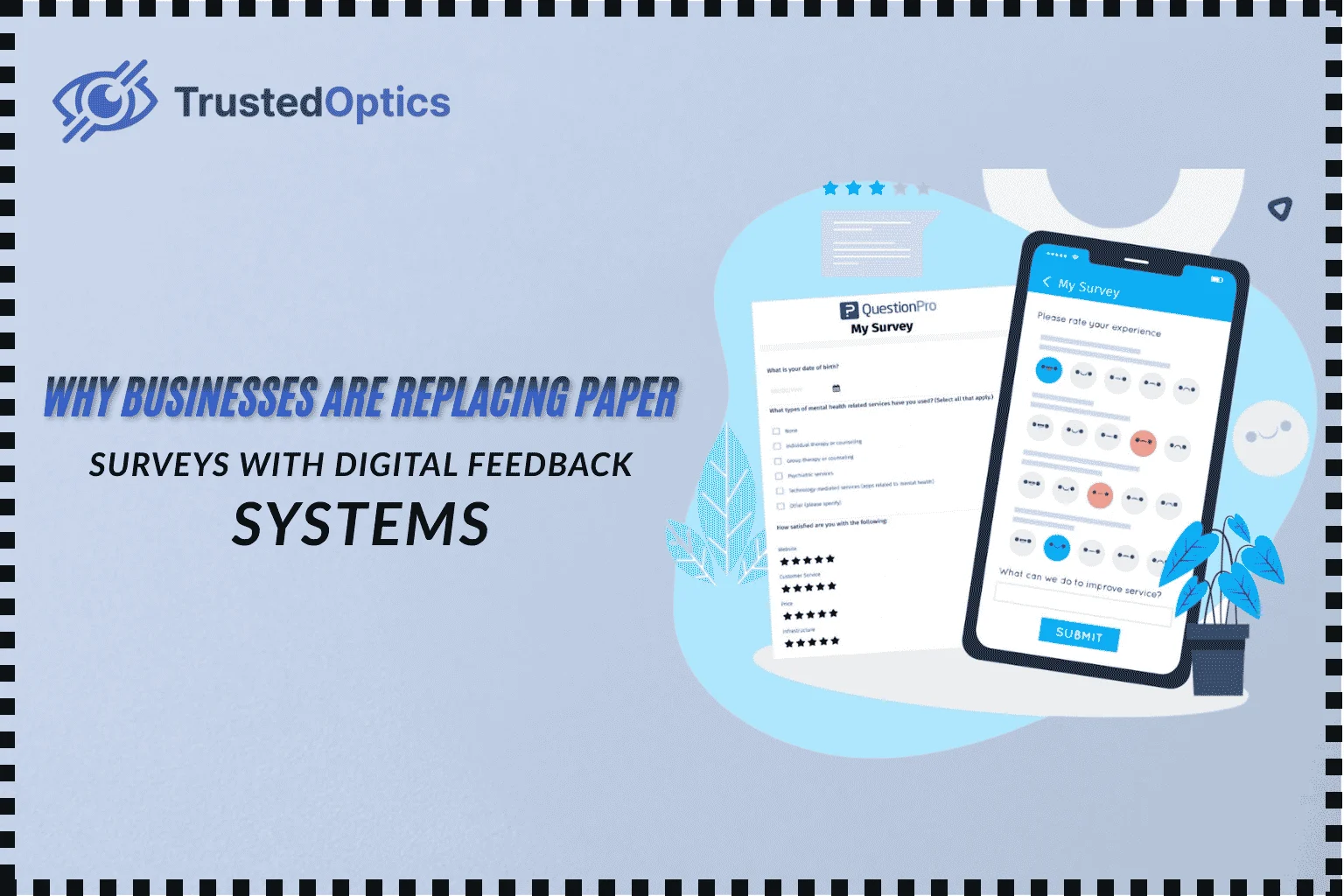
The Customer Feedback Revolution Is Already Here
When it comes to digital feedback system vs paper surveys, the difference is becoming clear for businesses across Pakistan. A customer finishes a meal at a restaurant in Karachi, checks out from a retail store in Lahore, or visits a healthcare clinic in Islamabad. Traditionally, businesses would hand them a paper survey and hope they filled it out.
Most didn't.
The reality is simple: paper surveys are slow, expensive, difficult to analyze, and often ignored. Meanwhile, customer expectations have changed dramatically. People now expect instant, digital interactions that fit naturally into their daily lives.
This shift is why businesses across Pakistan are rapidly moving from traditional paper surveys to modern digital feedback systems. Whether it's a restaurant collecting reviews through a QR code, a retail store tracking customer satisfaction in real time, or a hospital monitoring patient experiences, digital solutions are becoming the preferred choice.
Businesses gain faster insights, better response rates, automated reporting, and stronger online reputations.
What Is a Digital Feedback System?
A digital feedback system is a technology-driven platform that allows businesses to collect, analyze, manage, and act on customer feedback through digital channels such as:
-
QR codes
-
SMS surveys
-
Email surveys
-
Mobile apps
-
Websites
-
Tablets and kiosks
-
Social media integrations
Unlike traditional paper forms, digital systems automatically organize responses and present actionable insights through an analytics dashboard.
Quick Definition
A digital feedback system is a software-based solution that helps businesses collect customer opinions, measure satisfaction, analyze trends, and improve customer experiences using automated digital channels instead of paper surveys.
Why Paper Surveys Are Losing Relevance
For decades, paper surveys were considered a standard feedback collection method. However, modern business environments demand speed, accuracy, and scalability.
Common problems with paper surveys include:
-
Low completion rates
-
Lost or damaged forms
-
Manual data entry errors
-
Slow reporting processes
-
Storage and printing costs
-
Limited customer engagement
-
Delayed decision-making
In highly competitive industries, waiting weeks to review customer feedback can result in lost revenue and damaged brand reputation.
Digital Feedback System vs Paper Surveys
-
Response Collection: Instant feedback vs delayed collection.
-
Data Accuracy: Automated and accurate vs manual entry errors.
-
Analytics Dashboard: Real-time insights vs manual reporting.
-
Cost Over Time: Lower operational costs vs ongoing printing expenses.
-
Storage: Secure cloud storage vs physical document storage.
-
Automation: Automated workflows vs fully manual processes.
-
Customer Convenience: Quick digital access vs paper-based effort.
-
Reputation Management: Integrated review management vs limited capabilities.
-
Scalability: Easily scales across locations vs difficult to manage at scale.
-
Reporting Speed: Immediate reports vs days or weeks of processing.

Advantages of Digital Feedback Systems
-
Real-time customer insights
-
Higher survey completion rates
-
Automated data processing
-
Improved customer engagement
-
Better decision-making
-
Easier review generation
-
Lower long-term operational costs
-
Stronger online reputation management
Limitations of Paper Surveys
-
Printing expenses
-
Manual labor requirements
-
Difficult data analysis
-
Environmental waste
-
Slower response cycles
-
Inconsistent record keeping
How Collection Tools Improve Feedback Quality
One major reason businesses are replacing paper surveys is the effectiveness of modern collection tools.
These tools make feedback gathering effortless.
Examples include:
QR Code Surveys
Customers scan a code and provide feedback instantly.
SMS Feedback Requests
Businesses can request reviews immediately after a purchase or service interaction.
Email Surveys
Automated emails reach customers at the optimal time.
In-Store Tablets
Retailers and healthcare facilities collect feedback before customers leave.
Mobile-Friendly Forms
Customers can respond from any device within seconds.
Businesses using multiple collection channels often see significantly higher response rates compared to paper-based methods.
The Power of an Analytics Dashboard
Collecting feedback is only the first step.
The real value comes from understanding customer behavior.
An Analytics Dashboard transforms raw feedback into actionable insights by displaying:
-
Customer satisfaction trends
-
Net Promoter Score (NPS)
-
Review ratings
-
Customer sentiment analysis
-
Staff performance indicators
-
Service quality metrics
-
Location-specific reports
Expert Insight
One common mistake businesses make is collecting feedback without analyzing it consistently.
A well-designed analytics dashboard allows managers to identify customer issues before they become public complaints. This proactive approach often leads to stronger customer retention and higher revenue growth.
Why Reputation Management Has Become Essential
Modern consumers trust online reviews almost as much as personal recommendations.
A Reputation Management tool helps businesses:
-
Monitor customer reviews
-
Respond quickly to complaints
-
Improve review ratings
-
Build customer trust
-
Strengthen local SEO visibility
-
Increase conversion rates
For businesses searching for the best way to manage reviews, integrating feedback collection with reputation management creates a powerful customer experience strategy.
Instead of waiting for negative reviews to appear publicly, businesses can identify concerns early and resolve them privately.
How Automation Suites Save Time and Resources
One of the biggest advantages of digital systems is automation suite.
An automation suite can:
-
Send feedback requests automatically
-
Route complaints to managers
-
Generate reports instantly
-
Trigger customer follow-ups
-
Alert teams about low satisfaction scores
-
Schedule review requests
Real-World Example
A restaurant chain operating across multiple cities in Pakistan previously relied on printed feedback forms.
Managers reviewed responses only once per month.
After implementing a digital feedback system with automation capabilities, customer concerns were identified within hours instead of weeks. The business improved response times, reduced complaints, and increased positive online reviews.
Industry Use Cases
Retail Businesses
Retailers use digital feedback systems to:
-
Track customer satisfaction
-
Improve store experiences
-
Monitor staff performance
-
Increase repeat purchases
Restaurants
Restaurants benefit by:
-
Collecting real-time dining feedback
-
Identifying service issues quickly
-
Encouraging online reviews
-
Improving customer loyalty
Healthcare Facilities
Hospitals and clinics use digital feedback to:
-
Measure patient satisfaction
-
Improve service quality
-
Monitor wait times
-
Enhance patient experiences
Hospitality Industry
Hotels can:
-
Track guest satisfaction
-
Resolve concerns before checkout
-
Improve service standards
-
Strengthen brand reputation
Enterprise Organizations
Large companies use advanced analytics to:
-
Measure employee and customer experiences
-
Standardize service quality
-
Monitor multiple locations
-
Drive strategic decision-making
Cost vs Value Analysis
Many businesses hesitate because of software costs, but the long-term benefits often outweigh the initial investment.
Paper Survey Costs
-
Printing and storage expenses
-
Manual data entry
-
Administrative workload
-
Slow reporting processes
Digital Feedback System Costs
-
Software subscription
-
Staff training
-
Initial setup and implementation

Long-Term Value
Digital feedback systems help businesses:
-
Resolve issues faster
-
Improve customer retention
-
Generate more positive reviews
-
Increase operational efficiency
-
Reduce manual work and costs
Durability, Performance, and Maintenance
Unlike paper surveys that can be lost or damaged, digital systems offer secure and reliable data management.
Key Benefits
-
Cloud-based storage with secure backups
-
Real-time feedback processing
-
Automated reporting and workflows
-
Regular software updates
-
Reduced administrative effort
Modern platforms continue improving through updates, making them a sustainable long-term solution.
Safety and Data Security
Customer data protection is essential.
Most digital feedback platforms provide:
-
Secure cloud infrastructure
-
Data encryption
-
Role-based access controls
-
Automated backups
-
Compliance-focused security features
Expert Tips for Better Feedback Collection
-
Ask for feedback immediately after the customer experience.
-
Keep surveys short and easy to complete.
-
Respond to customer concerns quickly.
-
Focus on trends rather than individual comments.
-
Combine feedback collection with review management to improve online visibility.
Common Mistakes to Avoid
-
Asking too many questions
-
Ignoring negative feedback
-
Responding too late
-
Not tracking feedback trends
-
Failing to use an Analytics Dashboard
-
Depending on only one collection method
-
Treating feedback as a one-time task

Customer Testimonials
Ahmed Raza, Restaurant Owner (Karachi)
After switching to a digital feedback system, our response rate nearly doubled. We can now address customer concerns much faster.
Sarah Khan, Retail Manager (Lahore)
The Analytics Dashboard revealed issues we never noticed before and helped improve customer satisfaction.
Dr. Faisal Malik, Healthcare Administrator (Islamabad)
Automated feedback collection reduced administrative work and provided valuable patient insights in real time.
Frequently Asked Questions
Why are businesses replacing paper surveys?
Digital feedback systems provide faster insights, better response rates, and automated reporting.
Are digital feedback systems cost-effective?
Yes. They reduce printing, storage, and labor costs while improving efficiency.
How does an Analytics Dashboard help?
It turns customer feedback into actionable insights and performance reports.
Which industries benefit most?
Retail, restaurants, healthcare, hospitality, and enterprise organizations.
What is the best way to manage reviews?
Using a reputation management tool that combines feedback collection, monitoring, and review response management.
Conclusion
The shift from digital feedback system vs paper surveys is driven by one simple factor: businesses need faster, smarter, and more reliable customer insights.
Digital feedback systems help organizations improve customer experiences, strengthen online reputations, reduce operational costs, and make data-driven decisions. For businesses in Pakistan looking for the best way to manage reviews and customer feedback, solutions from Trusted Optics can help turn valuable customer insights into measurable business growth.
Looking for the best way to manage reviews across Google, Facebook, and other review platforms? Learn how businesses can monitor, respond to, and improve customer reviews more effectively.
Read More:What Is the Best Way to Manage Customer Reviews Across Multiple Platorms
Author Bio
Trusted Optics Editorial Team
Trusted Optics helps businesses improve customer experiences through feedback collection, review management, analytics dashboards, and automation solutions. Our team shares practical insights to help organizations make smarter, customer-focused decisions.

 English
 Arabic
 French
 Spanish
 Portuguese
 Deutsch
 Turkish
 Dutch
Dutch
 Russian
 Romaian
 Portuguese (Brazil)
 Greek
Greek
