Gynecomastia is a condition in which male breast tissue becomes enlarged, creating a fuller or more rounded appearance around the chest. It can affect one or both sides and may develop at different stages of life. While it is often associated with hormonal changes, several factors can contribute to its development. For many men, the change in chest shape can become noticeable through clothing, during exercise, or when the upper body is uncovered.
The effect of gynecomastia on chest appearance can vary significantly from person to person. Some men may have mild fullness around the nipple area, while others may experience more noticeable enlargement involving a larger portion of the chest. Understanding how gynecomastia changes chest contours can help individuals make informed decisions about evaluation and available treatment options, including Gynecomastia in Islamabad.
How Does Gynecomastia Change the Shape of the Chest?
A typical male chest tends to have a relatively flat and defined contour. Gynecomastia can change this appearance by increasing the amount of glandular breast tissue beneath or around the nipple. This may create a rounded, swollen, or slightly protruding chest profile.
The changes may be subtle or more pronounced. In mild cases, the enlargement may mainly be visible around the areola, giving the nipples a puffy appearance. In more developed cases, additional tissue can make the entire chest look fuller.
Gynecomastia may also affect chest symmetry. One side can become more enlarged than the other, resulting in an uneven appearance. This does not necessarily indicate a serious problem, but noticeable asymmetry can become a cosmetic concern for some men.
What Causes a Fuller Male Chest Appearance?
Hormonal balance plays an important role in the development of gynecomastia. Male and female hormones are naturally present in everyone, but changes in their balance can encourage the growth of male breast tissue.
Gynecomastia may occur during puberty when hormone levels are changing rapidly. It can also appear in adulthood or later in life. Certain medications, underlying health conditions, weight changes, and other factors may contribute to breast enlargement.
It is important to distinguish gynecomastia from excess chest fat. Fat accumulation can create a fuller chest without enlargement of the underlying glandular tissue. This is sometimes referred to as pseudogynecomastia. A proper medical assessment can help determine whether the chest fullness is mainly related to glandular tissue, fat, or a combination of both.
How Can Gynecomastia Affect Body Proportions?
Chest shape contributes significantly to the overall appearance of the upper body. When excess breast tissue becomes noticeable, it can alter the proportions between the chest, shoulders, abdomen, and arms.
A fuller chest may make the upper body appear less defined, even when a person maintains a healthy weight and exercises regularly. Some men may notice that their chest looks rounded rather than firm or contoured.
Gynecomastia can also become more visible after weight loss. As overall body fat decreases, remaining glandular tissue may stand out more clearly against the surrounding chest. Exercise can strengthen the chest muscles, but it may not remove enlarged glandular breast tissue.
For this reason, persistent chest enlargement should be assessed according to its underlying cause rather than assuming that additional exercise alone will resolve the appearance.
Can Gynecomastia Affect Confidence and Clothing Choices?
Changes in chest appearance can influence how some men feel about their bodies. A person may become more conscious of the chest when wearing fitted shirts, lightweight clothing, or sportswear.
Some individuals may choose loose clothing to make the chest less noticeable. Others may avoid swimming, changing rooms, gyms, or activities where the upper body is exposed. These reactions can vary from person to person, and the condition does not affect everyone emotionally in the same way.
The physical appearance is only one part of the concern. For some men, addressing persistent gynecomastia is primarily about achieving a chest shape that feels more proportionate and comfortable with their personal appearance.
How Is Gynecomastia Treatment Planned?
Treatment depends on the cause, severity, duration, and amount of enlarged tissue. A healthcare professional may assess the chest, review medical history, consider medications, and determine whether hormonal or other factors could be involved.
When gynecomastia persists and creates significant cosmetic concerns, surgical treatment may be considered. Depending on the individual case, treatment may involve removing excess glandular tissue, reducing excess fat, or using a combination of approaches to improve the chest contour.
The objective is generally not to create an unnaturally flat chest. Instead, treatment planning focuses on creating a balanced and natural-looking contour that fits the individual's body structure.
For individuals researching Gynecomastia in Islamabad, understanding the treatment approach is important before making any decision. A personalized assessment can help determine whether treatment is appropriate and which technique may be suitable.
What Can the Chest Look Like After Treatment?
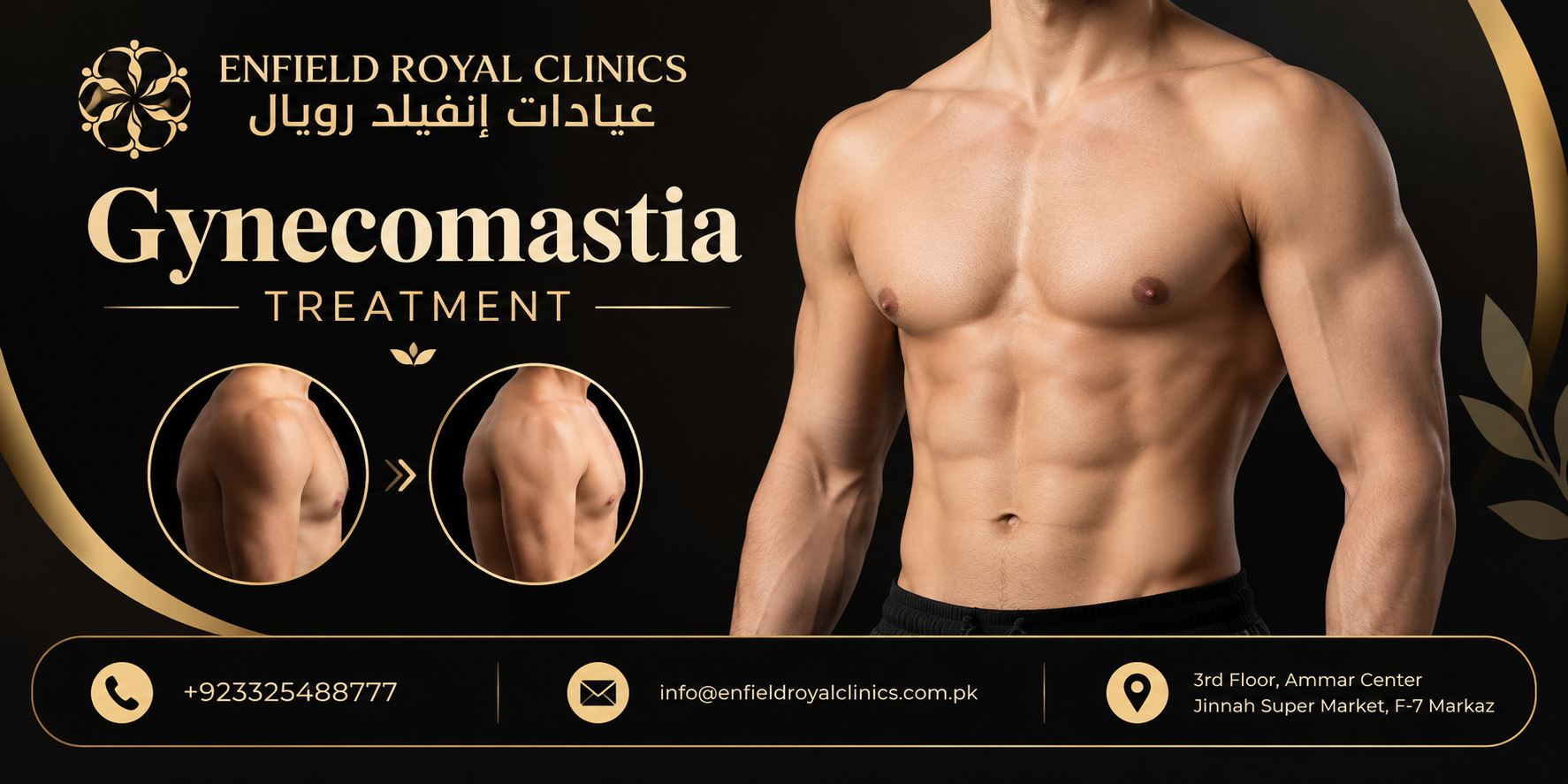
The appearance after treatment depends on the original amount of tissue, skin elasticity, chest structure, and technique used. When excess tissue is appropriately addressed, the chest may appear flatter, firmer, and more proportionate.
The nipple and areola area may also appear less prominent when enlarged tissue beneath the area is reduced. If one side was larger than the other, treatment planning may also consider symmetry.
Recovery is an important part of the process. Swelling and bruising can temporarily affect the chest appearance, so the immediate postoperative result may not represent the final contour. As healing progresses, swelling generally settles and the chest gradually takes on its more refined shape.
Following aftercare instructions can support a smoother recovery. Patients may be advised to limit strenuous activities for a period and use supportive garments when recommended.
Is Gynecomastia Always a Cosmetic Concern?
Not every case requires treatment. Gynecomastia can sometimes improve naturally, particularly when it develops during puberty. However, persistent or newly developing breast enlargement in adulthood should be medically evaluated rather than automatically treated as a cosmetic issue.
A healthcare professional can determine whether further investigation is needed. Sudden enlargement, significant pain, a firm lump, nipple discharge, or other unusual changes warrant medical attention.
Understanding the underlying cause is especially important because treatment should address the actual reason for chest enlargement. A cosmetic procedure may not be appropriate if an underlying medical issue has not been evaluated.
What Should Men Consider Before Gynecomastia Treatment?
Anyone considering treatment should first understand whether the chest enlargement is caused by glandular tissue, excess fat, or both. Medical history, current medications, weight changes, hormonal factors, and the duration of the condition can all be relevant.
Realistic expectations are equally important. Treatment can improve chest contours, but individual results vary. Factors such as skin elasticity, the amount of excess tissue, healing response, and overall body structure can influence the final appearance.
A qualified medical assessment can help establish realistic goals and determine whether treatment is appropriate. It also provides an opportunity to discuss recovery, possible risks, expected changes, and aftercare.
FAQs About Gynecomastia
1. Does gynecomastia always cause a visibly enlarged chest?
No. Gynecomastia can range from mild nipple puffiness to more noticeable enlargement of the chest. The appearance depends on the amount and distribution of excess tissue.
2. Can exercise completely remove gynecomastia?
Exercise can strengthen the chest muscles and reduce overall body fat, but it may not remove enlarged glandular breast tissue. The appropriate approach depends on the underlying cause.
3. Can gynecomastia affect only one side of the chest?
Yes. Gynecomastia can affect one or both sides. When only one side is enlarged, the difference may create noticeable chest asymmetry.
4. Is gynecomastia treatment suitable for every man?
Treatment is not automatically necessary or appropriate for everyone. A medical evaluation can determine the cause of chest enlargement and whether observation, lifestyle measures, medical management, or surgical treatment may be suitable.


 English
 Arabic
 French
 Spanish
 Portuguese
 Deutsch
 Turkish
 Dutch
Dutch
 Italiano
 Russian
 Romaian
 Portuguese (Brazil)
