
Is FUSS Hair Transplant in Dubai Suitable for Stable Loss
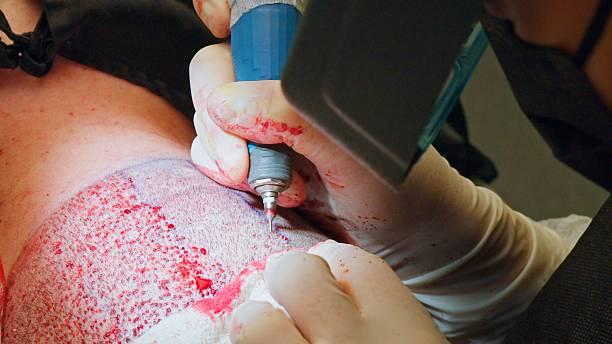
Stable hair loss can make surgical planning more predictable because the surgeon can evaluate a relatively established pattern of thinning and recession. FUSS Hair Transplant in Dubai may be suitable for selected patients with stable loss when the donor region remains healthy, sufficient follicles are available, and the expected restoration can be planned without excessive depletion.
What Stable Hair Loss Means
Hair loss is not considered stable simply because the patient has noticed no major change for a few weeks.
Pattern Consistency
A stable pattern means the distribution and progression of loss have remained relatively consistent over an appropriate observation period. The clinical assessment should consider previous changes rather than relying only on the patient's current appearance.
Donor Stability
The donor zone also matters. Hair that is expected to remain relatively permanent is generally more valuable for transplantation than follicles that may themselves be susceptible to significant miniaturization.
Why Stability Helps Surgical Planning
A stable pattern allows the surgeon to estimate the relationship between the recipient area and available donor follicles.
Designing the Hairline
A stable frontal pattern can make it easier to determine whether the patient needs reinforcement, reconstruction, or coverage of established recession.
Allocating Donor Hair
When the current pattern is clearer, donor follicles can be distributed according to the areas that require the greatest visual improvement.
Evaluating the Donor Region
FUSS relies on a donor strip from an appropriate scalp region.
Density and Hair Caliber
High donor density does not necessarily mean every follicular unit is identical. Hair caliber and follicular-unit composition affect the visual coverage achievable from harvested tissue.
Scalp Characteristics
The surgeon may also consider scalp laxity and previous procedures when determining whether strip harvesting is appropriate.
Long-Term Reserve
Even stable loss should be evaluated from a long-term perspective. Stable today does not necessarily mean the scalp will never change.
Recipient-Site Planning
Stable loss creates an opportunity to map established areas carefully.
Established Bald Zones
Completely bald areas provide a clear recipient surface, but the surgeon still needs to establish appropriate direction and density.
Partially Thinned Zones
Partially thinned regions require more conservative planning because native follicles may still be present.
Transition Areas
The boundary between transplanted and native hair should not appear abrupt. Density and hair direction should gradually integrate across these zones.
Stable Loss Does Not Mean Unlimited Density
One of the most important misconceptions is that a stable pattern allows unlimited restoration.
Finite Donor Supply
Every patient has a limited donor reserve. Once follicles are removed, they cannot simply be regenerated through another harvesting procedure.
Strategic Distribution
A well-planned transplant may prioritize the areas that most strongly affect appearance rather than attempting maximum density everywhere.
The following factors help define a stable-loss surgical plan:
| Factor | Role in planning |
|---|---|
| Duration of stability | Helps establish pattern consistency |
| Donor density | Defines available follicular reserve |
| Hair caliber | Influences visual fullness |
| Recipient size | Determines coverage requirements |
| Hairline position | Shapes facial framing |
| Crown involvement | Requires whorl-specific planning |
| Future loss | Protects long-term design |
| Previous procedures | Changes donor/recipient assessment |
Who May Still Need Additional Evaluation
Even patients reporting stable loss may require further assessment.
Diffuse Miniaturization
Hair can gradually become finer without creating obvious new bald patches. Trichoscopic or clinical examination can reveal changes that are not immediately visible to the patient.
Scalp Conditions
Active scalp inflammation or infection should be evaluated before elective transplantation.
Unclear Hair-Loss Diagnosis
Not every type of hair loss follows the same progression or responds to transplantation in the same way. Establishing the underlying diagnosis is part of responsible candidate assessment.
How FUSS Fits Into Long-Term Planning
The purpose of choosing FUSS should not be limited to the immediate procedure.
Donor Conservation
The surgical strategy should preserve the appearance and future usefulness of the donor region.
Coverage Prioritization
A patient with stable frontal recession may prioritize the hairline, while another with established crown loss may require a different distribution strategy.
Future Sessions
Although stable loss can improve predictability, some patients may still require future treatment. Donor capacity should therefore be considered before the first strip is harvested.
Recovery Considerations
FUSS includes donor-site closure, so recovery planning differs from techniques that extract individual follicular units.
Early Donor Healing
Tenderness, tightness, swelling, and redness can occur during early recovery. The incision should be protected according to postoperative instructions.
Recipient Healing
The implanted region may develop temporary redness and scabbing. Grafts should not be scratched or disturbed.
Gradual Activity Resumption
Work, exercise, and outdoor activity should be resumed according to the treating clinician's instructions and individual healing progress.
Questions About Stable Hair Loss
Is Stable Hair Loss Necessary for FUSS
Not necessarily, but understanding the progression of hair loss is important when planning a long-term transplant.
Does Stable Loss Guarantee Good Results
No. Donor quality, recipient anatomy, surgical technique, graft handling, and realistic expectations also influence outcomes.
Can Stable Loss Still Progress Later
Yes. Stability at the time of assessment does not guarantee that no future changes will occur.
Can FUSS Be Used for a Stable Hairline Recession
It may be considered when donor supply and the patient's overall pattern support transplantation.
The Strategic Investment
Stable hair loss can provide a clearer foundation for donor allocation and recipient design, but it does not eliminate the need for long-term planning. FUSS Hair Transplant in Dubai may suit selected patients with established loss when their donor reserve, scalp condition, and restoration objectives align with strip harvesting.
Patients researching Dubai hair restoration services should have both current and future hair patterns considered before surgery. Tajmeels Clinic can assess donor availability, recipient requirements, and the suitability of a strip-based approach for an individualized restoration plan.

 English
 French
 Spanish
 Portuguese
 Deutsch
 Turkish
 Dutch
Dutch
 Italiano
 Russian
 Romaian
 Portuguese (Brazil)
 Greek
Greek
