
Aluminium Barge Manufacturers: Building Stronger, Safer, and More Efficient Marine Vessels
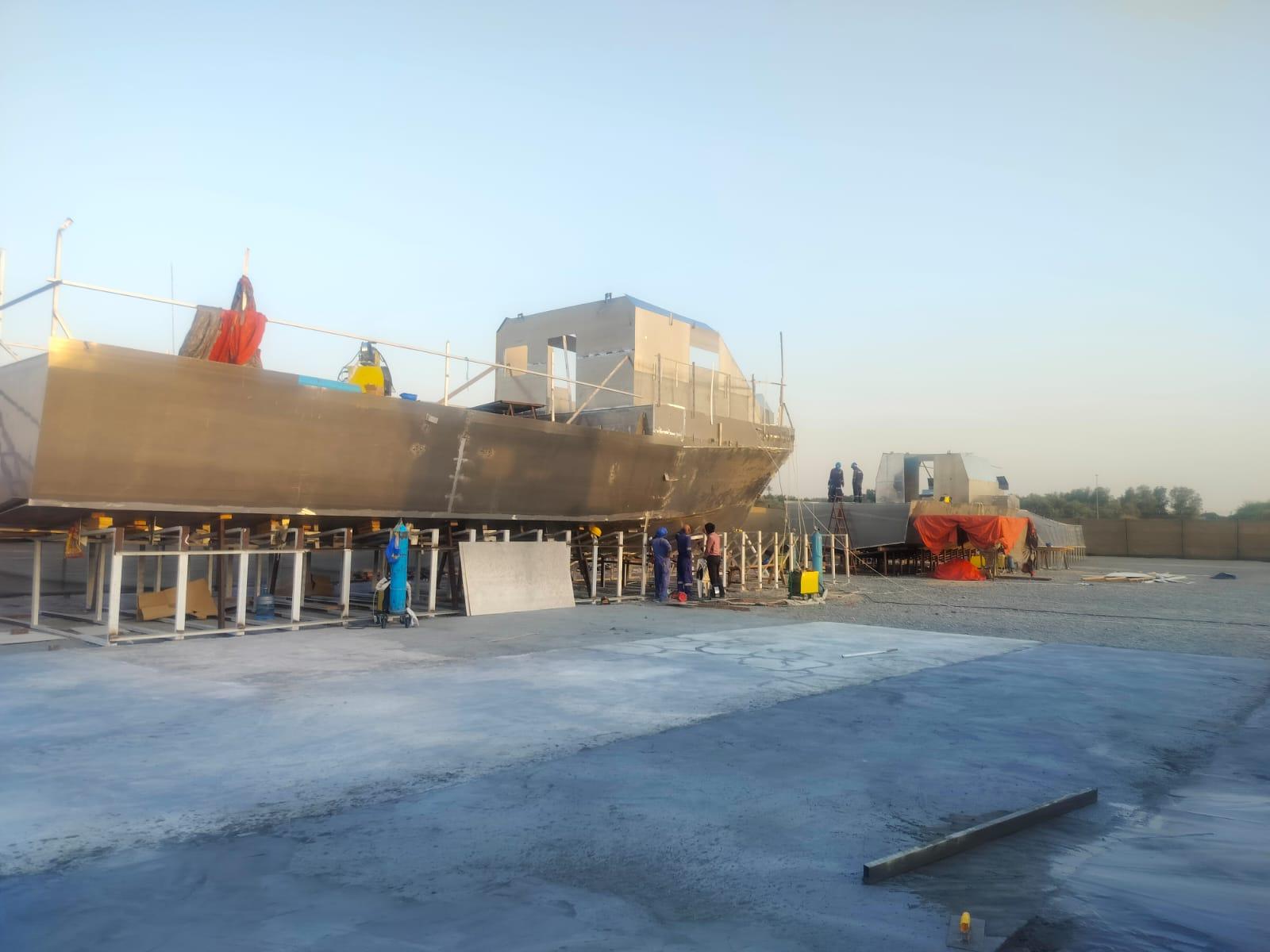
The marine industry is constantly looking for better ways to build vessels that are strong, lightweight, safe, and economical to operate. Aluminium has become a popular material for this purpose because it offers a useful combination of low weight, durability, corrosion resistance, and design flexibility. This has increased interest in aluminium barge manufacturers, particularly for commercial and industrial marine projects.
Barges are widely used to transport equipment, cargo, construction materials, and other heavy loads. They operate in ports, rivers, coastal waters, and offshore environments, where reliability is essential. A well-designed aluminium barge can provide the strength required for demanding work while keeping overall vessel weight under control.
Why Aluminium Is Suitable for Barges
One of the biggest advantages of aluminium is its low density. Aluminium has a density of around 2.7 tonnes per cubic metre, compared with approximately 7.8 tonnes per cubic metre for mild steel. This makes aluminium significantly lighter than steel.
For marine vessels, lower weight can offer several practical benefits. It can help improve payload efficiency, reduce the power required for propulsion, and potentially lower fuel consumption. A lighter structure can also make a vessel easier to transport and handle during certain operations.
The wider aluminium boat market is also showing strong growth. Recent industry research estimates that the global aluminium boat market was worth about USD 3.5 billion in 2024 and could reach approximately USD 6.9 billion by 2034, growing at around 7.1% annually. This reflects the wider demand for lightweight and efficient marine vessels.
Strong and Reliable Construction
A working barge needs to withstand heavy loads, vibration, wave action, repeated loading, and challenging marine conditions. Aluminium can provide excellent structural performance when the vessel is designed correctly.
Experienced aluminum barge builders use suitable marine-grade alloys and carefully planned structural systems. Hull plating, frames, bulkheads, deck structures, and reinforcement members must all be designed according to the vessel's expected load and operating environment.
Aluminium does require specialised engineering. Its stiffness, thermal properties, and welding behaviour are different from steel. Therefore, designers must consider factors such as structural deformation, buckling, thermal expansion, and welding effects.
Modern computer-aided design and engineering software help designers evaluate these factors before construction starts. This can improve accuracy and reduce the possibility of expensive changes during fabrication.
Corrosion Resistance
Corrosion is a major concern for marine vessels because they are regularly exposed to seawater, humidity, and changing weather conditions. Aluminium naturally develops a protective oxide layer, giving it good resistance to corrosion.
This can be particularly useful for barges working in coastal and marine environments. However, aluminium is not completely maintenance-free. Proper design, inspection, drainage, welding, and protection against galvanic corrosion are still necessary.
When aluminium comes into contact with dissimilar metals, special precautions may be required to prevent galvanic corrosion. Regular inspection and appropriate maintenance therefore remain important throughout the vessel's working life.
Better Operational Efficiency
For commercial operators, operating costs matter just as much as the initial construction cost. Fuel consumption, maintenance, repairs, and downtime can significantly affect the overall cost of owning a vessel.
The lightweight nature of aluminium can contribute to improved fuel efficiency, depending on hull design, propulsion, operating speed, payload, and sea conditions. A lighter vessel generally requires less energy to move than a heavier vessel of comparable dimensions.
This can also support environmental goals. Lower fuel consumption can mean lower emissions, making lightweight vessel construction an attractive option as the marine sector works toward more efficient and sustainable operations.
Applications of Aluminium Barges
Aluminium barges can be designed for many different marine applications. Their configuration can be customised according to the required payload, deck space, draft, operating location, and equipment.
Common uses include:
- Cargo transportation
- Offshore support
- Construction projects
- Port and harbour operations
- Dredging support
- Equipment transportation
- Floating work platforms
- Aquaculture
- Coastal transportation
- Inland-waterway operations
For example, a construction barge may require a reinforced deck for heavy machinery, while an offshore support barge may need additional equipment foundations, storage areas, and specialised working spaces.
Demand for Barge Construction in the UAE
The UAE has an important maritime and offshore sector supported by major ports, logistics operations, coastal development, and offshore activities. These industries require reliable vessels that can handle different types of marine work.
Businesses searching for barge builders in UAE often look for more than basic fabrication. Engineering knowledge, material quality, customisation, project management, and construction standards all influence the final quality of a vessel.
The country's location as a major maritime and logistics hub also creates opportunities for advanced vessel construction. Aluminium can be an attractive choice for projects where lightweight construction and corrosion resistance are important.
Safety Begins With Good Design
A safe barge is the result of good engineering, quality construction, and proper operation. Designers need to consider stability, buoyancy, freeboard, structural strength, deck loading, cargo distribution, and watertight arrangements.
Modern engineering tools allow these factors to be assessed before fabrication. During construction, accurate cutting, controlled welding, dimensional checks, and quality inspections help ensure that the finished structure meets the required specifications.
Safety should not be treated as an additional feature added at the end of a project. It needs to be considered from the earliest stages of design.
Customisation and Modern Technology
Not every barge has the same purpose. A vessel transporting heavy equipment will have different requirements from one used for offshore support or cargo operations.
Custom design allows the builder to adapt hull dimensions, deck layout, payload capacity, storage, lifting systems, propulsion, and other features to the customer's requirements.
VU Marine focuses on practical marine construction solutions designed around operational needs. Combining experienced engineering with modern fabrication methods can help create vessels that are both functional and efficient.
Technology is also changing the construction process. Digital modelling, precision cutting, advanced welding, and modern inspection systems can improve accuracy and consistency. At the same time, hybrid propulsion, electric systems, smart monitoring, and energy-efficient equipment are becoming increasingly relevant to the future of marine vessels.
Choosing the Right Barge Builder
Selecting the right barge building company is an important decision. Buyers should consider the builder's experience with aluminium structures, engineering capabilities, fabrication quality, material standards, inspection procedures, and ability to customise the vessel.
It is also useful to understand the builder's approach to maintenance and after-sales support. A marine vessel is a long-term investment, so construction quality and ongoing reliability are both important.
Conclusion
Aluminium offers an effective combination of low weight, strength, corrosion resistance, and flexibility for modern barge construction. These advantages can make aluminium barges suitable for cargo transportation, offshore work, construction, port operations, and many other applications.
The growing aluminium marine vessel market shows that demand for lightweight and efficient vessels is continuing to increase. However, successful barge construction depends on more than material selection. Good naval architecture, structural engineering, skilled fabrication, safety planning, and regular maintenance are equally important.
With the right design and construction approach, aluminium barges can provide a strong, efficient, and practical solution for today's demanding marine industry while supporting the industry's move toward more economical and sustainable vessel operations.

 English
 Arabic
 French
 Spanish
 Portuguese
 Deutsch
 Turkish
 Dutch
Dutch
 Russian
 Romaian
 Portuguese (Brazil)
 Greek
Greek
