
MCP Server: Complete Guide to AI Integration, APIs, Enterprise Data & MCP Clients
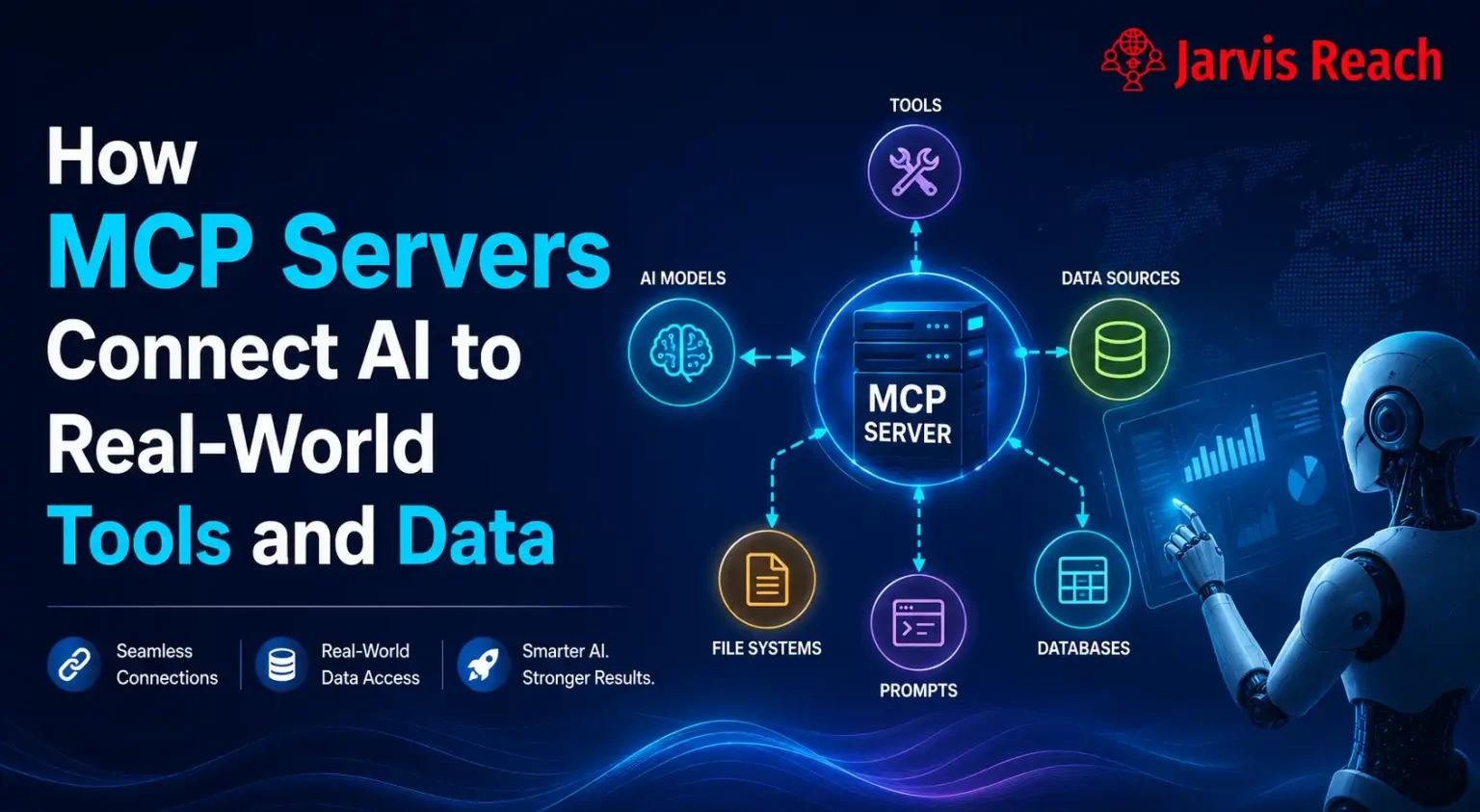
Artificial intelligence is becoming a core part of modern software. However, AI models are most useful when they can access live information instead of relying only on pre-trained knowledge. This is where an MCP Server plays an important role. It helps AI platforms communicate securely with APIs, databases, enterprise systems, and other external resources.
If you want to understand how AI applications connect with business tools and real-time information, this guide explains everything about MCP Server, including MCP Client, APIs, enterprise data, SQL databases, authentication, prompt templates, stateful and stateless architecture, file systems, and backends.
What Is an MCP Server?
An MCP Server (Model Context Protocol Server) is a service that allows AI applications to securely access external tools and data sources. Instead of storing all information inside the AI model, the server retrieves data whenever it is needed.
This approach improves accuracy, enables real-time responses, and helps businesses use AI more effectively.
Why Is MCP Server Important?
Modern AI applications often need information from multiple systems. An MCP Server acts as a secure bridge between an AI platform and external resources.
It helps AI applications:
- Retrieve live information
- Connect with business software
- Access enterprise data
- Query SQL databases
- Read files and documents
- Automate workflows
As a result, AI becomes more useful for both businesses and developers.
How an MCP Server Works
The communication process is straightforward.
- A user sends a request to an AI platform.
- The AI platform passes the request through an MCP Client.
- The MCP Client communicates with the MCP Server.
- The server authenticates the request.
- It connects to the required API, database, or file system.
- The requested information is returned securely.
- The AI platform generates a response using the latest data.
Therefore, users receive more accurate and up-to-date answers.
Understanding MCP Client
The MCP Client is responsible for sending requests from an AI application to the MCP Server.
Its main responsibilities include:
- Communicating with servers
- Sending secure requests
- Receiving responses
- Managing authentication
- Accessing external tools
Without an MCP Client, AI platforms cannot easily communicate with connected services.
API Integration with MCP Server
One of the biggest advantages of an MCP Server is API connectivity.
An API allows software applications to exchange information automatically.
Using APIs, AI platforms can access:
- CRM systems
- Weather services
- Email platforms
- Analytics tools
- Payment gateways
- Business software
Consequently, AI assistants can provide accurate information based on real-time data.
Connecting Enterprise Data
Most organizations store valuable enterprise data across different business systems.
An MCP Server provides secure access to information such as:
- Customer records
- Sales reports
- Product information
- Employee documentation
- Business analytics
Instead of manually searching multiple applications, employees can ask AI questions and receive immediate answers.
SQL Databases Support
Many businesses rely on SQL databases to store structured information.
An MCP Server can securely query SQL databases and return relevant information to AI applications.
Benefits include:
- Faster database searches
- Real-time reporting
- Better business insights
- Improved automation
This makes AI assistants much more useful for daily operations.
Multiple Data Sources
An MCP Server can communicate with various data sources, including:
- SQL databases
- REST APIs
- Cloud storage
- Internal applications
- Business documents
- Knowledge bases
- File systems
Because multiple data sources are supported, AI applications become more flexible and intelligent.
Prompt Templates
Prompt templates help standardize communication between AI models and connected systems.
They provide several advantages:
- Consistent AI responses
- Better formatting
- Reduced prompt errors
- Faster workflow automation
Additionally, prompt templates simplify large-scale AI deployments.
Authentication and Security
Security is essential when AI accesses external systems.
Authentication ensures that only authorized users and applications can retrieve protected information.
Common authentication methods include:
- API Keys
- OAuth
- Access Tokens
- Secure Login Credentials
Strong authentication protects enterprise systems and sensitive business data.
Stateful vs Stateless Communication
An MCP Server may support both stateful and stateless communication.
A stateless server treats every request independently. It does not remember previous interactions, making it easier to scale.
A stateful server remembers previous conversations and session information. Therefore, it provides a more personalized user experience.
The right architecture depends on the specific application requirements.
File Systems and Backends
Besides APIs and databases, MCP Servers can also communicate with file systems and application backends.
This allows AI to:
- Read documents
- Process files
- Access internal reports
- Retrieve business records
- Automate repetitive tasks
As a result, AI platforms become much more capable in enterprise environments.
Benefits of Using MCP Server
Organizations choose MCP Server because it offers:
- Secure AI integration
- API connectivity
- Enterprise data access
- SQL database support
- Multiple data source integration
- Prompt templates
- Authentication management
- Stateful and stateless communication
- Backend connectivity
- File system access
These features improve AI performance while maintaining security and scalability.
Future of MCP Server
As AI technology continues to evolve, MCP Server will become increasingly important. Businesses are adopting AI assistants that require secure access to company data, business applications, and external services.
Moreover, future MCP implementations are expected to provide better security, faster performance, and easier integration with cloud platforms. This will allow developers to build more reliable AI solutions that can access information in real time while protecting sensitive data.
Conclusion
An MCP Server is an essential component for modern AI applications. It enables secure communication between AI platforms and APIs, SQL databases, enterprise data, file systems, and other external resources. Working together with an MCP Client, it helps AI retrieve real-time information, automate workflows, and deliver more accurate responses.
Whether you are building AI assistants, enterprise automation tools, or intelligent business applications, understanding MCP Server architecture will help you create scalable, secure, and future-ready AI solutions.

 English
 Arabic
 French
 Spanish
 Portuguese
 Deutsch
 Turkish
 Dutch
Dutch
 Italiano
 Russian
 Portuguese (Brazil)
 Greek
Greek
