
Why Investments in Network Infrastructure Are Boosting the Telecom Equipment Market
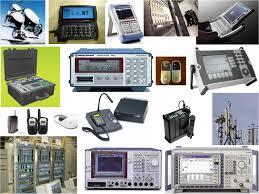
The accelerated digitalization of industrial sectors—commonly referred to as Industry 4.0—is drastically modifying the core demand profiles for high-grade communication hardware. Smart factories, automated logistics hubs, and offshore energy sites require ultra-reliable, low-latency private wireless networks to coordinate thousands of connected sensors, autonomous mobile robots, and mission-critical safety devices. Consequently, telecom equipment suppliers are shifting focus toward custom enterprise-grade solutions, including private 5G access nodes, ruggedized edge servers, and specialized industrial gateways. This expansion beyond traditional consumer-centric communications creates massive operational opportunities for hardware innovators capable of delivering secure, high-throughput network architectures tailored specifically for complex industrial environments.
Furthermore, public sector initiatives aimed at building interconnected municipal environments, intelligent traffic management systems, and resilient power grids rely heavily on modern optical transmission and wireless communication hardware. To effectively tap into these emerging verticals, telecom vendors must form cross-industry alliances with automation specialists, cloud service providers, and enterprise security firms. Staying aligned with detailed tracking of Telecom Equipment market growth enables hardware manufacturers to target fast-growing sub-sectors, refine product specifications for enterprise clients, and secure lucrative contracts within high-value infrastructure projects worldwide.
Frequently Asked Questions
-
How does the expansion of Industry 4.0 influence networking hardware demands? Industrial automation requires ultra-low latency, robust private 5G networks, and ruggedized edge gateways to support real-time sensor communications, continuous robotics, and mission-critical applications.
-
What role do smart city initiatives play in driving network equipment adoption? Public municipal projects require extensive optical transmission systems and wireless nodes to connect traffic management networks, public safety monitors, and intelligent utility grids.
➤➤➤Explore MRFR’s Related Ongoing Coverage In Semiconductor Industry:
Digital Banking Platform Market

 Arabic
 French
 Spanish
 Portuguese
 Deutsch
 Turkish
 Dutch
Dutch
 Italiano
 Russian
 Romaian
 Portuguese (Brazil)
 Greek
Greek
