
Ramadan Books Online: A Complete Reading List for Every Age
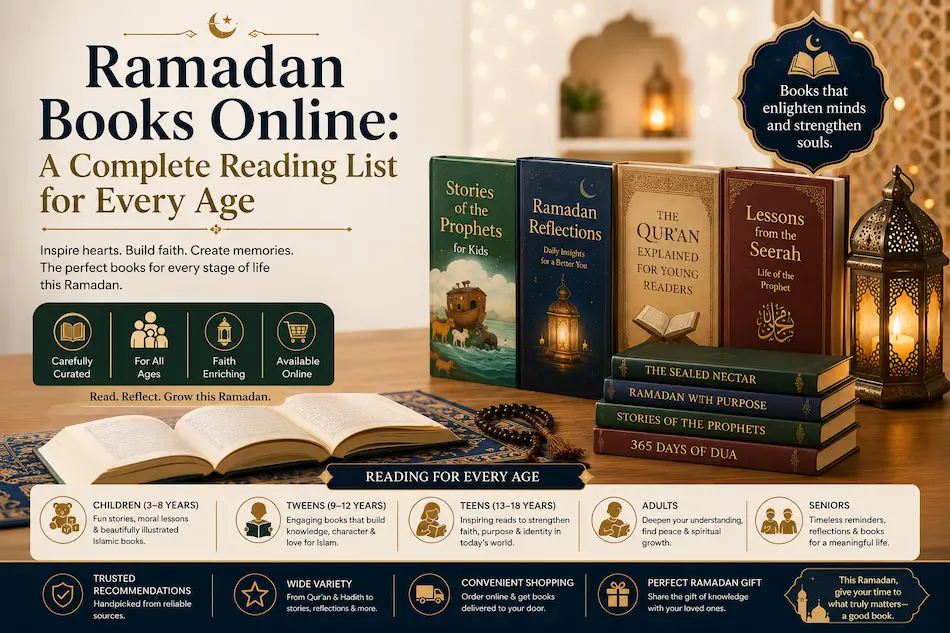
Ramadan means something different at every stage of life. A five-year-old experiences the month through curiosity and excitement about fasting for the first time, a teenager might be balancing school with new spiritual responsibilities, and an adult may be searching for deeper reflection after years of familiar routine. A single reading list rarely fits everyone in a household, which is why building an age-appropriate collection matters more than simply picking whatever's trending.
This guide breaks down the best Ramadan books online by age group, making it easier to find something genuinely suited to each reader in your family.
Toddlers and Young Children (Ages 3–6)
At this age, children aren't fasting yet, but they're absorbing the excitement and atmosphere around them. The right books introduce Ramadan through simple concepts and bright imagery rather than detailed explanation.
What to look for:
-
Board books or picture books with minimal text
-
Simple explanations of what Ramadan is and why families fast
-
Bright, engaging illustrations that hold short attention spans
-
Stories built around family traditions like iftar and decorations
Books at this stage are less about instruction and more about building positive early associations with the month.
Early Readers (Ages 7–9)
Children in this age range are often starting to understand fasting more concretely, and some may be attempting partial fasts for the first time. Books here can introduce slightly more structure and detail.
What to look for:
-
Illustrated storybooks that explain the "why" behind fasting, not just the "what"
-
Simple activity or reflection books tied to daily Ramadan themes
-
Short stories highlighting patience, sharing, and kindness
-
Basic introductions to key duas used during the month
This is also a good age to introduce a simple, guided daily journal designed specifically for children.
Pre-Teens (Ages 10–12)
At this stage, many children are fasting more consistently and starting to ask more thoughtful questions about faith. Books can begin addressing the spiritual "why" in more depth, alongside practical guidance.
What to look for:
-
Books explaining the spiritual significance of fasting, beyond the physical routine
-
Simplified Seerah content focused on the Prophet's ﷺ Ramadan practices
-
Age-appropriate guides to prayer and worship during the month
-
Reflection journals with slightly more depth than younger children's versions
This age group often benefits from books that treat them as capable of real reflection, rather than only simplified explanations.
Teenagers (Ages 13–18)
Teenagers are often navigating Ramadan alongside school, social pressures, and a more independent relationship with their faith. Books at this stage work best when they connect Islamic guidance to real, relatable challenges.
What to look for:
-
Contemporary Islamic writers, such as Khurram Murad, whose work often speaks directly to modern challenges
-
Books addressing balancing faith with school, friendships, and identity
-
More detailed guides to the spiritual and physical aspects of fasting
-
Daily reflection journals designed for older readers, with space for personal writing
Teenagers often respond well to books that don't talk down to them, treating their questions and doubts as legitimate rather than something to simply move past.
Young Adults (Ages 19–30)
Young adults are frequently navigating major life transitions — university, early careers, or new independence — often for the first time during Ramadan away from a family structure that previously shaped their routine.
What to look for:
-
Practical guides to maintaining consistency while balancing work or study
-
Books on the deeper spiritual meaning of fasting, geared toward independent reflection
-
Contemporary voices that bridge classical guidance with modern life circumstances
-
Structured daily journals that help build habits without requiring a rigid schedule
This group often benefits most from books they can engage with flexibly, fitting reading around unpredictable routines.
Adults and Parents (Ages 30–55)
Adults, especially parents, are often balancing their own spiritual goals with responsibilities for guiding children through the month. Books at this stage frequently serve a dual purpose.
What to look for:
-
In-depth books on the virtues and deeper meaning of Ramadan
-
Guides for teaching children about fasting and worship
-
Reflection journals designed for consistent, longer-term use
-
Books focused on the last ten nights and maximizing worship during that period
Many adults also use this stage to revisit classical texts they may not have had time for in earlier years.
Older Adults (55+)
For older readers, Ramadan books often shift toward reflection, legacy, and deeper spiritual connection, sometimes alongside physical considerations around fasting.
What to look for:
-
Reflective, classical texts meant for slow, contemplative reading
-
Books on gratitude and spiritual growth later in life
-
Guidance on fasting considerations for health and age, where relevant
-
Seerah and historical texts offering depth without requiring extensive new study
Older readers often prefer books that reward patience and repeated reading over fast-paced, structured formats.
Building a Household Collection Across Ages
Rather than searching for a single book that fits everyone, the most effective approach is building a small, age-spanning collection — even if it's just one book per age group represented in your household. This allows every family member to engage with Ramadan at a level that genuinely matches where they are, while still sharing the experience of the month together.
Shopping With Age in Mind
When browsing Ramadan books online, filtering by intended age range, rather than general popularity, tends to produce far more useful results. A bestselling adult reflection journal won't serve a seven-year-old, just as a simplified children's storybook won't meet the needs of a teenager looking for deeper guidance. Taking age into account from the start saves time and leads to books that are actually read, rather than left unopened.
Final Thoughts
Ramadan is experienced differently at every age, and the books chosen for the month should reflect that. Building an age-appropriate reading list — from picture books for toddlers to reflective texts for older adults — ensures that every member of the household has something genuinely suited to where they are in their journey, making the month more meaningful for the whole family.
Frequently Asked Questions
What Ramadan books are appropriate for young children? Simple picture books with bright illustrations and minimal text work best for toddlers and young children, focusing on the excitement and traditions of the month rather than detailed explanations.
What kind of Ramadan books do teenagers respond to best? Books by contemporary Islamic writers that address real challenges like balancing school, friendships, and identity tend to resonate more than traditional or overly simplified texts.
Should adults and parents look for different books than younger family members? Yes. Adults often benefit from more in-depth reflection books, along with guides for teaching children, which serve a different purpose than age-specific children's books.
How do I build a Ramadan reading list for a family with mixed ages? Choose at least one age-appropriate book for each family member, focusing on their specific stage of understanding rather than searching for a single book that fits everyone.

 English
 Arabic
 French
 Spanish
 Portuguese
 Deutsch
 Turkish
 Dutch
Dutch
 Italiano
 Romaian
 Portuguese (Brazil)
 Greek
Greek
