
How Can I Backtest a Futures Trading Strategy?
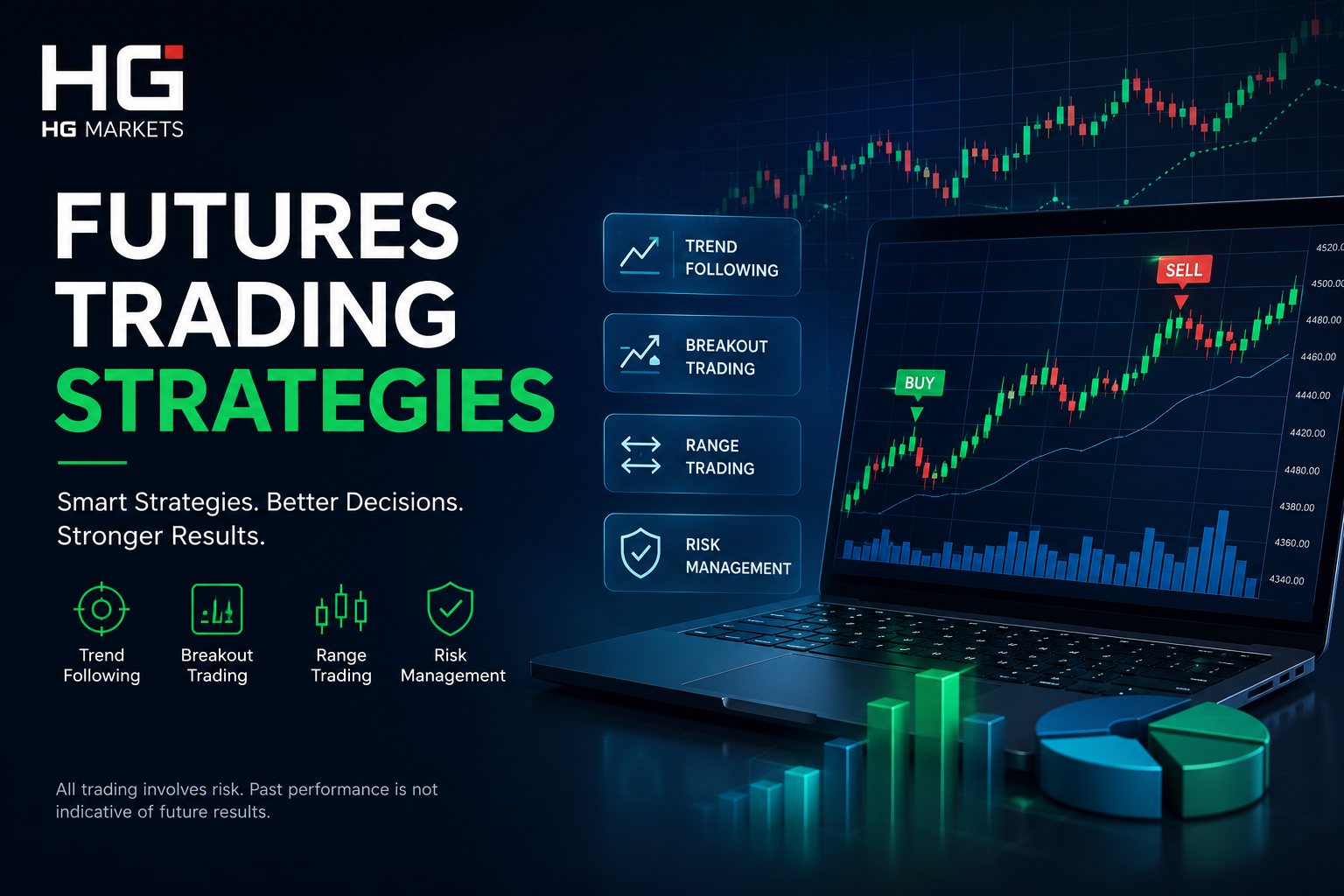
Introduction to Futures Trading Strategy
Backtesting is one of the most valuable skills a trader can develop before risking real money in the futures market. Whether you are new to trading or refining your existing futures trading strategies, testing your approach against historical market data helps you understand how your strategy might perform under different market conditions. Instead of relying on assumptions or emotions, backtesting allows you to make informed decisions based on measurable results. For traders working with HG Markets, combining a reliable trading platform with disciplined testing can improve confidence, strengthen risk management, and support more consistent trading decisions. By investing time in the backtesting process, traders can identify weaknesses, refine their methods, and build futures trading strategies that are better prepared for live market conditions.
What Is Backtesting in Futures Trading?
Backtesting is the process of applying a trading strategy to historical price data to determine how it would have performed in the past. Although previous market performance cannot predict future results with certainty, it provides valuable insights into the strengths and weaknesses of a strategy. Rather than entering trades based on instinct, traders can evaluate whether their rules consistently produce positive outcomes over time. Effective futures trading strategies should be tested across different market environments, including trending, ranging, and volatile periods, to ensure they are not dependent on a single market condition. This approach creates a more realistic understanding of potential performance before live trading begins.
Why Backtesting Is Important Before Trading
Backtesting helps traders reduce uncertainty by replacing guesswork with evidence. It reveals whether a strategy has generated consistent returns over a large number of trades and highlights periods where performance may have struggled. This information allows traders to make improvements before committing capital, reducing the likelihood of costly mistakes. Many traders abandon potentially profitable systems after a few losses because they have never examined the long-term results. Backtesting provides confidence by demonstrating that temporary drawdowns can occur even within successful futures trading strategies, making it easier to remain disciplined when markets become unpredictable.
How to Define a Trading Strategy Before Backtesting
Before beginning the backtesting process, every aspect of the trading strategy should be clearly documented. Entry rules, exit conditions, stop-loss levels, profit targets, and position sizing should all be objective and measurable. A strategy based on vague observations such as "buy when the market looks strong" cannot be tested consistently because different traders may interpret the same chart differently. Well-defined futures trading strategies remove emotional decision-making and ensure that every trade follows the same logical process. The more precise the rules are, the more reliable the backtesting results will be.
Why Clear Trading Rules Produce Better Results
A successful backtest depends on consistency. If trading rules change during the testing process, the results become unreliable and impossible to evaluate accurately. Clear rules allow traders to repeat the same decisions throughout years of historical data, creating meaningful statistics that can be analysed with confidence. Consistency also makes it easier to identify which elements of the strategy contribute to success and which require adjustment. Rather than constantly modifying the system after every losing trade, traders can rely on historical evidence to guide improvements.
Choosing Reliable Historical Market Data
The quality of historical market data has a direct impact on the accuracy of any backtest. Incomplete or inaccurate data may produce misleading results that create unrealistic expectations. Traders should use reliable datasets that include accurate price movements, trading volumes, and contract adjustments where necessary. Testing a strategy over several years helps ensure it has experienced different market cycles, including economic growth, recession, high volatility, and quieter trading periods. High-quality historical data gives traders greater confidence that their futures trading strategies have been evaluated under realistic conditions.
Why Different Market Conditions Matter
Markets are constantly changing, and a strategy that performs well during strong trends may struggle in sideways or highly volatile conditions. Testing across different environments helps traders understand where a strategy performs best and where additional filters may be required. Instead of expecting one approach to succeed in every situation, traders can identify the market conditions that align with their system. This knowledge improves decision-making and prevents unrealistic expectations once live trading begins.
Analysing Backtesting Results Effectively
Completing a backtest is only the first step. The real value comes from carefully analysing the results to understand how the strategy behaved over time. Looking only at total profit can be misleading because profitability alone does not measure consistency or risk. Traders should examine the frequency of winning and losing trades, the largest drawdowns, and the stability of returns across different market periods. Well-developed futures trading strategies should demonstrate a balance between profitability and risk rather than relying on a small number of exceptionally profitable trades.
Understanding Risk and Performance Together
A strategy that generates impressive profits while exposing the trading account to significant losses may not be suitable for long-term trading. Risk management should always be considered alongside returns because preserving capital is essential for sustainable success. Analysing drawdowns, average returns, and consistency helps traders determine whether a strategy fits their financial goals and risk tolerance. By focusing on balanced performance instead of headline profits, traders are more likely to build systems capable of surviving changing market conditions.
Common Backtesting Mistakes to Avoid
Even experienced traders can make mistakes that reduce the accuracy of their backtesting results. One of the most common errors is over-optimising a strategy until it perfectly matches historical data, a practice known as curve fitting. While this may produce exceptional historical results, it often performs poorly in live markets because the strategy has been tailored to past price movements rather than general market behaviour. Ignoring trading costs, slippage, and execution delays can also create unrealistic expectations. Strong futures trading strategies should be designed to remain effective under real trading conditions rather than ideal scenarios.
Why Emotional Bias Can Affect Results
Although backtesting relies on historical data, emotions can still influence the process. Traders may be tempted to ignore losing trades, adjust rules midway through testing, or stop evaluating a strategy after a series of disappointing results. These behaviours reduce the reliability of the findings and make it difficult to determine whether a strategy genuinely has an edge. Remaining objective throughout the testing process allows traders to make decisions based on evidence rather than emotion, leading to more reliable conclusions.
Why HG Markets Supports Smarter Futures Trading
Developing profitable trading methods requires more than technical knowledge. Traders also need access to reliable markets, educational resources, and professional trading tools. HG Markets provides access to global futures markets while supporting traders with technology designed to help them analyse opportunities and execute trades efficiently. When combined with disciplined backtesting, these resources allow traders to approach the market with greater preparation and confidence. Whether you are testing new futures trading strategies or improving an existing system, working with a trusted brokerage such as HG Markets can help create a stronger foundation for long-term trading success.
Conclusion
Backtesting is an essential step in developing disciplined and consistent futures traders. It allows traders to evaluate strategies using historical market data, identify weaknesses before risking capital, and improve confidence through objective analysis. While no strategy can eliminate risk or guarantee future profits, thorough testing provides valuable insight into how a system may perform under different market conditions. By combining well-tested futures trading strategies with sound risk management and the trading resources available through HG Markets, traders can make more informed decisions and build a stronger path towards long-term success.
Frequently Asked Questions
What is the purpose of backtesting a futures trading strategy?
Backtesting helps traders evaluate how a strategy would have performed using historical market data. It provides valuable insights into profitability, consistency, and potential risks before real money is invested.
How much historical data should be used for backtesting?
Using several years of historical data is generally recommended because it exposes the strategy to different market conditions, including trends, volatility, and economic cycles, creating more reliable results.
Can backtesting guarantee future trading profits?
No. Backtesting cannot predict future market movements or guarantee profits. However, it helps traders identify whether a strategy has demonstrated a consistent edge and supports better-informed trading decisions.
Why is risk management important during backtesting?
Risk management shows how much capital may be at risk during losing periods. Understanding drawdowns and potential losses allows traders to determine whether a strategy is suitable before trading live.
Why choose HG Markets for futures trading?
HG Markets provides access to global futures markets, trading technology, educational resources, and market insights that help traders implement well-tested strategies with greater confidence and discipline.

 English
 Arabic
 French
 Spanish
 Portuguese
 Deutsch
 Turkish
 Dutch
Dutch
 Italiano
 Russian
 Romaian
 Portuguese (Brazil)
