
How Automotive Hypervisors Are Transforming Software-Defined Vehicles
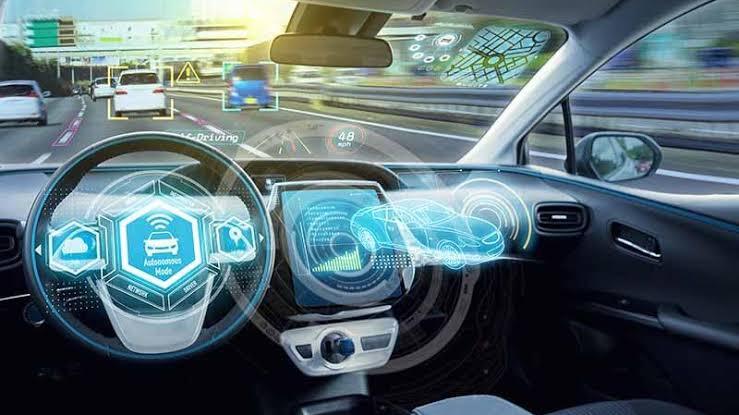
The automotive industry is undergoing a rapid digital transformation as vehicles become increasingly software-driven. Modern vehicles integrate advanced infotainment systems, driver assistance technologies, digital instrument clusters, and connected services that require secure and efficient computing environments. Automotive hypervisors have emerged as a key enabling technology, allowing multiple operating systems to run independently on a single hardware platform while maintaining high levels of safety, reliability, and performance.
As automakers continue to adopt centralized vehicle computing architectures, the demand for advanced virtualization technologies for connected vehicles is gaining attention. These technologies help manufacturers simplify software integration, improve hardware utilization, and support the transition toward software-defined vehicles capable of receiving continuous updates and new digital features throughout their lifecycle.
Unlike traditional electronic control unit (ECU) architectures, hypervisor-based platforms enable different vehicle applications to operate securely on shared hardware without interfering with one another. This capability allows safety-critical functions and consumer-focused applications to coexist while maintaining strict isolation, making automotive hypervisors an important component of next-generation vehicle electronics.
What Is an Automotive Hypervisor?
An automotive hypervisor is a virtualization layer that enables multiple operating systems or virtual machines to run simultaneously on a single processor. Each operating system functions independently while sharing the same hardware resources. This approach improves system efficiency and allows manufacturers to consolidate multiple ECUs into fewer, more powerful computing platforms. As noted in research published by MarkNtel Advisors, automotive virtualization technologies are becoming increasingly important as vehicle software complexity continues to grow.
Supporting the Shift Toward Software-Defined Vehicles
Software-defined vehicles rely heavily on centralized computing systems capable of managing numerous digital functions through software rather than hardware-specific components. Automotive hypervisors provide the foundation for these architectures by enabling multiple applications to share computing resources efficiently while maintaining functional separation.
This flexible architecture allows manufacturers to deploy software updates more easily, introduce new digital services after vehicle delivery, and reduce dependence on large numbers of dedicated hardware modules. As vehicles become more connected and intelligent, virtualization technologies help streamline system management and improve long-term scalability.
Key Benefits of Automotive Hypervisors
- Improved Functional Safety: Safety-critical applications remain isolated from infotainment and other non-critical software.
- Efficient Hardware Utilization: Multiple operating systems operate on shared processors, reducing hardware complexity.
- Lower System Complexity: Consolidating ECUs simplifies vehicle architecture and software integration.
- Enhanced Cybersecurity: Virtual machine isolation helps minimize risks associated with software vulnerabilities.
- Simplified Software Updates: Manufacturers can deploy new features and security improvements more efficiently.
Role in Advanced Driver Assistance Systems
Advanced Driver Assistance Systems (ADAS) process large amounts of real-time sensor data while simultaneously supporting navigation, driver information, and connectivity features. Automotive hypervisors enable these workloads to operate securely on shared computing platforms without compromising system stability.
By separating critical driving functions from entertainment and communication systems, virtualization technology enhances operational reliability while optimizing overall processor performance. This capability is becoming increasingly valuable as vehicles integrate more autonomous and intelligent driving features.
Enhancing In-Vehicle Infotainment
Modern infotainment systems combine navigation, smartphone integration, voice assistants, multimedia services, and cloud connectivity into a single digital experience. Automotive hypervisors allow infotainment software to operate independently from essential vehicle functions while sharing the same hardware infrastructure.
This separation improves system responsiveness, increases reliability, and enables manufacturers to introduce new digital experiences without affecting safety-critical applications.
Reducing Vehicle Development Complexity
Vehicle manufacturers face growing challenges in managing increasingly sophisticated electronic architectures. Hypervisor-based virtualization simplifies development by allowing software teams to test multiple operating systems on common hardware platforms. This approach reduces integration challenges, improves software validation processes, and supports faster development cycles.
Standardized virtualization platforms also improve collaboration across hardware and software suppliers, helping manufacturers develop scalable vehicle platforms capable of supporting multiple vehicle models.
Future Outlook
The evolution of connected mobility, artificial intelligence, cloud connectivity, and centralized vehicle computing continues to increase the importance of virtualization technologies within the automotive ecosystem. Automotive hypervisors are expected to remain an essential foundation for secure, scalable, and software-centric vehicle architectures that can adapt to evolving customer expectations and technological innovation.
As software continues to redefine vehicle functionality, automotive hypervisors will play a critical role in enabling efficient computing, stronger cybersecurity, simplified software management, and improved digital experiences across future vehicle platforms.

 English
 Arabic
 French
 Spanish
 Portuguese
 Turkish
 Dutch
Dutch
 Italiano
 Russian
 Romaian
 Portuguese (Brazil)
 Greek
Greek
