
Digital Lending Market Share 2035: Asia-Pacific Emerging as High-Growth Regional Hub
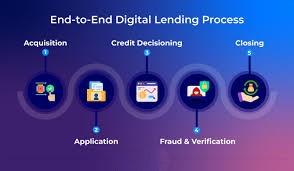
The meteoric ascent of Point-of-Sale (POS) micro-credit solutions, colloquially known as Buy Now Pay Later (BNPL) services, has completely revolutionized global retail merchant ecosystems and fundamentally altered modern consumer purchasing behaviors. By embedding short-term, interest-free credit options directly into the digital checkout funnels of e-commerce websites and physical retail terminals, providers have successfully eliminated the psychological friction typically associated with large capital outlays. Merchants integrating these frictionless financing alternatives experience immediate, substantial increases in average order values, conversion rates, and long-term customer loyalty metrics. This seamless integration of consumption and financing marks a massive departure from traditional credit card models, appealing particularly to younger demographics who harbor a deep-seated aversion to compounding revolving credit card debt and opaque annual fees.
However, this rapid proliferation of embedded micro-credit has attracted intense scrutiny from macroeconomic policy analysts and financial consumer protection bureaus globally. Critics argue that the hyper-frictionless nature of embedded lending can easily induce impulsive consumer over-leveraging, as users can effortlessly accumulate multiple concurrent micro-loans across independent, uncoordinated platforms. This lack of centralized credit reporting creates blind spots for traditional credit bureaus, potentially masking escalating systemic consumer debt bubbles. Industry researchers, corporate strategy executives, and retail enterprise planners looking to capture market share within this hyper-competitive consumer finance segment can review specialized data within the Digital Lending Market segment reports to build sustainable credit portfolios. Striking the optimal equilibrium between maximizing merchant checkout conversions and maintaining prudent underwriting guidelines is paramount for long-term operational sustainability.
Why do e-commerce merchants willingly absorb the transaction fees charged by micro-credit providers? E-commerce merchants absorb these fees because the integration of micro-credit significantly boosts their overall sales volumes, drives higher average transaction sizes, and drastically reduces shopping cart abandonment rates.
What systemic risks arise when micro-credit platforms fail to report transactions to central credit bureaus? When platforms fail to report transactions, it allows consumers to unsustainably borrow money from multiple lenders simultaneously, creating hidden debt over-extension that traditional credit risk models cannot detect until defaults skyrocket.

 English
 Arabic
 French
 Portuguese
 Deutsch
 Turkish
 Dutch
Dutch
 Italiano
 Russian
 Romaian
 Portuguese (Brazil)
 Greek
Greek
