
Strategic Data Interpretation: Transforming Granular Technical Matrices and Edge AI Hardware Market Data into Actionable Insights
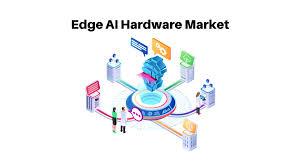
In an era defined by information abundance, the ability to filter through the noise and extract reliable, empirical metrics is a vital skill for technology leaders and market analysts. Utilizing high-fidelity Edge AI Hardware Market Data allows product developers, operational engineers, and financial planners to base their strategic decisions on concrete numbers rather than guesswork or industry hype. This quantitative data includes a wide range of essential metrics, such as chip yield rates, average selling prices, processing performance benchmarks per watt, regional distribution figures, and sector-specific adoption rates. By carefully tracking and analyzing these data points over time, organizations can spot subtle shifts in market demand, identify emerging supply chain bottlenecks, and adjust their procurement and production schedules accordingly.
Furthermore, integrating structured hardware data into predictive corporate models enables companies to run highly accurate scenario analyses and stress-test their long-term product roadmaps. For instance, understanding the precise adoption rates of specific silicon architectures within the automotive or industrial sectors helps sensor manufacturers design compatible interfaces well ahead of time. Ultimately, transforming raw technical and commercial data into clear, actionable business intelligence is what separates market leaders from laggards in the fast-moving, high-stakes semiconductor landscape.
Frequently Asked Questions
-
What performance benchmarks are most important when analyzing edge AI hardware data? Key performance benchmarks include TOPS (Tera-Operations Per Second), latency (measured in milliseconds for model inference), and efficiency metrics like TOPS per Watt, which evaluate computational throughput relative to power consumption.
-
How can a company protect its supply chain against sudden anomalies in global semiconductor manufacturing data? Companies can build resilience by pursuing multi-sourcing strategies for critical components, maintaining strategic safety stock, and choosing flexible hardware designs that can be adapted to chips from different foundries if needed.

 English
 Arabic
 French
 Spanish
 Portuguese
 Turkish
 Dutch
Dutch
 Italiano
 Russian
 Romaian
 Portuguese (Brazil)
 Greek
Greek
