
Why the Agricultural Sensors Market Is Powering the Next Generation of Smart Farming
Market Overview
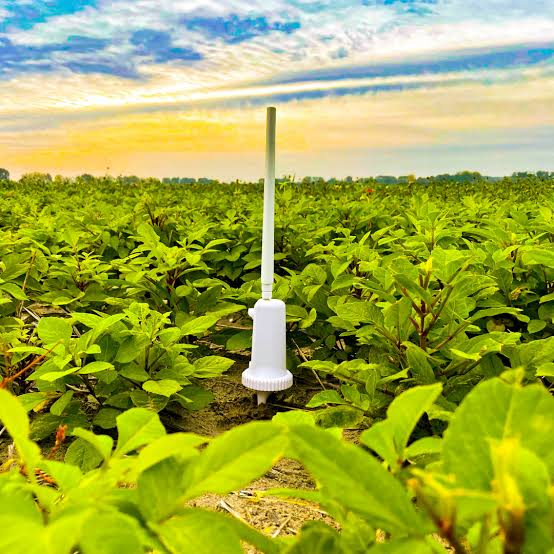
The global Agricultural Sensors Market is experiencing robust growth as farmers increasingly adopt precision agriculture technologies to improve crop productivity, optimize resource utilization, and enhance farm management. Agricultural sensors play a critical role in monitoring soil moisture, temperature, humidity, nutrient levels, weather conditions, crop health, and livestock performance, enabling data-driven decision-making and efficient agricultural operations.
According to Market Genics, the Agricultural Sensors Market is expected to witness strong growth throughout the 2025–2035 forecast period. Rising global food demand, labor shortages, climate variability, and the growing need for sustainable farming practices are accelerating the adoption of sensor-based agricultural solutions.
The integration of Artificial Intelligence (AI), Internet of Things (IoT), cloud computing, GPS, satellite imaging, and precision farming technologies is transforming traditional agriculture into a connected and intelligent ecosystem. As governments and agricultural enterprises continue investing in digital farming infrastructure, agricultural sensors are becoming an essential component of modern smart farming systems.
To obtain a free sample research report - https://marketgenics.co/download-report-sample/agricultural-sensors-market-49351?utm_source=Free&utm_medium=ruchika
Market Growth Drivers
Rising Adoption of Precision Agriculture
Farmers are increasingly utilizing sensor-based technologies to monitor field conditions, improve irrigation efficiency, optimize fertilizer application, and maximize crop yields.
Growing Demand for Smart Farming Technologies
The adoption of AI, IoT, cloud-based farm management systems, drones, and automated agricultural equipment is driving demand for advanced agricultural sensors.
Increasing Focus on Resource Optimization
Agricultural sensors help reduce water consumption, minimize fertilizer waste, improve energy efficiency, and lower production costs by enabling precise farm management.
Climate Change and Weather Monitoring
Changing weather patterns and climate uncertainties are increasing the need for real-time environmental monitoring through soil, weather, and crop sensors.
Government Support for Digital Agriculture
Governments worldwide are promoting precision agriculture, digital farming initiatives, and smart agriculture technologies through funding programs and policy support.
Rising Demand for High-Quality Crop Production
Continuous monitoring of soil health, environmental conditions, and crop growth enables farmers to improve productivity while maintaining quality standards.
Key Players
- Deere & Company
- Trimble Inc.
- Topcon Corporation
- AGCO Corporation
- CropX Technologies
- Davis Instruments
- Stevens Water Monitoring Systems
- Bosch Sensortec
- TE Connectivity
- Sentek Technologies
- AquaSpy
- Campbell Scientific
- Libelium
- Monnit Corporation
- Pessl Instruments
Regional Insights
North America
North America dominates the Agricultural Sensors Market due to widespread adoption of precision agriculture, advanced farming equipment, and strong investments in digital agriculture technologies.
Europe
Europe is witnessing steady market growth driven by sustainability initiatives, precision farming adoption, and increasing investments in digital agriculture.
Asia-Pacific
Asia-Pacific is projected to register the fastest growth due to increasing mechanization, government support for smart farming, rapid digital transformation in agriculture, and rising food demand.
Latin America
The region is experiencing growing adoption of sensor-based farming technologies to improve productivity in large-scale agricultural operations.
Middle East & Africa
Water scarcity and the need for efficient agricultural resource management are driving demand for agricultural sensors across greenhouse farming and precision irrigation applications.
Future Outlook
The Agricultural Sensors Market is expected to witness rapid technological advancements over the coming decade. Artificial Intelligence, machine learning, cloud computing, edge computing, satellite-based monitoring, autonomous farm equipment, and drone technology will further enhance sensor capabilities and farm automation.
Future agricultural sensors will provide real-time predictive analytics, automated decision support, remote monitoring, and integrated farm management solutions. The increasing use of wireless sensor networks, 5G connectivity, AI-powered crop intelligence, and climate monitoring systems will significantly improve agricultural productivity while promoting sustainable farming practices.
With growing investments in AgriTech, precision agriculture, and smart farming infrastructure, the Agricultural Sensors Market is poised to play a crucial role in transforming global agriculture, supporting food security, and improving resource efficiency throughout the 2025–2035 forecast period.
Related Reports
Agricultural Blockchain Market

 English
 Arabic
 French
 Spanish
 Portuguese
 Deutsch
 Turkish
 Italiano
 Russian
 Romaian
 Portuguese (Brazil)
 Greek
Greek
