
Collar Design Guide: How the Right Collar Style Transforms Any Outfit
I still remember the first time a client walked into a fitting room convinced her blazer was "just not working," when the real problem was sitting an inch above the lapel the whole time. We swapped the collar shape, kept everything else identical, and she looked in the mirror and actually laughed. That's the power of collar design, it does more heavy lifting than almost any other detail in a garment, and most people never clock it.
Ten-plus years of sitting across the table from tailors and pattern cutters has taught me one thing above all else: everyone obsesses over fit, fabric, and color, but the collar is the piece that frames the face. Nail it, and a basic shirt suddenly looks bespoke. Miss it, and no amount of good tailoring elsewhere will fully save the outfit.
So let's actually talk about collars properly, the shirt collar design classics, what's happening in collar design for ladies right now, where designer collar work is heading, and how to pick a neck collar design that actually suits you instead of whatever happened to be on the rack.
What Collar Design Actually Means (And Why It's Not a Minor Detail)
At its simplest, collar design is the shape, structure, and construction of the part of a garment wrapping the neckline. Sounds basic. It isn't, collar height, point length, spread, and stiffness all quietly change the whole mood of a piece of clothing.
I like to think of a collar as punctuation. A sharp point collar reads like an exclamation mark. A soft, rounded one is closer to a comma, it slows the whole outfit down, makes it feel less serious.
How Collar Shape Plays With Face and Neck Proportions
Here's the part almost nobody thinks about: your collar is quietly negotiating with your face shape every time you put it on.
A narrow point collar can elongate a rounder face. A wider spread tends to balance out a longer, narrower one. Tailors have leaned on this for decades, it's not some trendy styling hack, it's closer to an old rule of thumb that keeps proving itself right, which is exactly why made-to-measure clothing tends to look more "finished" than anything bought off a rack.
A Few Terms Worth Knowing Before You Order Anything Custom
If you've ever tried explaining what you want to a tailor and ended up just pointing at a photo — this bit's for you.
- Collar stand: the band holding the collar up against your neck
- Collar point: the tip of each collar leaf, short or long
- Collar spread: how far apart the two points sit
- Collar roll: the way the fabric naturally folds or curves once worn
Knowing these five minutes' worth of vocabulary saves you from a lot of back-and-forth later.
The Shirt Collar Styles That Actually Get Worn
Shirt collar design gets researched more than any other category, probably because we wear shirts more often than anything else with a defined collar.
The Point Collar (Still the Safest Bet)
Moderate spread, medium-length points, works with a tie or without one. If you're only building one shirt collar into your wardrobe, this is the one. Not flashy. Just reliably right.
Spread and Cutaway | For When You Want a Bit More Presence
A spread collar opens up wider, leaving room for a fuller tie knot and a more confident, open look at the neck. Push that spread further and you land on the cutaway, dramatic, a little editorial, and honestly best suited to someone already comfortable being looked at.
Button-Down: The Casual Workhorse
Fun bit of trivia, the button-down collar was originally designed to stop polo players' collars flapping around mid-game. It's since become a casual-smart staple, and it's probably the most forgiving option if your everyday dress code sits somewhere between office and off-duty.
So Which Shirt Collar Actually Suits a Round Face?
A point collar, or a moderately extended spread, adds vertical lines that visually stretch out a rounder face. What you want to avoid is going too wide, an oversized spread collar widens the face further instead of balancing it, which is the opposite of what you're after.
Collar Design for Ladies: What's Timeless, What's Trending
Collar design for ladies has genuinely opened up in the last ten years. What used to mean "shirt collar, but on a blouse" now covers everything from soft Peter Pan collars to sharp, sculptural, almost architectural shapes on coats and dresses.
The Peter Pan Collar Just Won't Quit
Rounded, flat, unmistakably soft, the Peter Pan collar has been cycling in and out of fashion since the early 1900s and shows zero signs of retiring. It works on blouses, dresses, even structured jackets when a designer wants to take the edge off something otherwise quite formal.
Ruffle and Statement Collars
These are pure personality, nothing more, nothing less. A well-placed ruffle can turn a plain black dress into an evening piece without touching a single accessory. This is genuinely where custom tailoring shines brightest, a made-to-order ruffle can be scaled up dramatically or kept subtle, depending on how loud you want the finished look to feel.
Mandarin Collars, Borrowed and Reworked
Pulled from menswear and reworked for womenswear, the mandarin collar gives a clean, structured neckline with no fold at all. It's quietly become the go-to for minimalist, modern professional wardrobes over the last few seasons.
What Collar Suits a Petite Frame Best?
Smaller, closer-fitting collars, think narrow Peter Pan or mandarin styles, generally suit petite frames better than big statement collars, which can swallow a smaller frame whole. Proportion really is everything here, and it's one of the clearest reasons custom-made clothing outperforms standard sizing.
Where Designer Collar Work Is Headed
High fashion has never once treated the collar as an afterthought. Some of the most memorable runway moments in recent memory used the collar as the entire point of the garment, not a finishing touch.
Sculptural, Almost Architectural Collars
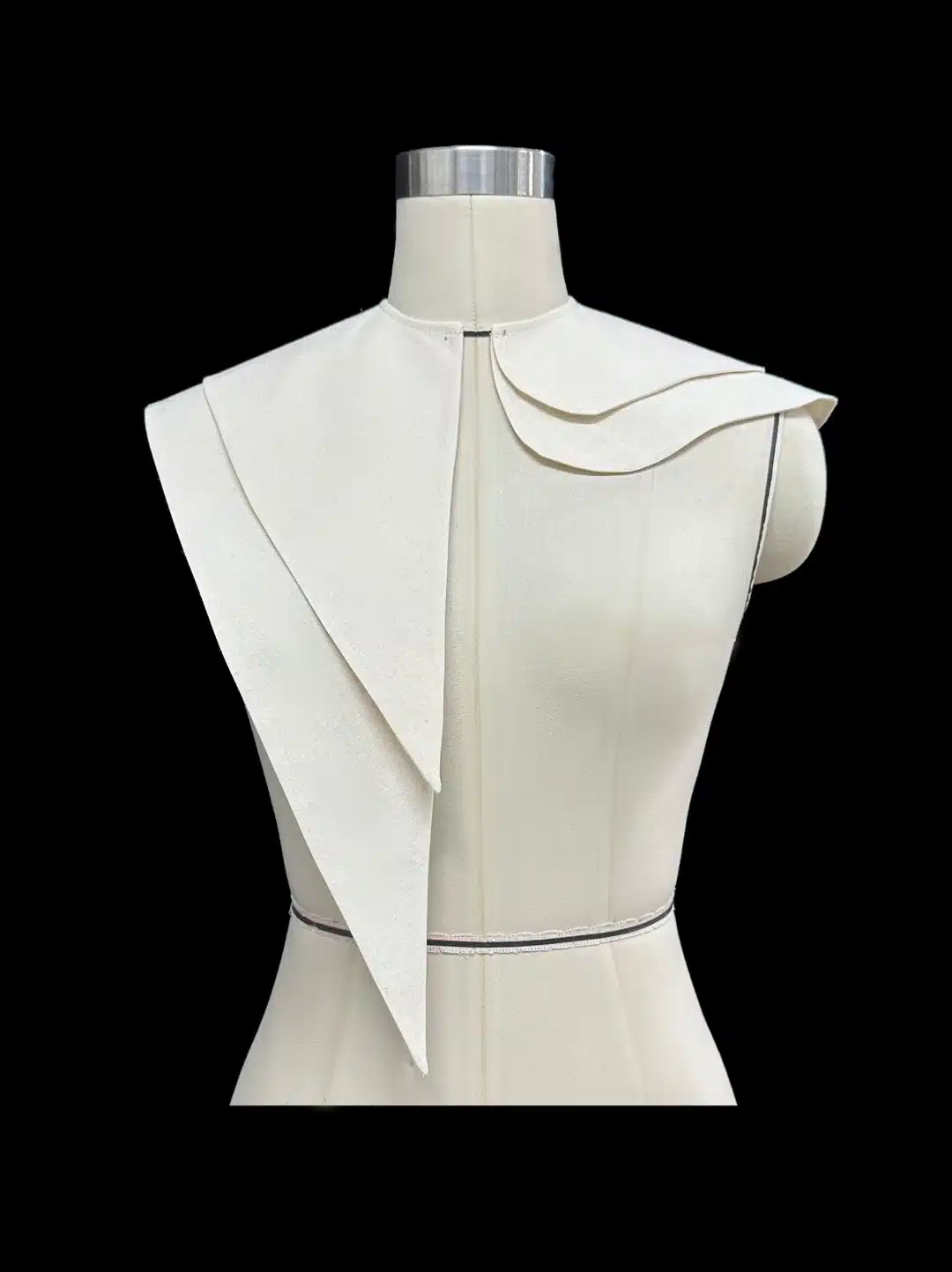
More designers are treating collars as wearable sculpture now, exaggerated shapes, unexpected materials, asymmetric cuts that abandon the traditional round-the-neck structure entirely. It's not for everyone. It's not meant to be.
Detachable Collars Are Back (Quietly)
The detachable collar trend has crept back in, and honestly, it makes a lot of practical sense, one base garment, several collar options, endless outfit combinations without buying a whole new wardrobe. A handful of custom clothing brands have started offering this, and I think it's one of the smarter ideas to resurface in years.
What's the Real Difference Between Designer and Everyday Collars?
It comes down to intent, mostly. Everyday collar styles are built around comfort and function first. Designer collar work often puts silhouette and visual impact first, with wearability as a secondary concern. Neither approach is wrong, they're just solving different problems, which is exactly why custom collar design exists as a middle ground between the two.
Neck Collar Design: The Part You Actually Feel All Day
Neck collar design isn't just about how a collar photographs. It's about how the fabric behaves against your skin for eight, ten, twelve hours, through movement, through weather, through an entire workday.
Fused vs. Unfused Construction
| Construction | How It Feels | Where It Works Best |
|---|---|---|
| Fused collar | Crisp, holds its shape | Formal shirts, office wear |
| Unfused collar | Softer, natural roll | Casual shirts, relaxed fits |
Most mass-produced shirts go with fused interlining, mainly because it's cheaper and faster to produce at scale. Custom tailors tend to favor unfused or lightly fused construction instead, it drapes more naturally and holds up longer without that cracked, bubbly look you sometimes see after a shirt's been washed a few dozen times.
Fabric Really Does Change the Collar's Personality
Cotton poplin holds a crisp shape beautifully. Linen softens fast and wrinkles by design, that's part of its charm, honestly. Silk and satin need extra internal support just to hold any structure at all. If a "budget" version of a collar style has ever looked slightly off to you without being able to say why, fabric weight is usually the quiet culprit.
Why Does My Collar Keep Curling After a Few Washes?
Nine times out of ten, it's the interlining. Cheap fusible interlining starts separating from the outer fabric after repeated washing, and that's what causes the bubbling and curling you see. It's a common complaint with fast-fashion shirts specifically, and it's one of the easiest problems custom-made construction solves, permanently.
Fashion Collar Trends Worth Actually Watching
Fashion collar trends move quickly, sure, but a few threads have held steady across recent seasons.
Oversized collars, sometimes layered right over a sweater or coat, have become a favorite for stylists trying to modernize an otherwise plain outfit. Contrast collars, where the collar fabric or color deliberately clashes with the main garment, are an easy, low-risk way to add personality without redesigning the whole piece. It's also one of the most requested customizations I see from clients wanting something that's unmistakably theirs.
And then, at the complete opposite end, collarless and crew-adjacent designs have grown in popularity too, proof, if you needed it, that collar trends really do move in circles rather than straight lines.
Choosing the Right Collar for Your Own Wardrobe
By now the honest answer should be pretty clear: there's no single "best" collar. There's only the best collar for your face shape, your proportions, your personal style, and whatever occasion you're actually dressing for.
That's exactly why off-the-rack sizing so often falls just short. A standard spread collar cut for an "average" neck won't sit the same way on every neck, and that small gap between fits-okay and fits-perfectly is precisely where custom-made clothing earns its reputation.
If you're done settling for the closest available option and want a collar, shirt, blouse, or jacket, built around your actual measurements and taste, working with a custom clothing service is still the most reliable way to get there, every time.
Frequently Asked Questions
What's the most versatile shirt collar design? The classic point collar, hands down. It works with or without a tie and suits nearly every face shape and occasion without trying too hard.
Which collar design works best for formal events? A structured spread collar or a cutaway usually looks best for formal settings, especially paired with a tailored jacket.
What collar style is trending in women's fashion right now? Statement and oversized collars are having a moment, alongside a quieter trend toward minimalist mandarin-style collars.
Can a collar shape actually change how your face looks? Yes, genuinely. Collar shape and spread interact with face shape and neck length, which is why the same shirt can look completely different on two people.
Is a custom collar worth the extra cost over off-the-rack? For most people, yes. A custom collar is cut to your exact neck size and shoulder slope, which solves the usual fit issues, gapping, curling, or a collar stand that's just a bit too tight.
What fabric holds a collar's shape best? Medium-weight cotton, poplin or twill especially, holds a crisp collar shape better than lighter fabrics like silk or very soft cotton blends.
How do I figure out what collar style actually suits my body type? Match the collar size to your frame as a starting point, smaller collars for petite frames, wider or statement collars for larger frames, and if you're custom-ordering, just ask your tailor. That's what they're there for.

 English
 Arabic
 French
 Spanish
 Portuguese
 Turkish
 Dutch
Dutch
 Italiano
 Russian
 Romaian
 Portuguese (Brazil)
 Greek
Greek
