
Hanger Conveyor for Automated Storage, Retrieval, and Sortation
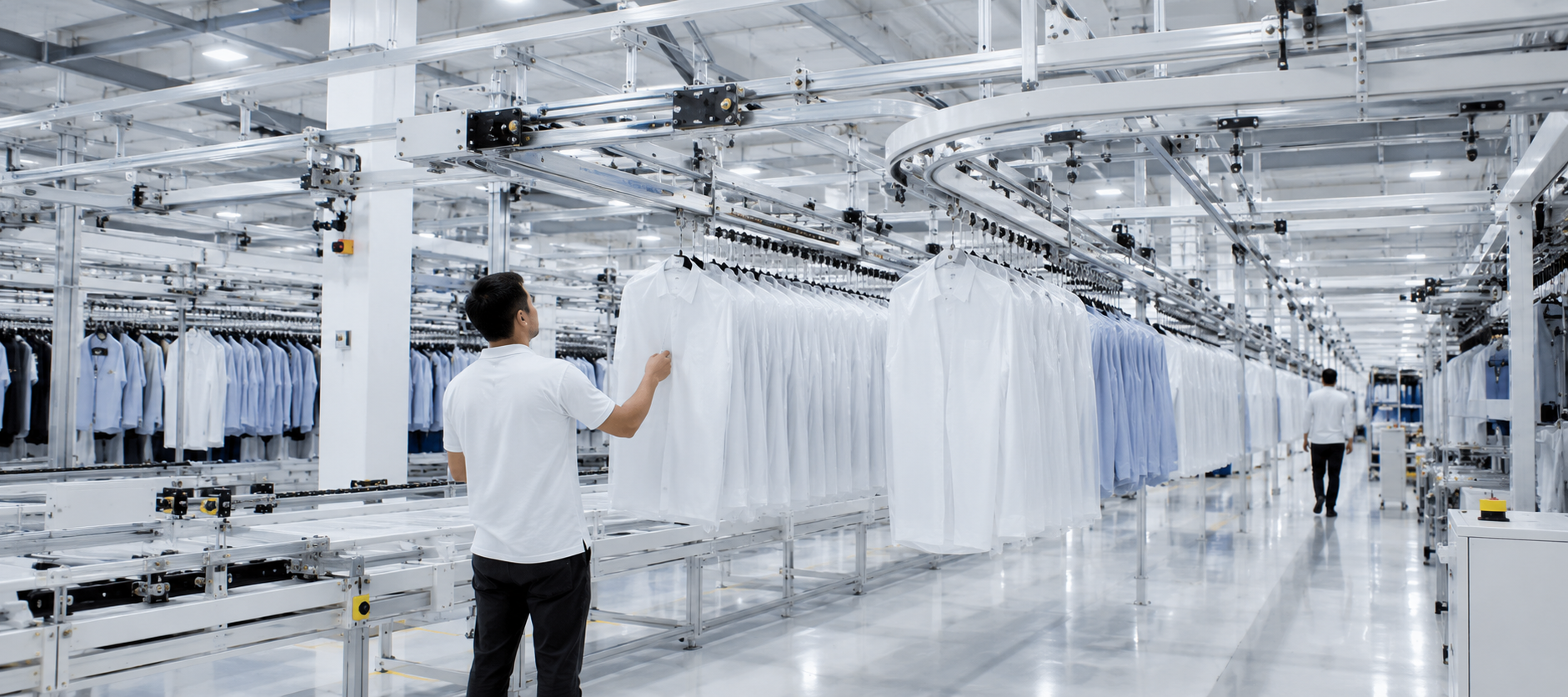
Modern textile manufacturing and garment production require high levels of efficiency to meet global market demands. As warehouses handle massive volumes of fabric rolls, raw garments, and finished apparel, traditional floor based storage methods often lead to bottlenecks, labor inefficiencies, and material damage. Utilizing vertical space through specialized overhead material handling technologies has become a critical strategic move for manufacturing facilities seeking to maximize floor plans and streamline fulfillment workflows.
The evolution of smart warehousing has transformed how factories manage fabric rolls and hung garments. By moving inventory off the ground and utilizing the structural ceiling space, production managers can increase storage capacity dramatically without expanding the facility physical footprint. Automated material transport systems minimize manual labor, eliminate the risk of forklift accidents, and significantly reduce operational lead times from production lines to shipping docks.
Implementing a highly advanced chain iot hanger system allows textile facilities to track, sort, and move hung garments or fabric components seamlessly across different production stages. This Internet of Things integrated technology connects physical conveyor components with smart digital tracking systems, ensuring that every piece of inventory is accounted for in real time. Incorporating these network connected overhead solutions bridges the gap between mechanical hardware and digital inventory management, delivering unparalleled transparency across the modern garment assembly line.
Streamlining Inventory Management with Smart Over Head Tracking
Traditional manual tracking often introduces human errors, mixed up batch orders, and significant delays during inventory auditing. Integrating IoT capabilities into garment storage structures enables manufacturing hubs to monitor stock levels continuously. RFID sensors, barcodes, and automated scanners attached along the overhead tracking framework communicate with warehouse management software to log every single movement instantly.
This automated real time visibility prevents inventory misplacement and guarantees that the right products move to the designated processing zones without manual intervention. Workers no longer need to spend hours searching through massive clothing racks, as the automated retrieval mechanism locates the exact batch requested and brings it forward instantly. The continuous flow of real time data ensures predictive maintenance cycles can be scheduled efficiently, minimizing unexpected production downtime.
Maximizing Vertical Cube Space in Garment Logistics
Industrial real estate costs continue to rise, making it highly impractical for textile hubs to expand outward horizontally. Maximizing the vertical cube space of an existing warehouse is the most financially viable alternative for increasing storage capabilities. Overhead hanging setups allow heavy industrial materials and apparel pieces to be stored closely together in multi tiered overhead configurations while maintaining easy structural accessibility.
By shifting thousands of apparel items to overhead tiers, floor space is freed up for core activities such as high speed fabric cutting, automated stitching, and final quality control checks. This optimizes warehouse ergonomics and allows for cleaner, safer walkways for the factory floor personnel. Better utilization of vertical space also enhances ventilation throughout the facility, protecting delicate textile materials from moisture accumulation and dust buildup.
Accelerating Order Fulfillment and Batch Sorting Speed
Speed is a vital metric in the apparel supply chain, particularly with the rapid rise of fast fashion and rapid ecommerce distribution. Overhead conveyor configurations drastically accelerate the order fulfillment process by using automated switches to sort garments by size, color, design, or destination. As products move along the automated rail loops, smart sorters segregate the items into dedicated packing stations.
This eliminates the time consuming process of manual sorting, packing, and staging before final transport. Rapid batch processing reduces order cycle times from days to hours, giving textile producers a distinct competitive advantage in demanding international markets. Faster turnaround times translate into lower overall holding costs and higher customer satisfaction levels for global retail brands.
Performance Comparison Traditional vs. Smart Overhead Storage
| Feature | Traditional Floor Based Storage | Automated Overhead IoT Systems |
| Space Utilization | High floor footprint, wasted vertical space | Minimal floor footprint, maximized ceiling space |
| Inventory Tracking | Manual logs, barcode scanning by hand | Automated real time RFID and IoT sensor tracking |
| Material Condition | High risk of creasing, crushing, or fabric stains | Suspended hanger storage preserves garment quality |
| Fulfillment Speed | Slow manual retrieval and physical sorting | Rapid automated sorting and conveyor transport |
| Workplace Safety | High forklift traffic and crowded walkways | Zero overhead clutter, safer pedestrian pathways |
Enhancing Workplace Safety and Minimizing Material Damage
Manual handling of bulky apparel boxes or moving heavy carts across crowded factory floors poses significant safety risks to warehouse employees. Forklift traffic in congested aisles frequently causes workplace injuries and structural warehouse damage. Overhead transit networks eliminate these hazards by shifting heavy material transport routines completely out of the foot traffic pathways.
Future Proofing Textile Facilities with Scalable Automation
As a textile business expands, its storage and material handling infrastructure must adapt to rising production demands. Scalable modular overhead track designs allow management teams to extend, reconfigure, or reroute conveyor paths without shutting down ongoing plant operations. This modular flexibility ensures that the warehouse layout remains aligned with changing market needs over time.
Frequently Asked Questions
What is an overhead material handling setup in textile manufacturing?
An overhead material handling setup is an industrial conveyor system that utilizes warehouse ceiling space to transport and store fabric rolls, components, or hung garments. This system clears floor space, improves logistics speed, and minimizes manual material handling.
How does IoT integration benefit garment warehousing operations?
Integrating IoT sensors into apparel storage networks allows for real-time tracking, automated sorting, and precise inventory visibility. It connects mechanical conveyor hardware with warehouse management software to eliminate human errors and accelerate fulfillment.
Can vertical storage systems help prevent textile product damage?
Yes, vertical hanging storage prevents garments from getting crushed, creased, or stained, which frequently happens during traditional flat stacking methods. Keeping apparel suspended ensures it stays in retail-ready condition.
Is it possible to expand modular conveyor layouts after installation?
Modern overhead conveyor tracks are designed using a modular framework. This allows factory managers to extend, alter, or reroute the transport loops easily as production volumes grow or warehouse layouts change over time.
What safety improvements do automated ceiling tracks offer?
By moving large quantities of garments or heavy textile items via ceiling tracks, warehouses reduce the need for manual carts and heavy forklift usage on the main floor. This significantly minimizes the risk of workplace collisions and injuries.
Conclusion
Embracing automated overhead storage architectures has transitioned from a luxurious upgrade to an operational necessity for modern textile enterprises. By shifting inventory upwards and utilizing smart tracking technologies, manufacturers can maximize storage density, elevate safety standards, and significantly accelerate batch sorting workflows.
These comprehensive logistics solutions eliminate operational bottlenecks, lower labor dependency, and protect textile goods from physical damage during movement. Investing in scalable, network connected ceiling conveyors equips apparel producers with the agility required to thrive in a fast paced global economy. Ultimately, upgrading to advanced industrial automation paths ensures sustainable productivity, lowers long term operational expenditures, and drives superior supply chain efficiency.

 English
 Arabic
 French
 Spanish
 Portuguese
 Turkish
 Dutch
Dutch
 Italiano
 Russian
 Romaian
 Portuguese (Brazil)
 Greek
Greek
