
Why DC Fast Charging Is Reshaping Electric Mobility
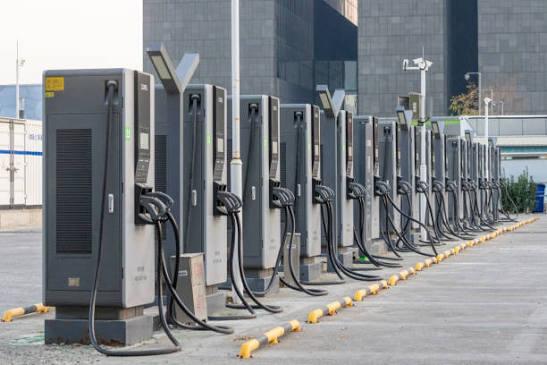
Electric mobility is entering a stage where vehicle performance alone no longer defines the user experience. Charging speed, station availability, network reliability, and ease of access increasingly influence how drivers and fleet operators assess electric vehicles. DC fast charging is central to this transition because it reduces extended charging stops and supports mobility patterns that are difficult to serve through slower residential or workplace charging.
Infrastructure developers are therefore focusing more closely on high-power systems that can serve highways, urban charging hubs, commercial fleets, and other high-utilization locations. Analysis of the high-power EV charging ecosystem also reflects the growing strategic role of faster charging in the wider electrification landscape. The technology is becoming an important link between expanding EV adoption and practical charging accessibility.
Unlike AC charging, DC fast chargers supply direct current to the vehicle battery through an off-board power conversion system. This architecture allows higher charging power and can shorten the time vehicles remain connected to a station. As battery capacities increase and electric vehicles expand into commercial applications, charging infrastructure must increasingly balance speed with battery communication, thermal management, grid capacity, and operational reliability.
Faster Charging Is Becoming a Mobility Requirement
Charging expectations are changing as electric vehicles move beyond early adoption. Drivers travelling longer distances generally need charging experiences that fit naturally into established travel routines. The International Energy Agency reported that continued ultra-fast charger deployment increased the average speed of charging points worldwide from just over 40 kW in 2024 to nearly 50 kW in 2025. IEA charging analysis highlights how higher-power infrastructure is becoming more prominent as public charging networks develop.
DC fast charging is particularly relevant for motorway corridors, intercity routes, taxi operations, ride-hailing vehicles, and commercial fleets. These applications often involve high daily mileage and limited tolerance for long charging periods. Faster energy replenishment can improve vehicle availability, although actual charging performance still depends on battery condition, vehicle architecture, charger output, ambient conditions, and the charging curve supported by the vehicle.
Investment Is Shifting Toward High-Power Networks
According to the study published by MarkNtel Advisors, the Electric Vehicle DC Fast Chargers Market is projected to expand from USD 14.2 billion in 2026 to USD 75.49 billion by 2032, registering an estimated CAGR of 32.11% during 2026–2032. The report identifies commercial end users as a leading segment, indicating the importance of public and business-oriented charging applications within infrastructure deployment strategies.
High-power charging networks require more than the installation of individual charging units. Developers must evaluate grid connections, transformers, site design, power distribution, cooling equipment, software platforms, payment systems, and maintenance arrangements. A charging location with several high-output connectors can create substantial electricity demand, making coordination between charging operators, utilities, property owners, and technology suppliers increasingly important.
Ultra-Fast Technology Is Advancing Charger Design
Higher charging power is influencing the engineering of cables, connectors, power electronics, and thermal systems. Extreme fast charging can deliver power levels of up to and potentially beyond 350 kW, according to the U.S. National Institute of Standards and Technology's National Cybersecurity Center of Excellence. NIST's extreme fast charging overview also emphasizes that connected charging infrastructure introduces cybersecurity considerations alongside technical performance requirements.
Liquid-cooled cables and improved thermal management are becoming relevant because higher current levels generate additional heat. Charger manufacturers are also developing modular power architectures that can distribute available capacity across several connectors. Such designs can help charging operators adapt output to real-time vehicle demand rather than assigning the same fixed power level to every charging point.
Reliability Matters as Much as Charging Speed
A charger advertised with high peak power provides limited value if drivers experience failed sessions, payment problems, damaged connectors, or network communication errors. As DC fast charging becomes part of everyday transport infrastructure, operators are under greater pressure to improve uptime and simplify the charging process. Remote diagnostics, predictive maintenance, automated fault detection, and software-based monitoring can help identify technical issues before prolonged service disruption occurs.
Interoperability is another important consideration. Drivers increasingly expect vehicles, charging hardware, network platforms, and payment systems to communicate with minimal friction. Common technical standards and secure communication protocols can support a more consistent experience across charging networks. At the same time, connected chargers require stronger cybersecurity practices because charging stations exchange operational, authentication, payment, and vehicle-related information.
Grid Integration Will Shape Future DC Charging
The expansion of high-power charging can create concentrated electricity demand, particularly when several vehicles charge simultaneously. Smart energy management is therefore becoming integral to large charging sites. Dynamic load management can allocate available power among chargers, while battery energy storage and renewable generation may help site operators manage peak demand and improve the use of local electricity resources.
Commercial vehicle electrification adds another layer of complexity. Electric buses, delivery fleets, and heavy-duty trucks can require large amounts of energy within tightly controlled operating schedules. Depot charging strategies may combine overnight charging with rapid opportunity charging, while highway freight applications are encouraging development of even higher-power charging systems. These requirements are gradually expanding DC charging from a passenger vehicle solution into broader transport infrastructure.
DC Fast Chargers Are Becoming Core EV Infrastructure
The next phase of electric mobility will depend on charging systems that are fast, accessible, reliable, and capable of interacting intelligently with electricity networks. DC fast charging addresses an important limitation of electric transport by reducing the operational impact of battery replenishment, particularly for long-distance travel and high-utilization vehicles.
Continued progress in power electronics, thermal management, charging software, cybersecurity, and grid integration is likely to influence how fast-charging networks are designed. Rather than focusing only on maximum charging output, infrastructure planning is increasingly considering the complete charging experience. This broader approach positions DC fast chargers as a critical component of an electric transport system built around practical vehicle use and dependable energy access.

 English
 Arabic
 French
 Spanish
 Portuguese
 Turkish
 Dutch
Dutch
 Italiano
 Russian
 Romaian
 Portuguese (Brazil)
 Greek
Greek
