
Cable Assembly Industry Competitive Landscape and Future Growth Prospects
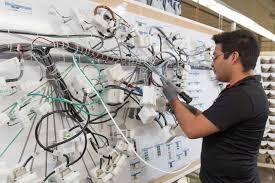
The structural foundation of modern digital infrastructure relies heavily on the steady evolution of custom electrical and optical wire harnesses running behind heavy machinery, massive server farms, and transportation vehicles. Every single technological leap in cloud computing, micro-miniaturization of medical devices, and high-frequency military radar arrays directly translates to an immediate requirement for upgraded physical connection points. As a result, cross-functional engineering teams and corporate strategists are paying incredibly close attention to long-term projections, ensuring that their supply chains can handle the structural shifts ahead. Exploring a trusted Cable Assembly Market forecast has become an essential practice for industrial procurement executives seeking to hedge against component obsolescence and sudden material shortages. The steady integration of localized micro-grids, massive investments in utility-scale solar and wind farms, and the universal push toward highly efficient smart public transit networks further solidify this widespread industrial dependence. Consequently, manufacturers are expanding their factory footprints globally to place assembly lines closer to end-user manufacturing hubs, ensuring rapid turnarounds for custom configurations.
Looking closely at regional manufacturing ecosystems reveals a profound transformation in production methodologies, shifting rapidly from labor-intensive manual tapping to sophisticated robotic visual-guided assembly lines. This change is vital to eliminate human error in intricate terminal crimping, ensuring that multi-pin connector housings achieve perfect hermetic sealing and structural integrity before deployment in volatile field conditions. At the same time, the aerospace and defense sectors are demanding extreme weight-reduction strategies, pushing the development of ultra-lightweight silver-plated copper alloys and specialized thin-walled fluoropolymer insulations that save weight without compromising dielectric strength. Meanwhile, the consumer electronics market continues to squeeze component dimensions, forcing the mass engineering of micro-coaxial setups and flexible printed circuit connections that fit into ultra-thin form factors. By embracing highly agile manufacturing practices and investing heavily in advanced automated testing rigs, industry leaders can successfully navigate volatile global economic conditions, protect their operating margins, and deliver high-performance solutions for demanding applications.
Frequently Asked Questions
Why is automated robotic assembly becoming crucial for the production of multi-pin wire harnesses? Automated robotic assembly ensures absolute precision in complex crimping, soldering, and terminal insertion tasks, virtually eliminating human error, maximizing mechanical hold strength, and guaranteeing uniform structural integrity across large production volumes.
What specific methods are aerospace manufacturers using to reduce the overall weight of onboard wiring systems? Aerospace designers are utilizing highly advanced silver-plated copper-clad steel alloys, miniature connector profiles, and thin-walled high-performance fluoropolymer insulations to dramatically shed weight while maintaining top-tier electrical conductivity and thermal resistance.
➤➤➤Explore MRFR’s Related Ongoing Coverage In Semiconductor Industry:
Japan Semiconductor Device Market

 English
 Arabic
 French
 Spanish
 Deutsch
 Turkish
 Dutch
Dutch
 Italiano
 Russian
 Romaian
 Portuguese (Brazil)
 Greek
Greek
