
Autonomous Navigation Systems Reshaping Rescue Robot Capabilities
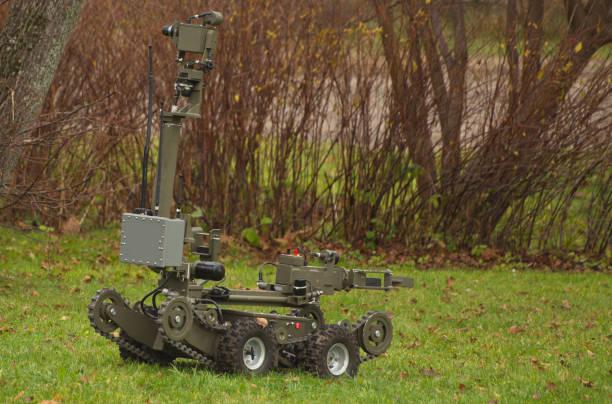
Autonomous mobility is becoming a defining feature in the evolution of the Search and Rescue Robots Market. In high-risk emergency environments such as collapsed buildings, wildfire zones, chemical spill sites, and flood-affected regions, reliable navigation without continuous human control is essential. Rescue robots must operate in unpredictable terrain where GPS signals may be unavailable and visibility is severely compromised.
Rapid advancements in Autonomous robotic navigation systems are enabling next-generation rescue robots to move intelligently through complex environments. These systems combine LiDAR mapping, inertial measurement units (IMUs), ultrasonic sensors, stereo vision cameras, and simultaneous localization and mapping (SLAM) algorithms. Together, these technologies allow robots to construct real-time 3D maps, detect obstacles, and determine optimal movement paths independently.
Autonomous navigation significantly enhances operational speed. Instead of relying entirely on remote operators, robots can assess terrain hazards, adjust movement trajectories, and reposition themselves dynamically. This reduces latency in decision-making during time-sensitive rescue missions where every second matters. AI-driven path planning also enables energy-efficient navigation, maximizing battery life during prolonged deployments.
In hazardous environments involving smoke, debris, or unstable surfaces, autonomy ensures continuity of operation even if communication links are temporarily disrupted. Redundant sensor systems further improve resilience and reliability. Some advanced rescue robots are equipped with terrain-adaptive locomotion mechanisms, including tracked wheels, articulated legs, and amphibious capabilities.
Autonomous functionality also facilitates multi-robot collaboration. Swarm robotics principles allow multiple units to coordinate search patterns and share mapping data, increasing coverage area and operational efficiency. As computational power becomes more compact and affordable, embedded AI processors are being integrated directly into rescue robots.
The shift toward intelligent mobility systems represents a structural transformation within the Search and Rescue Robots Market. As emergency management agencies prioritize faster response times and improved mission accuracy, autonomous navigation technologies will continue driving innovation and global adoption.
FAQs
Q1: Why is autonomous navigation critical in rescue robots?
It enables independent movement in hazardous, GPS-denied environments, improving speed and operational reliability.
Q2: What technologies support autonomous movement?
LiDAR, SLAM algorithms, stereo vision cameras, and inertial sensors enable precise navigation.

 English
 Arabic
 French
 Spanish
 Portuguese
 Deutsch
 Turkish
 Dutch
Dutch
 Russian
 Romaian
 Portuguese (Brazil)
 Greek
Greek