
US Automotive High Performance Electric Vehicle Market Outlook: Luxury Electric Mobility, High-Speed Performance, and Technological Advancements
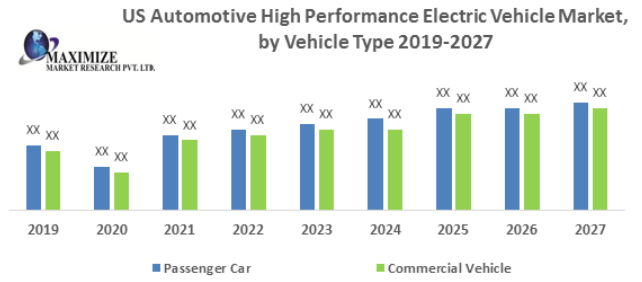
US Automotive High-Performance Electric Vehicle Market Size Exceeds Baseline Projections, Set to Scale Rapidly as Advanced Powertrain Technologies Transform Luxury and Sport Segments
The premium and performance-tier automotive sectors in the United States are undergoing an unprecedented structural revolution. The US Automotive High-Performance Electric Vehicle (EHPV) Market has crossed major financial thresholds and is positioned to maintain a strong double-digit Compound Annual Growth Rate (CAGR) exceeding 15% through the current forecast matrix.
This comprehensive strategic research indicates that the fusion of high-output electric motor architectures, high-voltage battery technologies, and next-generation wide-bandgap (SiC) semiconductors is rapidly moving high-performance electric vehicles from a niche enthusiast category into a major segment driving long-term corporate profitability for global original equipment manufacturers (OEMs). Driven by strong domestic demand, strict emission regulations, and a growing consumer passion for extreme performance metrics paired with zero tailpipe emissions, the US marketplace has emerged as the definitive global engine for premium EV innovation.
𝐃𝐨𝐰𝐧𝐥𝐨𝐚𝐝 𝐅𝐫𝐞𝐞 𝐏𝐃𝐅 𝐁𝐫𝐨𝐜𝐡𝐮𝐫𝐞 @https://www.maximizemarketresearch.com/request-sample/63796/
Market Overview: The Redefinition of Power and Dynamics in the Post-ICE Era
For more than a century, the high-performance automotive segment in the United States was defined by the engineering metrics of internal combustion engines (ICE)—specifically displacement, cylinder count, and exhaust acoustics. Today, the industry is witnessing a total transformation. High-performance electric vehicles (EHPVs) have fundamentally broken the traditional relationship between mechanical complexity and vehicle acceleration. By leveraging the physical advantages of electric powertrains, which deliver maximum torque instantly from zero RPM, modern high-performance EVs consistently achieve 0–60 mph acceleration times in under 3 seconds, a level of performance previously reserved exclusively for multimillion-dollar hypercars.
This evolution covers various premium product layouts, including high-output Battery Electric Vehicles (BEVs), high-performance Plug-in Hybrid Electric Vehicles (PHEVs), long-range electric SUVs, and high-end track-focused roadsters. These platforms are equipped with integrated, high-capacity lithium-ion or evolving solid-state battery configurations, structural pack designs that lower the vehicle's center of gravity, and intelligent multi-motor electronic drivetrains that optimize traction across all four wheels simultaneously.
Strategic Market Dynamics: Identifying Crucial Growth Drivers and Catalysts
1. Advanced Battery Architectures and the Mitigation of Range Anxiety
The primary driver of sustainable growth within the high-performance EV market is continuous innovation in high-voltage energy storage systems. Historical constraints regarding limited operational range have been systematically dismantled. Modern premium electric platforms regularly achieve single-charge driving ranges exceeding 250 to 300 miles, with flagship performance models targeting limits beyond 500 miles. These breakthroughs are supported by advancements in cell-to-pack (CTP) structural engineering, enhanced thermal management systems that prevent thermal throttling during continuous performance loops, and optimized chemical composition variants that provide greater power density per kilogram.
2. Massive Enterprise Investments in Production Infrastructure and Powertrains
Major automotive legacy OEMs and specialized EV pioneers are committing billions of dollars to restructure domestic manufacturing networks in the United States. For example, prominent industry leaders like General Motors have directed investments upwards of USD 760 million into dedicated propulsion plants to scale up the production of localized EV powertrains, including specialized front-, rear-, and all-wheel-drive performance variants. Similarly, premium European brands continue to expand their high-performance hybrid and electric product lines, embedding high-output electric motors directly into advanced multi-speed performance transmissions to deliver optimized top-speed tracking capabilities.
3. Comprehensive Federal Initiatives and Charging Standardization
The widespread adoption of the North American Charging Standard (NACS) has significantly reduced charging fragmentation across the United States. Key automotive players—including Ford, GM, Rivian, Hyundai, and Mercedes-Benz—have systematically integrated NACS hardware into production models, giving drivers immediate access to expansive, highly reliable fast-charging networks. Furthermore, federal support channels, including the multi-billion-dollar National Electric Vehicle Infrastructure (NEVI) formula program, are accelerating the rollout of high-capacity DC fast chargers along major alternative fuel corridors. This infrastructure expansion directly supports the practical, daily utilization of high-performance electric vehicles.
Technical Segment Insights: Performance Tiers, Body Layouts, and Powertrain Dynamics
High-Output SUVs Capture Dominant Market Volumes
By looking closely at body styles, the high-performance SUV segment currently holds the dominant volume share within the US luxury electric space. These large-format vehicles meet a growing consumer demand that values everyday utility and family transport capacity alongside high performance. Advanced structural designs allow manufacturers to mount heavy battery packs flat under the vehicle floor, creating an optimal weight distribution that minimizes body roll and dramatically improves handling compared to traditional ICE SUVs.
Specialized Track Testing and Multi-Motor Digital Control Tech
At the absolute peak of the performance spectrum, manufacturers are utilizing limited-run hypercars and concept vehicles as advanced development platforms to evaluate next-generation electronics. Technologies like four-wheel independent motor control use dedicated microcontrollers to manage torque delivery to each individual wheel in real time. This digital handling architecture provides exceptional stability, cornering control, and active traction adjustment, far surpassing the capabilities of any traditional mechanical differential lock or hydraulic traction framework.
Geo-Economic Analysis: The Shift Toward Localized US Component Supply Chains
The geo-economic landscape of the US high-performance EV market is being reshaped by domestic supply chain policies. Historically, the United States maintained high import volumes for finished luxury vehicles and advanced electronic components from specialized manufacturing hubs in Europe and Asia. However, strict assembly and domestic battery sourcing criteria set by federal initiatives, including the Inflation Reduction Act (IRA), have accelerated the localization of manufacturing.
Automakers are building specialized vehicle assembly and battery cell production plants directly within domestic industrial corridors. This localized manufacturing strategy helps mitigate global supply chain risks, shields carmakers from volatile international shipping and tariff structures, and creates regional tech hubs capable of rapidly producing high-performance components tailored specifically for the unique demands of American drivers.
Strategic Guidance for Industry Executive Decision-Makers
To successfully navigate the high-performance electric vehicle market through 2030, corporate leaders and investors should target three distinct operational areas:
-
Invest Closely in Next-Generation Silicon Carbide (SiC) Power Inverters: High-performance acceleration demands rapid, high-volume energy transfers from the battery pack to the drive motors. Implementing advanced SiC semiconductors reduces thermal losses, optimizes energy efficiency, and enables vehicles to handle prolonged performance tracking without degradation.
-
Prioritize Subscription-Based Over-The-Air (OTA) Performance Packages: High-performance EVs function essentially as mobile software platforms. Product planners should design vehicles with scalable performance limits, allowing buyers to unlock additional horsepower, specialized track telemetry, or advanced dampening control configurations via post-purchase software subscriptions.
-
Establish Specialized Direct Fast-Charging Partnerships: Premium vehicle buyers expect an uncompromised, high-end ownership experience. Automakers should secure exclusive charging agreements or build dedicated premium lounge charging locations to ensure customers can charge their high-voltage vehicles quickly, safely, and comfortably.
Competitive Intelligence: Deep Profile of Global and Domestic Market Innovators
The US high-performance electric vehicle sector is characterized by an intense competitive dynamic between established domestic EV market leaders, traditional American automotive heavyweights, and premium European imports expanding their localized footprints.
US Automotive High Performance Electric Vehicle Market, By Drive Type
• Plug-in Hybrid
• Pure Electric
US Automotive High Performance Electric Vehicle Market, By Vehicle Type
• Passenger Car
• Commercial Vehicle
US Automotive High Performance Electric Vehicle Market Key Players
• BMW
• Daimler
• General Motors
• Nissan
• Ford
• Renault
• Rimac
• Tesla Motors
• Kia
• Mitsubishi
• Peugeot
• Volkswagen
• Venturi
• SAIC
• Geely-Volvo
For full access to the comprehensive strategic report, visit:https://www.maximizemarketresearch.com/market-report/us-automotive-high-performance-electric-vehicle-market/63796/
About Maximize Market Research
Maximize Market Research is a multifaceted market research and consulting company with professionals from several industries. Some of the industries we cover include medical devices, pharmaceutical manufacturers, science and engineering, electronic components, industrial equipment, technology and communication, cars and automobiles, chemical products and substances, general merchandise, beverages, personal care, and automated systems. To mention a few, we provide market-verified industry estimations, technical trend analysis, crucial market research, strategic advice, competition analysis, production and demand analysis, and client impact studies.
Contact Maximize Market Research
3rd Floor, Navale IT Park, Phase 2
Pune Bangalore Highway, Narhe,
Pune, Maharashtra 411041, India
sales@maximizemarketresearch.com
+91 96071 95908, +91 9607365656

 English
 Arabic
 French
 Spanish
 Portuguese
 Deutsch
 Turkish
 Dutch
Dutch
 Italiano
 Romaian
 Portuguese (Brazil)
 Greek
Greek
