
Hair Transplant transplanting density in critical zones
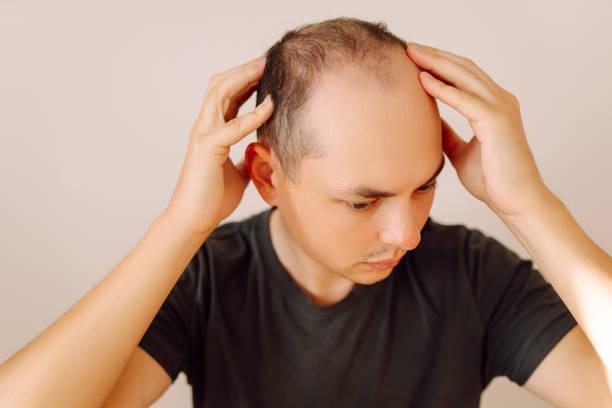
Achieving the perfect look after a hair restoration procedure often comes down to the science of spacing. Hair Transplant in Riyadh When we talk about density in critical areas like the frontal hairline or the crown, we are essentially discussing the strategic placement of hair follicles to mimic nature. It is not just about the number of grafts, but how those grafts are angled and layered to create a full, seamless appearance that frames your face perfectly.
Understanding the nuances of follicular unit distribution is essential for anyone considering a Hair Transplant in Riyadh. This procedure is a delicate balance of artistry and medical precision, where the goal is to provide maximum visual coverage while maintaining the health of your scalp. By focusing on critical zones—those areas most visible to the public—surgeons can create the illusion of thickness even when the actual number of transplanted hairs is lower than your original, pre-loss density.
-
Understanding Density: It is defined by the number of follicular units per square centimeter.
-
Visual vs. Actual: Experts focus on the "illusion of density" by using strategic layering.
-
The Critical Zones: The frontal hairline and mid-scalp require higher precision for natural results.
-
Patient Goals: Balancing your aesthetic desires with the reality of donor supply.
Why Density Matters in Critical Zones
The frontal scalp is the "calling card" of your face. When people look at you, this is the primary area they notice. Therefore, maintaining high density here is vital for a natural look. If the density is too sparse, the scalp remains visible, which can undermine the confidence-boosting benefits of the surgery. Conversely, attempting to pack too many follicles into a small, critical space can sometimes lead to poor blood supply, which puts the grafts at risk.
Achieving a high-quality hair transplant in riyadh requires a personalized approach. Every individual has a different donor capacity, hair texture, and scalp laxity. Surgeons must calculate the "safe" density for each specific zone, ensuring that the crown—often the most challenging area to cover—receives the right amount of attention compared to the dense frontal zones.
-
Donor Limitation: Your donor area is finite, and over-harvesting can lead to thinning at the back of the head.
-
Strategic Placement: Higher density is prioritized at the hairline to frame the face.
-
Blood Supply: Proper spacing is required to ensure every new follicle receives enough oxygen and nutrients.
-
Consistency: The key to a successful result is uniform growth that matches your natural hair pattern.
Factors Influencing Your Results
Several factors determine how dense your hair will appear after the recovery period. Hair thickness, curl, and color contrast all play a major role. For instance, individuals with curly or wavy hair often require fewer grafts to achieve the same visual density as those with fine, straight hair. Furthermore, the skill of the medical team in choosing the right extraction and implantation angles determines how light reflects off your hair, which directly impacts the "fullness" of the result.
Searching for the best hair transplant in riyadh often leads patients to look for clinics that prioritize these individual characteristics. By analyzing your unique hair profile, a specialist can design a plan that maximizes your available resources. It is about working smarter, not just harder, to create a result that looks authentic, whether you are in a boardroom or at the gym.
-
Hair Texture: Thicker, coarser hair strands create a fuller appearance with fewer follicles.
-
Color Contrast: Darker hair on light skin creates more contrast, requiring more careful graft placement.
-
Surgeon Expertise: The angle of insertion is critical for mimicking natural hair growth patterns.
-
Realistic Expectations: Understanding that the first session provides the foundation for your new look.
Achieving Natural Density in Saudi Arabia
The landscape for hair transplant saudi arabia has evolved significantly, with clinics now utilizing advanced tools to map out the scalp before surgery begins. This pre-operative planning allows for a "density map," where the surgeon determines exactly where to place single-hair grafts (for the hairline) versus multi-hair grafts (for the mid-scalp and crown). This ensures a smooth transition and avoids the "doll-hair" look that can occur with improper distribution.
For those pursuing hair restoration riyadh, the journey is about long-term satisfaction. While it is natural to want immediate results, true density takes time to mature. As your hair follicles settle and begin to grow, they will gradually thicken over the 12 to 18-month mark. Patience, combined with a high-quality surgical plan, is the best path to achieving the density you desire.
-
Advanced Mapping: Modern clinics use specialized software to predict coverage patterns.
-
Layering Technique: Using multi-hair units behind the hairline to add volume.
-
Recovery Timeline: Understanding that full density is a process that matures over a year.
-
Post-Op Care: Following your surgeon's specific care instructions is non-negotiable for graft survival.
For those seeking expert guidance and customized aesthetic care, you can book an appointment consultation at the Enfield Royal Riyadh.
Frequently Asked Questions
What factors dictate the density of my transplant?
Density is influenced by your donor supply, hair thickness, texture, and the surgeon's ability to layer grafts to create visual fullness.
Is the hair transplant cost in riyadh fixed for everyone?
No, pricing varies based on the number of grafts needed, the technique used, and the complexity of the area being treated.
Can I achieve high density in just one session?
While significant improvement is possible in one session, the scalp's blood supply limits how many grafts can be placed at once.
How do I know if I am a good candidate for high density?
A surgeon will evaluate your donor area strength, hair quality, and the size of the balding area during a personal consultation.
Will my hair look completely natural after the procedure?
Yes, by using precise angulation and natural distribution patterns, modern techniques ensure your new hair flows just like your original.

 English
 Arabic
 French
 Spanish
 Portuguese
 Deutsch
 Turkish
 Dutch
Dutch
 Italiano
 Romaian
 Portuguese (Brazil)
 Greek
Greek
