
Competitive Landscape in the Military Embedded Systems Market
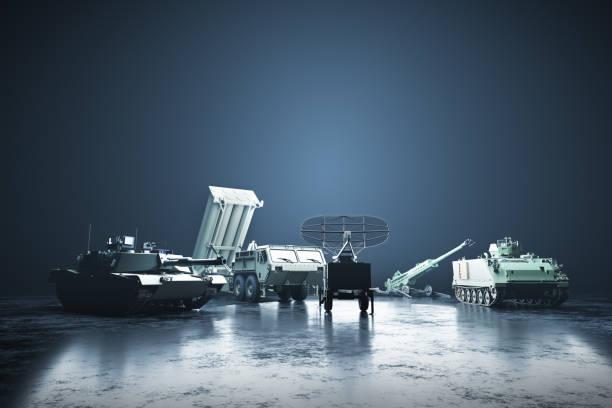
The Military Embedded Systems Market is highly competitive, driven by innovation, strategic defense partnerships, and long-term procurement contracts. Embedded systems play a vital role in defense platforms such as radar systems, missile guidance units, communication modules, and autonomous vehicles. As global military modernization accelerates, competition among vendors intensifies.
A key area of differentiation is the development of ruggedized embedded computing platforms for defense. These systems are specifically engineered to operate in extreme environmental conditions, including high vibration, temperature fluctuations, electromagnetic interference, and battlefield shock. Compliance with military standards such as MIL-STD-810 and MIL-STD-461 significantly enhances vendor credibility.
The competitive landscape is shaped by major defense contractors and semiconductor firms investing heavily in research and development. Companies focus on enhancing processing power while maintaining energy efficiency and compact form factors. Long procurement cycles require vendors to maintain consistent innovation pipelines to stay relevant.
Cybersecurity has also become a major competitive factor. Embedded systems deployed in defense applications must include encryption modules, secure firmware updates, and hardware-based root-of-trust mechanisms. Suppliers offering secure-by-design architectures often gain preference in defense tenders.
Another strategic advantage lies in open architecture design. Vendors that develop modular, interoperable platforms enable defense agencies to upgrade subsystems without replacing entire hardware infrastructures. This flexibility reduces lifecycle costs and strengthens long-term contracts.
Overall, competition in the Military Embedded Systems Market is innovation-driven. Companies that combine rugged hardware, cybersecurity resilience, and scalable architectures are well-positioned to dominate future defense contracts.
FAQs
Q1: Why is ruggedization important in military embedded systems?
A1: Ruggedization ensures systems can function reliably under extreme battlefield and aerospace conditions.
Q2: What gives vendors a competitive advantage?
A2: Compliance with military standards, cybersecurity features, and modular architecture designs.

 English
 Arabic
 French
 Spanish
 Portuguese
 Deutsch
 Turkish
 Dutch
Dutch
 Italiano
 Russian
 Romaian
 Greek
Greek