
The Complete Guide to Choosing the Right Laparoscopy Equipment
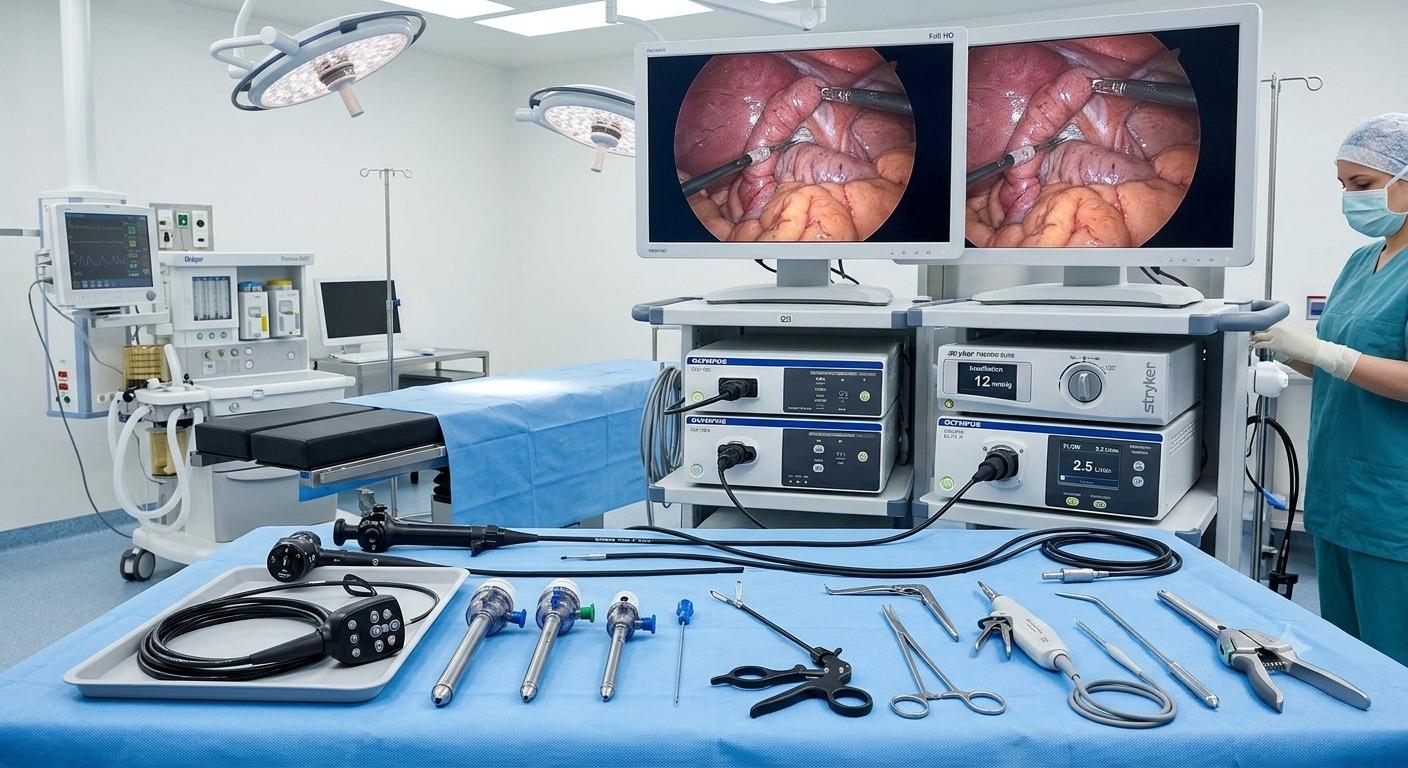
Picture this: it's the middle of a busy OT schedule, the surgeon is midway through a laparoscopic cholecystectomy, and suddenly the camera resolution drops, the light source flickers, or an insufflator starts acting unreliable. Every second matters in that room — and the equipment on the table decides whether that surgery goes smoothly or turns into a stressful scramble.
If you're a hospital administrator, a procurement head, or a surgeon setting up a new OT, choosing the right Laparoscopy Equipment isn't just a purchasing decision — it's a decision that directly affects patient safety, surgical precision, and the daily workflow of your entire surgical team. And yet, most buying guides out there are either too technical to be useful or too vague to be practical.
This guide breaks it down in plain language. Whether you're new to procuring surgical technology or simply want to upgrade your current setup, we'll walk you through everything — from the core components of a laparoscopy system to the mistakes buyers commonly make and how to avoid them.
What Is Laparoscopy Equipment, Really?
In simple terms, laparoscopy equipment refers to the complete set of tools and devices used to perform minimally invasive surgery — the kind where surgeons operate through small incisions instead of large open cuts. Instead of cutting the body open to see inside, surgeons use a tiny camera and specialized laparoscopy instruments inserted through small ports to view and operate on internal organs.
Think of it like performing a delicate repair inside a car engine through a small access panel, using a tiny camera and long, precise tools — instead of removing the entire hood. That's essentially what laparoscopic surgery does for the human body, and it's why recovery times are shorter and scarring is minimal compared to traditional open surgery.
A complete laparoscopy setup usually includes several interconnected systems working together — not just one machine. Understanding each part helps you make a smarter, more informed purchase.
The Core Components of a Laparoscopy System
-
Laparoscope (camera and telescope): The "eyes" of the operation, inserted into the body to capture live video.
-
Camera control unit and monitor: Processes and displays the image the surgical team sees.
-
Light source: Illuminates the internal cavity so the camera can capture a clear picture.
-
Insufflator: Pumps CO2 gas into the abdominal cavity to create working space for the surgeon.
-
Laparoscopy instruments: Graspers, scissors, dissectors, clip appliers, and suction devices used to perform the actual surgical steps.
-
Energy devices: Electrosurgical or ultrasonic units used for cutting and sealing tissue.
Every one of these pieces needs to work in harmony. A brilliant camera paired with a weak light source, for instance, will still produce a poor image — so it's rarely about buying "the best" single device, and much more about building a well-matched system.
Why the Camera System Deserves Extra Attention
If there's one component that tends to make or break a laparoscopic setup, it's the camera. This is where the conversation around the 4K laparoscopy camera system comes in. A few years ago, Full HD (1080p) was considered the gold standard. Today, 4K systems are becoming the new benchmark because they offer sharper detail, better color accuracy, and improved depth perception — all of which help surgeons identify fine anatomical structures like small blood vessels or nerve fibers more confidently.
That said, a 4K system isn't automatically "better" for every hospital. It's a genuine upgrade for high-volume surgical centers doing complex procedures, but a mid-range Full HD system may be perfectly adequate for a smaller facility with a lower case volume and tighter budget. The right choice depends on your surgical caseload, your surgeons' preferences, and your long-term technology roadmap.
Comparison: Full HD vs 4K Laparoscopy Camera System
|
Feature |
Full HD (1080p) System |
4K Laparoscopy Camera System |
|
Image Resolution |
1920 x 1080 pixels |
3840 x 2160 pixels (4x sharper) |
|
Detail & Depth Perception |
Good, standard clarity |
Excellent, enhanced tissue differentiation |
|
Ideal Use Case |
General & routine laparoscopic procedures |
Complex, high-precision surgeries |
|
Investment Level |
Moderate |
Higher, but future-ready |
|
Best Suited For |
Smaller hospitals, moderate case volume |
Large hospitals, teaching institutions, referral centers |
Note: The right system depends on surgical complexity, case volume, and budget — not just resolution numbers.
Key Factors to Consider Before You Buy
Choosing laparoscopy equipment isn't a one-size-fits-all decision. Here are the factors that genuinely matter:
-
Surgical volume and specialty mix: A high-turnover general surgery unit has different needs than a specialized gynecological or urological center.
-
Image quality and ergonomics: Surgeons spend hours looking at that monitor — clarity and eye comfort matter more than most buyers realize.
-
Compatibility with existing instruments: New equipment should integrate with your current laparoscopy instruments wherever possible, to avoid unnecessary replacement costs.
-
Sterilization and maintenance requirements: Some instruments are autoclavable, others need specific low-temperature sterilization — this affects your daily workflow.
-
Vendor support and service network: Downtime in the OT is costly, so responsive after-sales support is non-negotiable.
-
Budget and long-term ROI: The cheapest option upfront isn't always the most cost-effective option over five years.
Feature-Benefit Breakdown: What Matters and Why
|
What It Is |
Why It Matters |
|
High-resolution imaging |
Helps surgeons spot fine anatomical detail, reducing risk of accidental injury to tissue |
|
Reliable insufflator flow control |
Maintains stable working space, preventing sudden pressure drops mid-procedure |
|
Ergonomic instrument handles |
Reduces surgeon fatigue during long procedures, improving precision |
|
Modular system design |
Allows individual components to be upgraded without replacing the entire setup |
|
Local vendor support |
Minimizes OT downtime through faster repairs and readily available spare parts |
Note: Prioritizing these features helps you invest in equipment that performs reliably in real OT conditions, not just on a spec sheet.
Step-by-Step: How to Choose the Right Laparoscopy Equipment
If you're starting from scratch or planning an upgrade, here's a practical, step-by-step way to approach the decision.
The Buying Process, Simplified
|
Step |
What to Do |
|
1. Assess your needs |
Review case volume, surgical specialties, and current equipment limitations |
|
2. Consult your surgical team |
Get direct input from surgeons and OT staff who will use the equipment daily |
|
3. Shortlist trusted suppliers |
Compare manufacturers based on quality certifications, support, and track record |
|
4. Request live demonstrations |
Test image quality, ergonomics, and interface in person before committing |
|
5. Check compatibility |
Confirm new equipment integrates with existing laparoscopy instruments and OT infrastructure |
|
6. Evaluate total cost of ownership |
Factor in maintenance, training, warranty, and consumables — not just the sticker price |
|
7. Plan installation and training |
Ensure staff are properly trained before the equipment goes into regular use |
Note: Following this sequence prevents the most common procurement mistake — buying equipment before confirming it fits your actual OT workflow.
Tips and Best Practices
-
Involve your surgeons early. They're the end-users, and their comfort with the equipment directly affects surgical outcomes.
-
Don't chase specs alone. A 4K camera paired with a poor light source will underperform — always evaluate the system as a whole.
-
Ask for reference sites. Speak to other hospitals already using the equipment to understand real-world reliability.
-
Factor in future scalability. Choose systems that can be upgraded rather than fully replaced as technology evolves.
-
Prioritize training. Even the best equipment underperforms in untrained hands — budget time and resources for proper onboarding.
-
Review warranty and AMC terms carefully. Understand what's covered and what isn't before signing.
Common Mistakes to Avoid
Even experienced procurement teams fall into a few predictable traps. Here's what to watch out for:
Do's and Don'ts of Laparoscopy Equipment Procurement
|
Do |
Don't |
|
Test equipment with a live demo before purchase |
Rely only on brochures or spec sheets |
|
Involve surgeons and OT staff in the decision |
Leave the decision entirely to the finance or admin team |
|
Check compatibility with existing instruments |
Assume all systems are plug-and-play compatible |
|
Budget for training and onboarding |
Assume staff will "figure it out" on their own |
|
Evaluate long-term service and support |
Choose a vendor purely on the lowest quoted price |
Note: Most procurement regrets trace back to skipping one of these basic steps under time or budget pressure.
Frequently Asked Questions
1. What is the difference between laparoscopy equipment and laparoscopy instruments?
Laparoscopy equipment refers to the full system — cameras, monitors, light sources, and insufflators. Laparoscopy instruments are the specific hand-held tools, like graspers and scissors, used during the procedure itself.
2. Is a 4K laparoscopy camera system necessary for every hospital?
Not necessarily. It offers clear benefits for complex, high-volume surgical centers, but smaller facilities with moderate case loads may find Full HD systems perfectly sufficient.
3. How often should laparoscopy equipment be serviced?
Most manufacturers recommend routine preventive maintenance at regular intervals, along with calibration checks — always follow the specific schedule provided by your equipment supplier.
4. Can new laparoscopy equipment work with my existing instruments?
In many cases, yes, but compatibility depends on connector types, brands, and system specifications. It's important to confirm this with your supplier before purchase.
5. What's the biggest factor in choosing the right supplier?
Reliable after-sales support and service response time often matter more long-term than the initial purchase price.
6. How long does laparoscopy equipment typically last?
With proper maintenance, core systems can serve a facility for many years, though individual components like light sources or cables may need periodic replacement.
Final Thoughts
Choosing the right laparoscopy equipment comes down to one simple idea: match the technology to your team's real needs, not just to the latest trend on a spec sheet. A well-matched system — from the camera and light source to the smallest laparoscopy instrument — gives your surgeons the confidence to operate precisely, and gives your patients safer, faster recoveries.
At Stalwart Meditech, we work closely with hospitals and surgical centers to help them find equipment that genuinely fits their OT workflow, not just their budget sheet. If you're planning an upgrade or setting up a new laparoscopy unit, our team is happy to walk you through the options, including the latest 4K laparoscopy camera systems, and help you build a setup that serves your team reliably for years to come.
Visit: https://stalwartmeditech.com/contact-us/
Call: +91-9999012763, 9718784245
Email: stalwartmeditechindia@gmail.com
Address: Plot No. A-10, Second Floor, Patparganj Industrial Area, Delhi-92,
Address -: 4/2544, Street No.-11, Main Road, Govardhan Behari Colony, Shahdra, Delhi-32
Follow us on: Facebook, Instagram. Linkedin, Youtube

 Arabic
 French
 Spanish
 Portuguese
 Deutsch
 Turkish
 Dutch
Dutch
 Italiano
 Russian
 Romaian
 Portuguese (Brazil)
 Greek
Greek
