
How Acne Studios Rewrote Fashion Rules
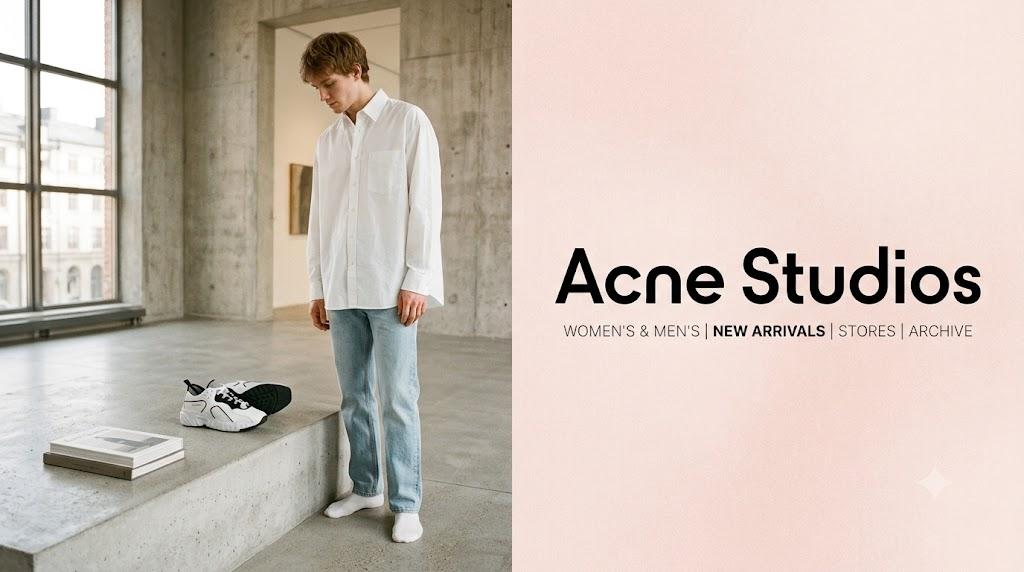
Acne Studios did not start as a traditional fashion house, which is exactly why it managed to disrupt the entire industry. Founded in Stockholm in 1996 by Jonny Johansson, ACNE originally stood for "Ambition to Create Novel Expressions." It operated as a creative collective focused on graphic design, film, and advertising rather than clothing. The fashion journey began almost by accident when Johansson created one hundred pairs of raw denim jeans with distinct red stitching and gave them away to local artists and skaters. This unexpected move sparked immediate underground demand, birthing a global powerhouse.
Denim as a High Fashion Canvas
Before this Swedish revolution, luxury fashion houses largely ignored casual denim, viewing it as basic streetwear rather than high art. The brand challenged this narrow perspective by treating simple jeans with the exact same prestige as a tailored evening gown. By combining minimalist Scandinavian architecture with raw, utilitarian street culture, they successfully elevated everyday wardrobe staples into coveted luxury statements. Today, collectors frequently visit the official platform at acnestudio.us to explore how these classic silhouettes continually evolve each season, cementing the brand’s unique reputation for turning everyday denim into wearable, high-end museum contemporary art.
The Subversive Power of Salmon Pink
Erasing Traditional Gender Boundaries
Long before gender-fluid collections became a mainstream industry standard, Acne Studios was quietly dismantling traditional sartorial binaries. Their design philosophy frequently blends traditionally masculine structures, such as boxy, oversized wool blazers, with softer, fluid feminine drapes. By focusing heavily on abstract shapes, artistic proportions, and fabric textures rather than rigid gendered sizing, they created a universally appealing aesthetic. This revolutionary approach invited consumers to dress for personal expression rather than societal expectations, rewriting the rulebook on how modern garments should fit and look on the human body.
A Brilliant Rejection of Advertising
In an industry completely dominated by multi-million dollar traditional ad campaigns and glossy celebrity endorsements, the brand chose an entirely different path. They launched their own independent biannual magazine, Acne Paper, which completely avoided self-promotion. Instead of traditional product placement, the publication focused heavily on classical art, historical photography, and deep cultural essays. By aligning themselves with intellectual artistry rather than aggressive commercialism, they built an incredibly loyal cult following. This brilliant strategy proved that creating genuine cultural value was far more effective than traditional fashion marketing.
Building Retail Spaces Like Museums
Stepping into a flagship boutique feels vastly different from entering a standard luxury clothing store. The brand completely rejects cookie-cutter retail layouts, designing each global location as a completely unique, site-specific art installation. They collaborate with radical architects to mix cold industrial concrete with warm, vibrant light installations. For fans looking to replicate this artistic lifestyle through clothing, visiting https://acnestudio.us/ offers a direct gateway into their latest collections. This unique retail approach ensures that purchasing a garment feels like acquiring a piece of contemporary art.
Defining Modern Luxury Culture
Ultimately, the brand successfully rewrote the fashion rules by proving that luxury is defined by creative freedom rather than an expensive price tag. They successfully bridged the gap between underground youth subcultures and elite Parisian runways without losing their authentic edge. By remaining fiercely independent and constantly experimental, they showed the world that a creative collective could completely conquer the luxury market on its own terms. Their enduring legacy is a vibrant blueprint for modern fashion, proving that authenticity and artistic expression will always outlive fleeting seasonal trends.

 English
 Arabic
 French
 Spanish
 Portuguese
 Deutsch
 Dutch
Dutch
 Italiano
 Russian
 Romaian
 Portuguese (Brazil)
 Greek
Greek
