
Upcycled Food Products Market Outlook: Sustainability Trends and Growth Opportunities
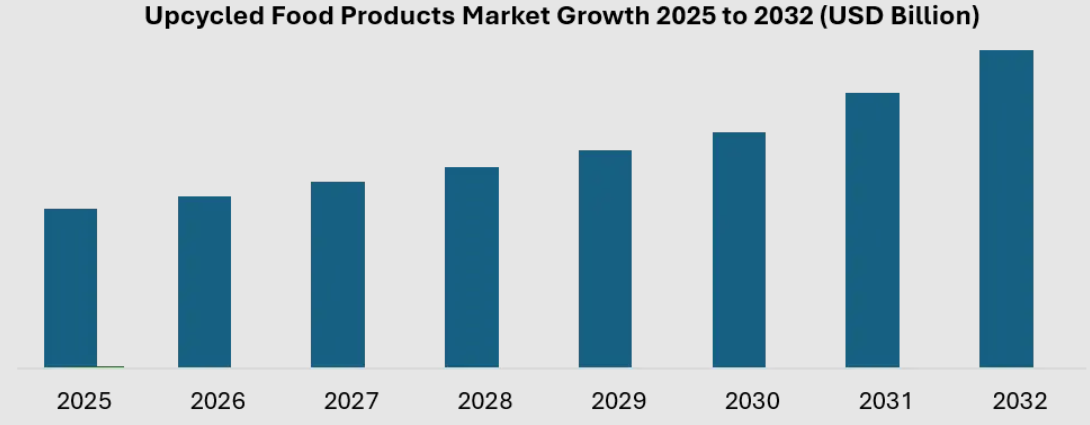
Global Upcycled Food Products Market Valued at USD 63.8 Billion in 2025; Expected to Surpass USD 127 Billion by 2032 as Circular Economy Interventions Revolutionize Food Processing Supply Chains
A leading international business intelligence, agricultural vertical analysis, and strategic commercial consulting firm, has released its highly anticipated, data-backed industry study Global Upcycled Food Products Market . This extensive research publication offers an authoritative analysis of the next-generation sustainable food and beverage ecosystem. It details critical consumer behavior patterns, clean-label raw material trends, localized legislative developments, and corporate investment roadmaps across the global food production landscape.
The granular market study demonstrates that the upcycled food sector has moved beyond niche environmental positioning to become an important strategy for structural cost optimization and waste reduction in industrial food systems. Valued at a substantial USD 63.8 Billion in 2025, the global market is on a trajectory to reach USD 127.8 Billion by 2032. This expansion represents a steady Compound Annual Growth Rate (CAGR) of 8.2% during the forecast period. This strong growth shows how major food conglomerates, agricultural cooperatives, and direct-to-consumer (DTC) brands are successfully shifting toward circular economy models—transforming discarded agricultural materials, processing by-products, and surplus inventory into high-value, nutrient-rich consumer products.
𝐃𝐨𝐰𝐧𝐥𝐨𝐚𝐝 𝐅𝐫𝐞𝐞 𝐏𝐃𝐅 𝐁𝐫𝐨𝐜𝐡𝐮𝐫𝐞 @https://www.maximizemarketresearch.com/request-sample/308938/
Executive Summary: Converting Industrial Food Waste Into Scalable Commercial Value Channels
The global food system faces a major structural challenge: nearly one-third of all food produced for human consumption is lost or wasted annually across supply chains. This waste creates significant economic losses, reduces corporate profit margins, and drives environmental liabilities like elevated municipal solid waste volumes and greenhouse gas emissions. Historically, food processing side-streams—such as spent brewery grains, nutrient-dense juicing pulp, fruit peels, whey isolates, and legume husks—were treated as low-value manufacturing waste, often discarded or diverted to animal feed at minimal financial return.
The commercialization of upcycled food products changes this dynamic. By utilizing advanced food tech processing methods like dehydration, powdering, micro-fermentation, and specialized enzymatic extraction, manufacturers are transforming these secondary streams into functional ingredients. These ingredients offer essential dietary fiber, protective antioxidants, and plant-based protein structures, meeting growing consumer demand for sustainable, clean-label foods.
The market research report segments the global upcycled food products landscape across four primary areas to provide clear insights for corporate decision-makers:
-
By Source Material: Fruit & Vegetable Processing Waste, Cereals & Spent Grains, Dairy Processing By-products (such as acid whey), and Agricultural Processing Residues.
-
By Product Category: Upcycled Snacks & Ready-To-Eat (RTE) Products, Functional Beverages, Bakery Products & Breakfast Cereals, Dairy Alternatives, and B2B Functional Ingredients (including flours, natural colorants, and nutrient powders).
-
By Distribution Channel: Supermarkets & Hypermarkets, Specialty Eco-Retail Outlets, Direct-to-Consumer (DTC) E-commerce Platforms, and Institutional Foodservice Providers.
-
By End-User Profile: Household Consumers, Food & Beverage Manufacturers (incorporating upcycled inputs), and Nutraceutical & Functional Food Companies.
Core Market Dynamics: Primary Economic, Legislative, and Social Drivers
An analysis of the agro-industrial manufacturing space reveals multiple interconnected drivers that are encouraging large corporations to allocate capital to upcycled infrastructure.
1. Corporate ESG Mandates and Supply Chain Margin Stabilization
Modern food and beverage manufacturers face volatile raw material costs alongside strict corporate Environmental, Social, and Governance (ESG) mandates. Upcycling allows processors to maximize raw material utilization. Instead of paying disposal fees for manufacturing by-products, companies can process those materials into secondary product lines. This approach creates new revenue streams from existing inputs, helping to offset raw material cost volatility and improve overall gross profit margins.
2. Shifting Consumer Values: Environmental Accountability and Clean-Label Trends
A clear shift in consumer buying behavior is supporting market expansion. Modern consumers, particularly younger demographics, increasingly evaluate products based on their environmental impact, looking for clear evidence of waste reduction and ethical sourcing. Upcycled food products fit perfectly within this trend. Furthermore, because these items are derived from natural agricultural inputs, they naturally align with clean-label preferences, free from synthetic texturizers or artificial chemical stabilizers.
3. Government Waste Mitigation Policies and Standardized Certifications
Regulatory frameworks are changing to actively discourage industrial organic waste. Governments worldwide are implementing strict national food waste reduction targets and landfill diversion mandates. This regulatory push is supported by third-party certification frameworks, such as the Upcycled Certified® designation. These clear labeling standards help reduce consumer skepticism, build brand trust, and make it easier for upcycled products to secure mainstream retail shelf space next to conventional alternatives.
Technical Segment Analysis: Leading Product Categories and Ingredient Channels
Snacks and Ready-to-Eat Products Dominate Mainstream Retail Volumes
By product category, Upcycled Snacks & Ready-to-Eat (RTE) Products hold the largest share of overall market revenue, accounting for roughly 33% of the global market in 2025. This leading position is driven by high consumer acceptance of everyday sustainable options like chips, snack bars, crackers, and granolas made from upcycled fruit pulps and spent grains. These items serve as an accessible entry point for consumers, driving impulse purchases and helping brands build visible sustainable profiles on supermarket shelves.
Nutraceuticals and B2B Functional Ingredients Trace the Fastest Growth
While consumer-facing snacks generate high sales volumes, the Nutraceuticals & B2B Functional Ingredients segment is tracking the fastest growth rate. Large food conglomerates are increasingly purchasing bulk upcycled flours, high-fiber powders, and natural antioxidants to reformulate their core product portfolios. This industrial-scale utilization enables large brands to achieve their corporate sustainability goals, providing high-volume stability for agricultural processors turning raw waste streams into standardized, shelf-stable ingredients.
Regional Developments: Advanced Value Chains and Strategic Geographies
North America: Market Leadership Anchored by Strong Retail Infrastructure
North America dominates the global upcycled food products market, controlling a major 40% revenue share in 2025. The region's market strength is driven by a well-developed ecosystem of specialized sustainable startups, strong venture capital funding, and active support from major grocery chains. In the United States, retail brands are dedicating specific shelf space to sustainable products, while e-commerce and online grocery platforms make these items highly accessible to consumers, reinforcing North America's position as a major center for sustainable food innovation.
Asia-Pacific: Rapid Industrialization and Fastest Compound Annual Growth
The Asia-Pacific (APAC) region is projected to register the fastest growth rate through 2032. This hyper-growth is driven by rapid urbanization, expanding middle-class populations, and a strong cultural focus on resource efficiency across major economies like China, Japan, India, South Korea, and Singapore. Furthermore, countries such as Japan are introducing strict food recycling laws, forcing large manufacturers to invest in advanced processing equipment. This combination of supportive regulations and massive consumer markets makes APAC a vital manufacturing and consumption hub for upcycled products.
𝐃𝐨𝐰𝐧𝐥𝐨𝐚𝐝 𝐅𝐫𝐞𝐞 𝐏𝐃𝐅 𝐁𝐫𝐨𝐜𝐡𝐮𝐫𝐞 @https://www.maximizemarketresearch.com/request-sample/308938/
Competitive Intelligence: Strategic Imperatives of Market Leaders
The global upcycled food products market is characterized by a dynamic, evolving competitive environment where established multinational food corporations work alongside agile, mission-driven startups to expand processing capacity.
Key industry participants analyzed within this comprehensive market report include:-
1. Nestlé S.A.
3.Danone S.A.
2.US Foods Holding Corp.
3Upcycled Foods, Inc.
4.Renewal Mill, ReGrained, Barnana.
5.Toast Ale, Rubies in the Rubble.
6.Outcast Foods, Matriark Foods.
7.Pulp Pantry, and Blue Stripes LLC.
The primary competitive strategies utilized by these industry leaders center on scaling processing capacity, ensuring supply consistency, and forming cross-industry partnerships:
-
Multinational Portfolio Integration: Global food leaders like Nestlé and Danone are incorporating upcycled ingredients directly into their core dairy, plant-based, and snack portfolios, validating the category and bringing upcycled products into mainstream distribution channels.
-
B2B Supply Security: Specialized ingredient processors like Renewal Mill and Upcycled Foods, Inc. are focusing on establishing stable supply agreements with industrial food processors, ensuring a consistent supply of raw side-streams to protect against agricultural seasonality.
-
Value-Chain Partnerships: Advanced startups are forming strategic partnerships with major retail chains and institutional foodservice distributors, allowing them to secure stable distribution networks and reach price-sensitive consumer segments at scale.
Industry Bottlenecks: Supply Chain Consistency and Consumer Education
Despite strong growth potential, the widespread commercial adoption of upcycled food products requires addressing specific logistical and marketing challenges.
The primary operational hurdle is supply chain consistency. Unlike traditional food production, which relies on standardized, predictable agricultural outputs, upcycled manufacturing depends entirely on the side-streams of other processes. These material streams often vary in volume, quality, and availability depending on seasonal harvest factors or primary production schedules. This variability requires upcycled manufacturers to invest heavily in specialized collection, stabilization, and storage infrastructure to maintain consistent, scaled output.
Additionally, brands face an ongoing consumer perception gap. In developing or less-exposed retail markets, consumers occasionally confuse "upcycled" with inferior or unhygienic waste products. Overcoming this skepticism requires clear product positioning, verified third-party certifications, and focused marketing to help consumers understand that these ingredients are thoroughly processed, highly nutritious, and completely safe.
For full access to the comprehensive strategic report, visit:https://www.maximizemarketresearch.com/market-report/upcycled-food-products-market/308938/
Strategic Outlook: The Transition to Tech-Driven Extraction and Mainstream Integration
Looking forward, the global upcycled food products market will be increasingly defined by advanced processing technologies. The next wave of industry innovation will rely on technologies like Pulsed Electric Field (PEF) extraction and specialized microbial fermentation. These methods allow processors to efficiently break down cellular structures in agricultural by-products, unlocking valuable bioactive compounds, natural pigments, and functional proteins without damaging their nutritional value.
Furthermore, as multinational food service providers and corporate catering networks commit to clear zero-waste targets, upcycled ingredients are becoming standard components in institutional supply chains. For food industry executives, corporate investment officers, and agricultural planners, participating in this circular economy shift is essential for building resilient supply chains. Investing in reliable upcycling networks today helps stabilize long-term sourcing costs, improves brand equity, and positions enterprises to thrive in an increasingly resource-constrained global market.
About Maximize Market Research
Maximize Market Research is a multifaceted market research and consulting company with professionals from several industries. Some of the industries we cover include medical devices, pharmaceutical manufacturers, science and engineering, electronic components, industrial equipment, technology and communication, cars and automobiles, chemical products and substances, general merchandise, beverages, personal care, and automated systems. To mention a few, we provide market-verified industry estimations, technical trend analysis, crucial market research, strategic advice, competition analysis, production and demand analysis, and client impact studies.
Contact Maximize Market Research
3rd Floor, Navale IT Park, Phase 2
Pune Bangalore Highway, Narhe,
Pune, Maharashtra 411041, India
sales@maximizemarketresearch.com
+91 96071 95908, +91 9607365656

 English
 Arabic
 French
 Spanish
 Portuguese
 Deutsch
 Turkish
 Dutch
Dutch
 Italiano
 Romaian
 Portuguese (Brazil)
 Greek
Greek
