
How to Choose a Broadband Amplifier for Wideband RF Work
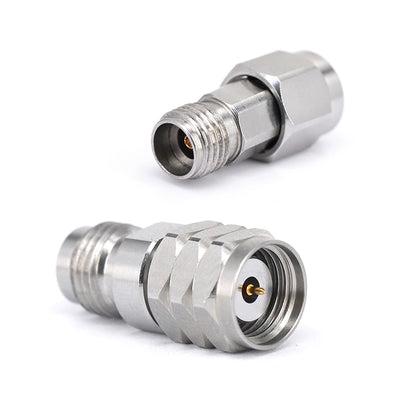
Weak signals are easy to lose in an RF chain. A good amplifier lifts the signal without changing its shape across the band. This guide explains how wideband RF amplifiers work, where they are used and what to check before buying. It uses product details from Flexi RF Inc, a supplier of RF and microwave components.
What Is a Wideband RF Amplifier?
A broadband amplifier, also called a wideband amplifier, is an RF device that boosts signal strength across a wide range of frequencies. It aims to keep gain steady from one end of the band to the other. This helps a signal stay clear when a system works on many frequencies instead of one.
Flexi RF Inc offers wideband amplifiers for US customers who need stable gain in their RF setups. The range is built around a consistent frequency response, which helps signals stay accurate across microwave and millimeter-wave frequencies.
Where Do Wideband Amplifiers Fit in a Real Setup?
Wideband amplifiers are used in electronic warfare (EW), radar systems and multi-band communication testing. These jobs often cover several bands at once, so steady gain across the range matters. A consistent response keeps signals clear and accurate whether the setup sits on a lab bench or runs in the field.
Flexi RF Inc groups this range on its broadband amplifier collection page. Buyers can narrow the list by frequency, gain, noise figure and connector type.
Which Amplifier Suits a Test Bench, a Field Setup or a Mixed Workload?
A rugged amplifier with protection built in suits most mixed lab and field work. Look for a sturdy, compact housing, SMA or 2.92 mm connectors that match the rest of the chain, and voltage control with thermal protection. These features support safe and steady operation when conditions change from the bench to the site.
Flexi RF Inc designs its amplifiers for harsh lab and field settings. The compact cases use standard SMA or precise 2.92 mm connections, so they fit easily into common RF chains.
What Should You Check Before Choosing an Amplifier?
Check the frequency range, gain, noise figure, connector type and built-in protection. The band and gain should match the signals in the setup. The connector should match the cables already in use. Protection features keep the unit safe during long tests.
- Frequency range: the amplifier band should cover the signals you plan to use.
- Gain: enough gain to lift the signal, without pushing the next device too hard.
- Noise figure: a lower figure means less added noise.
- Connector type: SMA or 2.92 mm, matched to your cables.
- Protection: voltage control and thermal protection for safe operation.
Should You Choose a Wideband or Low Noise Amplifier?
Choose a wideband amplifier when steady gain across many frequencies matters most. Choose a low noise amplifier when the signal is very weak and added noise must stay low. A low noise unit usually sits at the front of a receiver chain.
Flexi RF Inc lists both types as separate collections. This makes it easier to pick the right one for each stage of a build.
Frequently Asked Questions
My test setup uses both SMA and 2.92 mm parts. Which connector type and frequency range should I pick for the amplifier?
Match the amplifier connector to your cables first, then check the frequency range. SMA and 2.92 mm are the connector types Flexi RF Inc lists on its amplifier range. Using one connector type across the chain avoids extra adapters and keeps the setup simple.
Does a wideband amplifier change the signal shape?
A good one aims to keep gain steady across its band, so the signal stays close to the original. A flat response is the goal. Check the product page details before ordering.
Why does thermal protection matter in an amplifier?
Amplifiers create heat while they work. Thermal protection helps the unit run safely when conditions get warm, which is useful on long tests and in field setups.
Can one amplifier cover radar work, EW tasks and multi-band communication testing, or do I need separate units?
These are the uses Flexi RF Inc lists for its amplifier range. One wideband model can cover several of them if its band and gain fit each job. For a very weak input signal, a low noise model may still be needed at the front of the chain.
How can I narrow down a model on the Flexi RF Inc website?
The collection page has filters for frequency, gain, noise figure, connector type and stock status. Start with the connector and frequency range, then compare gain and noise figure.
Talk to Flexi RF Inc Today
Need help picking an amplifier? Browse the amplifier collection on the Flexi RF Inc website, or reach the team directly. Customer service is open Monday to Friday, 9 AM to 6 PM. Call +1 (650) 880-9199 or email Sales@FlexiRF.com. In-stock items ship the same day.

 English
 Arabic
 French
 Spanish
 Portuguese
 Deutsch
 Dutch
 Italiano
 Russian
 Romaian
 Portuguese (Brazil)
 Greek
