
Subcutaneous Fat and Thread Lift in Dubai
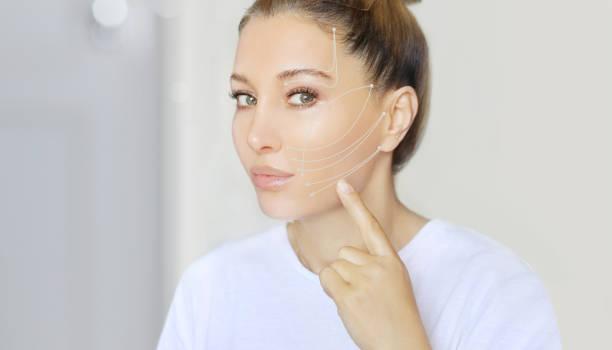
Subcutaneous fat plays an important role in facial shape, volume, and soft tissue support. During a Thread Lift in Dubai, understanding its distribution helps practitioners assess whether selected facial areas may benefit from temporary mechanical support. The amount, location, and condition of facial fat can influence how tissue responds to lifting threads and whether the expected contour improvement is realistic.
Facial ageing does not affect every person in the same way. Some individuals experience volume loss, while others develop changes in tissue position or increased fullness around the lower face. These differences matter because a thread lift is designed to support selected soft tissue, not remove fat or replace lost facial volume.
What Is Subcutaneous Fat in the Face?
Subcutaneous fat is the layer of fatty tissue located beneath the skin. In the face, it contributes to softness, contour, and the natural transitions between different facial regions.
Facial fat is not distributed as one continuous layer. It is organised into compartments with different locations and relationships to surrounding structures.
Superficial and Deep Facial Fat Compartments
Facial fat is commonly described in superficial and deep compartments. These compartments contribute differently to facial contour and are separated or supported by connective tissue structures.
Superficial fat lies closer to the skin, while deeper fat compartments are located beneath other tissue layers. Their distribution helps determine cheek fullness, lower-face shape, and the appearance of facial transitions.
A practitioner considers these anatomical differences when assessing tissue movement and planning a thread-based procedure.
Why Fat Distribution Matters More Than Overall Facial Weight
Two people with similar body weight can have very different facial contours. One may have fuller cheeks and a defined jawline, while another may have less midface volume or greater lower-face fullness.
For a thread lift, the location of soft tissue is often more relevant than a general assessment of facial fullness. The practitioner must identify whether the concern relates to tissue descent, volume changes, skin laxity, or a combination of factors.
How Subcutaneous Fat Influences a Thread Lift in Dubai
A thread lift provides temporary mechanical support to selected soft tissue. The surrounding tissue composition influences how that support interacts with the face.
The procedure does not directly remove fat or restore lost volume. Its suitability depends on whether the tissue can be supported safely and whether the intended improvement matches the patient's anatomy.
Tissue Thickness and Mechanical Engagement
The thickness and characteristics of the subcutaneous layer can influence how a thread engages surrounding tissue.
A practitioner evaluates the treatment area to determine whether the available tissue is appropriate for the selected thread system. Very thin or delicate tissue may require particular attention to product choice and placement depth.
Facial Fullness and Contour Changes
Fullness in the cheeks or lower face may arise from fat distribution, fluid retention, structural anatomy, or other factors. A thread lift may not address the underlying cause if the main concern is excess volume.
For example, a patient with significant lower-face fullness may not achieve a sharper jawline through tissue support alone. A separate assessment may be needed to identify the most appropriate approach.
Volume Loss and Reduced Support
Age-related fat loss can contribute to hollowing and changes in facial proportions. In these cases, the concern may involve reduced volume rather than tissue descent.
A thread lift cannot replace missing fat or recreate lost facial volume. Depending on the assessment, another treatment may be more appropriate.
The Relationship Between Facial Fat and Cheek Support
The cheek region contains multiple fat compartments that contribute to midface contour. Changes in their volume or position can influence the appearance of the cheek and the surrounding areas.
Midface Volume and Facial Proportions
A fuller midface may create a different treatment requirement from one affected by volume loss. The practitioner assesses cheek projection, skin quality, and tissue mobility before considering a thread lift.
The objective should be to maintain natural facial proportions rather than create an exaggerated lifted appearance.
When Cheek Fullness Is Not Tissue Laxity
Not every prominent cheek or lower-face area indicates sagging. Some patients naturally have fuller facial contours due to their anatomy.
If the concern is primarily volume distribution, a thread lift may not provide the desired change. A careful examination helps distinguish fullness from tissue descent.
How Lower-Face Fat Affects Jawline Definition
The jawline is influenced by skin elasticity, underlying bone structure, fat distribution, and the position of surrounding soft tissue.
Subcutaneous Fat Around the Lower Face
Fat distribution around the cheeks and lower face can affect the transition between the jawline and neck. Changes in this region may contribute to a heavier lower-face appearance.
A practitioner assesses whether the concern is related to tissue position or volume. Thread support may be considered in selected cases involving early laxity, but it does not remove excess fat.
Early Jowl Formation
Early jowls can develop through several interacting age-related changes. These may include reduced skin elasticity, changes in fat compartments, and alterations in soft tissue support.
A thread lift may provide modest temporary support when the tissue remains suitable. More advanced fullness or significant excess skin may require a different treatment discussion.
Can a Thread Lift Remove Facial Fat?
No. A thread lift is not a fat-removal procedure. It uses absorbable threads to provide temporary support to selected tissue.
Patients who want to reduce localised fat should discuss the cause of fullness with a qualified practitioner. Treatment options depend on the anatomical area and whether the concern is caused by fat, skin laxity, or another factor.
Confusing tissue repositioning with fat reduction can lead to unrealistic expectations.
Why Skin Thickness and Fat Distribution Must Be Assessed Together
The skin and subcutaneous fat work together to create facial contours. Their thickness, elasticity, and relationship with deeper structures influence the appearance of the face.
Thin Skin and Limited Soft Tissue Coverage
Patients with thin skin or limited tissue coverage may require careful evaluation before thread placement. An unsuitable thread or placement depth may increase the risk of visible irregularities.
The practitioner must consider the specific product and anatomical area rather than applying a standard approach.
Thicker Tissue and Greater Facial Fullness
Thicker soft tissue may present different mechanical considerations. The practitioner evaluates whether the selected thread can provide appropriate support and whether the expected contour change is achievable.
More tissue does not automatically mean a stronger or better lifting result.
Treatment Planning for Different Facial Fat Patterns
A personalised assessment helps determine whether a thread lift is appropriate for the patient's facial structure.
| Facial concern | Possible contributing factor | Assessment focus |
|---|---|---|
| Reduced cheek fullness | Volume loss | Whether volume restoration is more suitable |
| Early jowl formation | Tissue laxity and changing fat distribution | Degree of tissue mobility and skin elasticity |
| Full lower face | Fat distribution or natural anatomy | Whether the concern is volume rather than descent |
| Uneven cheek contours | Natural asymmetry or volume differences | Individual assessment of each side |
| Less defined jawline | Skin laxity, fat, or structural factors | Identifying the main cause of reduced definition |
The table describes general considerations, not a diagnosis or treatment recommendation.
Clinic Note
Facial fat distribution influences how a thread lift should be planned, but the procedure does not remove fat or restore lost volume. Practitioners must distinguish tissue descent from fullness and volume deficiency before recommending mechanical support.
Frequently Asked Questions
Does facial fat affect Thread Lift in Dubai results?
Yes. Fat distribution and tissue thickness can influence thread engagement, placement planning, and the appearance of the final contour.
Can a thread lift reduce cheek fat?
No. A thread lift provides temporary support to selected tissue. It does not function as a fat-reduction procedure.
Is a thread lift suitable for a naturally full face?
It depends on the reason for the fullness and the degree of tissue laxity. A practitioner must determine whether the concern is related to tissue descent or volume distribution.
Can facial volume loss affect thread lift suitability?
Yes. When volume loss is the main concern, a thread lift may not address the underlying issue. Other treatments may be discussed after assessment.
Does more facial fat create a stronger lifting effect?
Not necessarily. Tissue thickness, thread design, placement, and anatomy all influence mechanical support. Greater fullness does not guarantee a better result.
Discuss Facial Contours and Thread Lift Suitability at Tajmeels Clinic
Facial fat distribution is an important consideration when evaluating a thread lift. Understanding whether a concern relates to tissue descent, excess fullness, or volume loss helps prevent unsuitable treatment choices.
At Tajmeels Clinic, patients can discuss their facial contour concerns through an individual consultation. A personalised assessment can help determine whether temporary thread support or another treatment approach is more appropriate for their anatomy and goals.

 English
 French
 Spanish
 Portuguese
 Deutsch
 Turkish
 Dutch
 Italiano
 Russian
 Romaian
 Portuguese (Brazil)
 Greek
