
Strategy Consulting Market Shapes Executive Decision Making Across Complex Global Business Environments
Advisory Expertise Supports Confident Leadership Choices
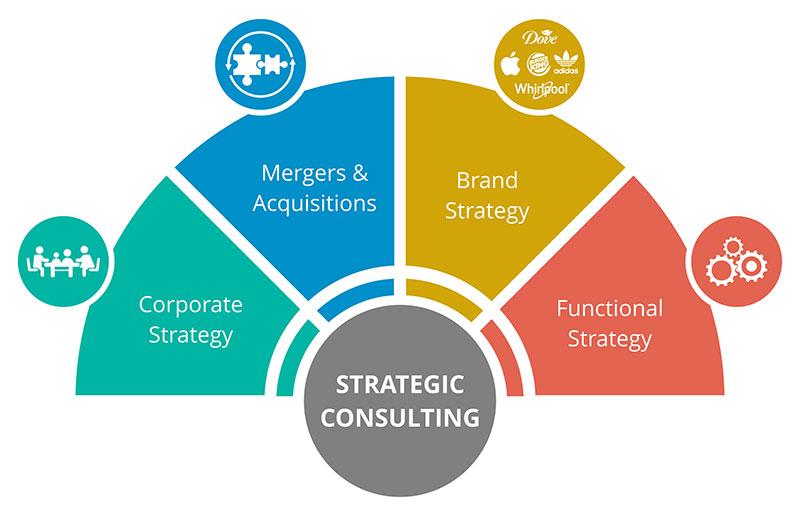
Strategy Consulting Market remains central to how leadership teams interpret ambiguous conditions and choose a direction with confidence. Advisory providers bring outside perspective, structured analysis, and experience across sectors. They work alongside executives to frame problems, test assumptions, and evaluate options. Engagements may focus on market entry, portfolio priorities, operating models, or large-scale transformation. The strongest advisers do not arrive with predetermined answers; they help clients think more clearly about trade-offs. They also support implementation by translating decisions into governance, sequencing, and accountability. Senior leaders often face competing internal views, and an external perspective can help surface assumptions that have gone unexamined. Facilitation matters as much as analysis, because alignment across functions determines whether a strategy survives contact with daily operations. This combination of analysis and execution support is why advisory services remain valued in uncertain periods. Organizations should define what they want from an engagement, who will sponsor it, and how recommendations will be tested internally. Clear scoping improves outcomes and reduces the risk of advice that looks elegant but cannot be applied. When clients and advisers work as genuine partners, strategy work strengthens judgment rather than replacing it.
Structured Analysis Improves Strategic Clarity
Structured analysis helps leadership teams separate signal from noise. Advisers gather evidence, segment problems, and compare options against explicit criteria. They challenge assumptions respectfully, drawing attention to risks that internal teams may have normalized. This discipline improves clarity, especially when decisions involve multiple functions and competing priorities. Analysis should be proportionate to the decision at hand. Heavy frameworks applied to simple questions create delay without insight, while light analysis applied to complex choices creates false confidence. Skilled advisers adjust depth to context. They also communicate uncertainty honestly rather than presenting projections as certainties. Clients should ask how conclusions were reached, which assumptions matter most, and what would change the recommendation. Transparency improves trust and helps internal teams defend decisions to stakeholders. When analysis is rigorous but proportionate, it strengthens executive judgment and reduces the risk of costly missteps.
Implementation Support Turns Direction Into Practice
Implementation support determines whether strategy becomes practice. Advisers can help clients translate direction into roadmaps, governance structures, and measurable milestones. They can facilitate alignment across functions that may have different incentives. They can also help build internal capability so that change continues after an engagement ends. Implementation support should respect client ownership. Advisers advise; leaders decide and remain accountable. Clear role definition prevents confusion and dependency. Practical support includes sequencing initiatives, defining decision rights, and establishing review routines. It also includes honest conversation about capacity and constraints. Organizations should ask how recommendations will be resourced, who will lead delivery, and how progress will be judged. When implementation is planned realistically, strategy work produces durable change rather than a document that gathers attention briefly and then fades.
Governance And Trust Shape Advisory Relationships
Governance and trust shape advisory relationships. Clients need confidence that advisers will handle sensitive information carefully and avoid conflicts of interest. Advisers need clarity about sponsorship, access, and decision rights. Both parties benefit from explicit expectations about confidentiality, independence, and communication. Governance should also address how recommendations are reviewed internally. Leaders should not outsource judgment; they should use advice to inform their own thinking. Contracts should define scope, deliverables, and responsibilities. Review routines help clients assess whether engagements are delivering value. Trust grows when advisers are transparent about limitations and honest about what they do not know. It also grows when clients provide candid feedback and clear direction. When governance is practical and mutual, advisory relationships become more productive and more durable.
Adoption Enablers For Durable Advisory Programs
Durable advisory programs depend on clear enablers. Leadership support connects engagements to strategic priorities rather than ad hoc curiosity. Clear ownership ensures that recommendations are carried forward. A phased approach allows clients to test value before committing to broader programs. Communication helps internal teams understand why external advice is being sought and how it will be used. Training and knowledge transfer build capability so that insights remain after advisers depart. Procurement should prioritize fit, experience, and approach rather than brand alone. Organizations should judge success by whether decisions improve, alignment strengthens, and implementation progresses. They should also review feedback and adjust how they work with advisers over time. Responsible adoption is not about outsourcing strategy. It is about creating dependable partnerships that strengthen internal judgment and support confident action.
➤ Featured Insights from Market Research Future:
France Integration Platform As A Service Market

 English
 Arabic
 French
 Spanish
 Portuguese
 Deutsch
 Turkish
 Dutch
 Russian
 Romaian
 Portuguese (Brazil)
 Greek
