
Voice Assistant Market Demand Supports Hands Free Access Across Homes Cars Enterprises
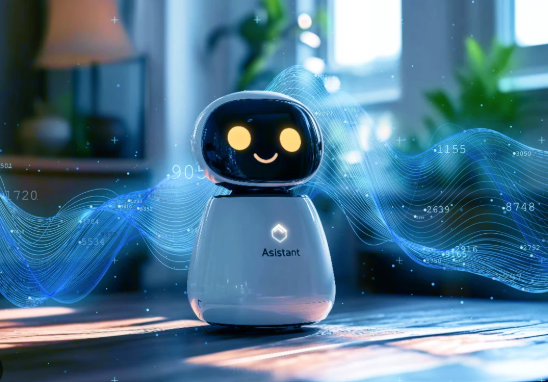
The Voice Assistant Market Demand is growing as users and organizations seek hands-free access to information, services, and device control. Consumers want convenience in smart homes, phones, and vehicles. Businesses want voice interfaces that support customer service, field operations, and workplace productivity. Healthcare and automotive settings value voice for constrained environments where touch interaction is impractical. Demand is not uniform; it varies by setting, user group, and privacy expectation. This article explores demand from consumer devices, enterprises, automotive, healthcare, and retail, along with ways suppliers can respond. It emphasizes clear use cases and responsible implementation. The aim is to show how organizations can translate interest into voice experiences that are useful, maintainable, and trusted.
Demand From Smart Homes And Consumer Devices
Smart homes and consumer devices create strong demand for voice assistants. Users want to control lights, thermostats, entertainment systems, and appliances without using their hands. They want quick answers to everyday questions and easy access to reminders and schedules. Voice assistants can provide these benefits when they understand context and respond reliably. Demand is driven by convenience, accessibility, and the growing number of connected devices. Consumers also expect privacy controls and consistent performance across devices. Organizations should design assistants that recover gracefully from errors and avoid exposing private information in shared spaces. Testing with diverse users helps improve recognition across accents and environments. A phased approach allows teams to refine skills and integrations. When consumer voice experiences are reliable and respectful, demand can translate into sustained use.
Demand From Enterprises And Customer Service
Enterprises and customer service teams create demand for voice assistants that improve efficiency and consistency. Service organizations use voice interfaces to handle routine inquiries, gather information, and route complex issues to human agents. Field workers use voice commands to access instructions, log updates, and request support while keeping their hands free. Workplace teams use assistants to schedule meetings, search knowledge, and automate simple tasks. Demand is driven by the need for faster service and hands-free productivity. Organizations should prioritize accuracy, privacy, and integration with business systems. They should define escalation paths so users can reach human support when needed. Training helps staff understand capabilities and limits. A phased rollout allows teams to test value in focused workflows. When enterprise voice experiences support real tasks, demand can lead to meaningful improvement.
Demand From Automotive And Healthcare Settings
Automotive and healthcare settings have distinct voice demands. Drivers need hands-free access to navigation, communication, and vehicle controls while staying focused on the road. Voice assistants can reduce distraction when designed with safety in mind. Healthcare settings use voice for documentation, hands-free information access, and support in constrained environments. Clinicians may benefit from voice-assisted workflows that reduce screen time. However, privacy and accuracy are critical. Organizations should test voice experiences in realistic conditions and address noise, terminology, and security. They should provide clear controls and human review where decisions matter. Demand is driven by convenience and safety. When voice assistants respect these requirements, they can support more focused and efficient work.
Supplier Response And Responsible Growth
Suppliers should respond to demand with practical, maintainable solutions. Reliable speech recognition and clear interfaces remain foundational. Context awareness, privacy controls, and graceful error recovery help reach diverse users. Integration options are essential for connecting with devices, apps, and enterprise systems. Training and documentation help organizations manage voice experiences confidently. Communication matters: buyers need to understand what a solution does, how it will be supported, and what internal effort is required. The demand anchor should encourage suppliers to listen to real use cases rather than chase feature trends. By focusing on reliability, privacy, and human support, suppliers can help organizations make voice assistants a dependable part of daily life and work. Responsible growth depends on quality, clarity, and sustained support.
➤ Latest Market Intelligence from Market Research Future:

 English
 Arabic
 French
 Spanish
 Portuguese
 Turkish
 Dutch
 Italiano
 Russian
 Romaian
 Portuguese (Brazil)
 Greek
