
From Coil Processing to Finished Parts: Understanding Steel Strip Applications
Many manufactured products depend on metal components that must fit accurately into larger assemblies while maintaining a consistent appearance and reliable function. The material selected at the beginning of production can influence how easily these components are formed, finished, stored, and assembled. For manufacturers comparing Steel Strip Coil options, understanding the relationship between material characteristics and downstream processing is essential. The right choice can help align purchasing decisions with the practical needs of stamping, forming, fabrication, and component manufacturing.
Steel strip is produced by processing steel into a continuous, relatively narrow flat material that can be supplied in coil form. Its composition and processing history influence its workability, strength, surface condition, and suitability for different applications. Carbon steel is commonly selected for components that require a balance of formability and mechanical performance, while other steel varieties may be considered when specific environmental or finishing requirements apply. Buyers should first identify the function of the finished component before deciding which material family is appropriate.
The intended production method is one of the most important factors in material selection. A manufacturer producing clips, brackets, fasteners, or formed supports may have different requirements from a business making decorative metal trims or appliance components. Some applications involve repeated bending and stamping, while others require cutting, welding, or additional surface treatment. Buyers should explain these operations to the supplier and discuss how the material is expected to behave throughout the production process. This helps avoid selecting a product based only on its general description.
Surface condition also deserves careful attention. A steel strip may pass through several manufacturing and handling stages before reaching the customer. Rolling, slitting, storage, and transportation can all influence the condition of its edges and surfaces. For components that receive paint, plating, or protective coatings, the quality of the incoming surface can affect later finishing work. Buyers should clarify acceptable surface conditions and ask how the supplier protects materials against contamination, scratches, and moisture during storage and delivery.
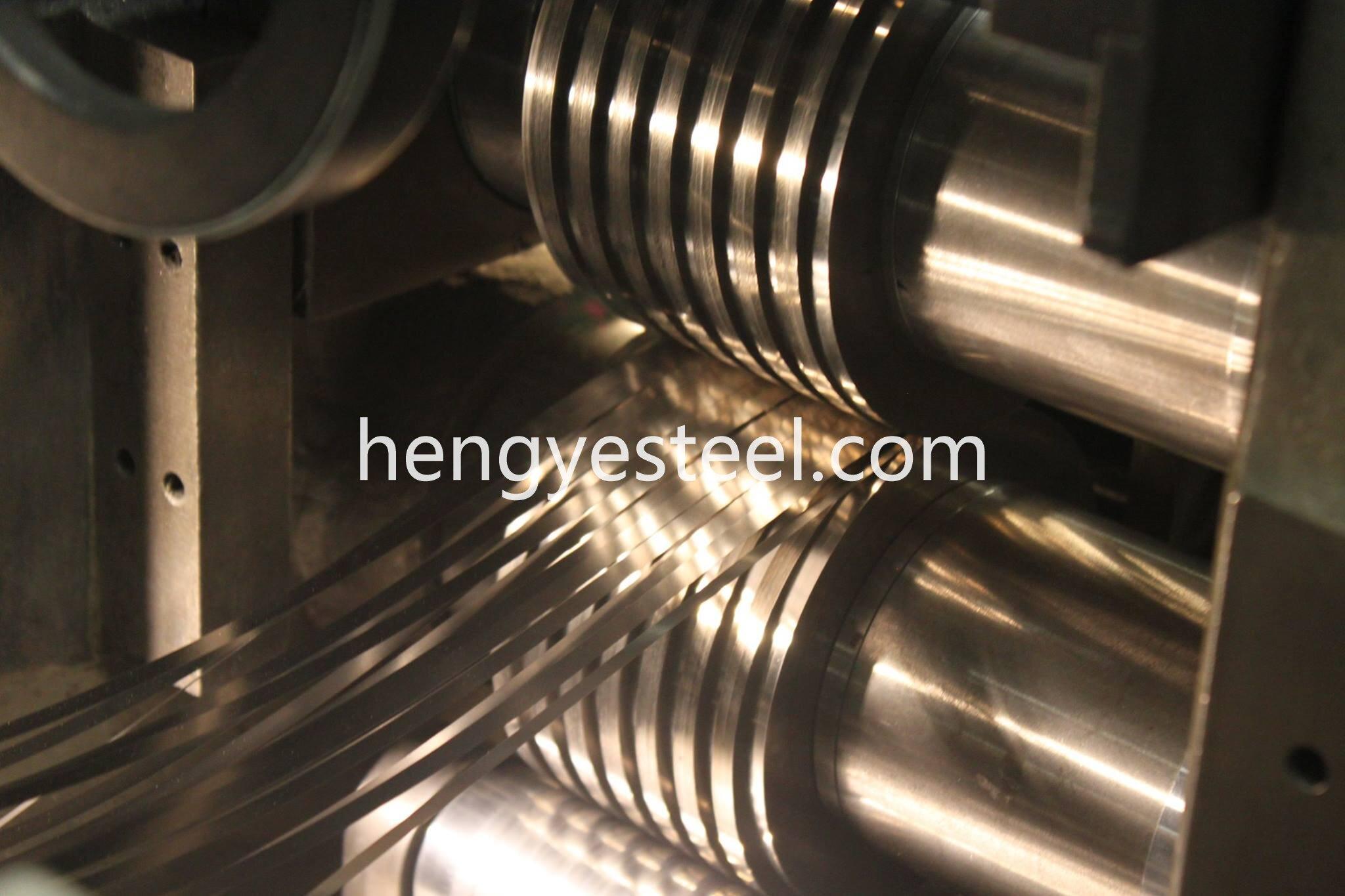
Processing technology determines how a large coil becomes material ready for a particular production line. Slitting is used to divide wider steel coils into narrower strips according to manufacturing needs. Leveling can help improve flatness, while edge treatment may be important for applications where clean, consistent edges are required. The processed strip can then move into stamping, roll forming, bending, or other fabrication operations. Coordination between the material supplier and the component manufacturer can help ensure that the supplied product is compatible with the equipment and production sequence.
Purchasing decisions should also account for consistency between orders. Manufacturers working with repeat production schedules need materials that behave predictably when introduced into established processes. Differences in surface condition, edge quality, or material behavior may require adjustments to equipment settings and production methods. Buyers can discuss inspection practices, product identification, documentation, and order management with potential suppliers. When a project involves multiple deliveries, clear communication about production batches and material traceability can make inventory control more manageable.
The everyday handling experience is another part of material quality. Coil packaging should support safe transportation, unloading, and storage. Clear labels help warehouse personnel identify the correct material, while suitable protection can reduce the risk of damage before production begins. Operators also benefit from consistent coil presentation because it can make loading and material changes easier to manage. These details are particularly relevant in facilities where several strip materials are used across different production lines.
The final component's appearance often reflects decisions made during material selection and processing. In visible products such as furniture fittings, appliance details, decorative trims, and architectural accessories, edge quality and surface uniformity can influence the finished look. Some components receive additional treatments that create a polished, coated, painted, or textured appearance. Others remain largely functional and are concealed within an assembly. Understanding whether the strip will be visible helps buyers determine how much attention should be given to surface finish and cosmetic inspection.
Design requirements can also influence the way manufacturers use steel strip. Narrow metal sections can be incorporated into compact assemblies, formed profiles, fastening systems, and decorative details. Their ability to be cut and shaped makes them useful in products where metal components must follow a specific outline or connect with other materials. Designers and engineers can work with production teams to consider how the strip will be processed, joined, and finished, ensuring that the selected material supports both the component's function and its intended appearance.
For manufacturers evaluating long-term supply relationships, product suitability should be considered alongside production experience, quality management, processing capabilities, and communication. Dongyang Hengye Steel Strip Co., Ltd. works in the steel strip and steel material sector, providing a relevant reference for businesses researching coil-based materials for industrial processing and component production. Buyers can review its product information and company background at https://www.hengyesteel.com/.

 English
 Arabic
 French
 Spanish
 Portuguese
 Deutsch
 Turkish
 Dutch
 Italiano
 Russian
 Romaian
 Greek
