
Beyond Student Records: How a Student Information System Connects Every Stage of the Student Journey
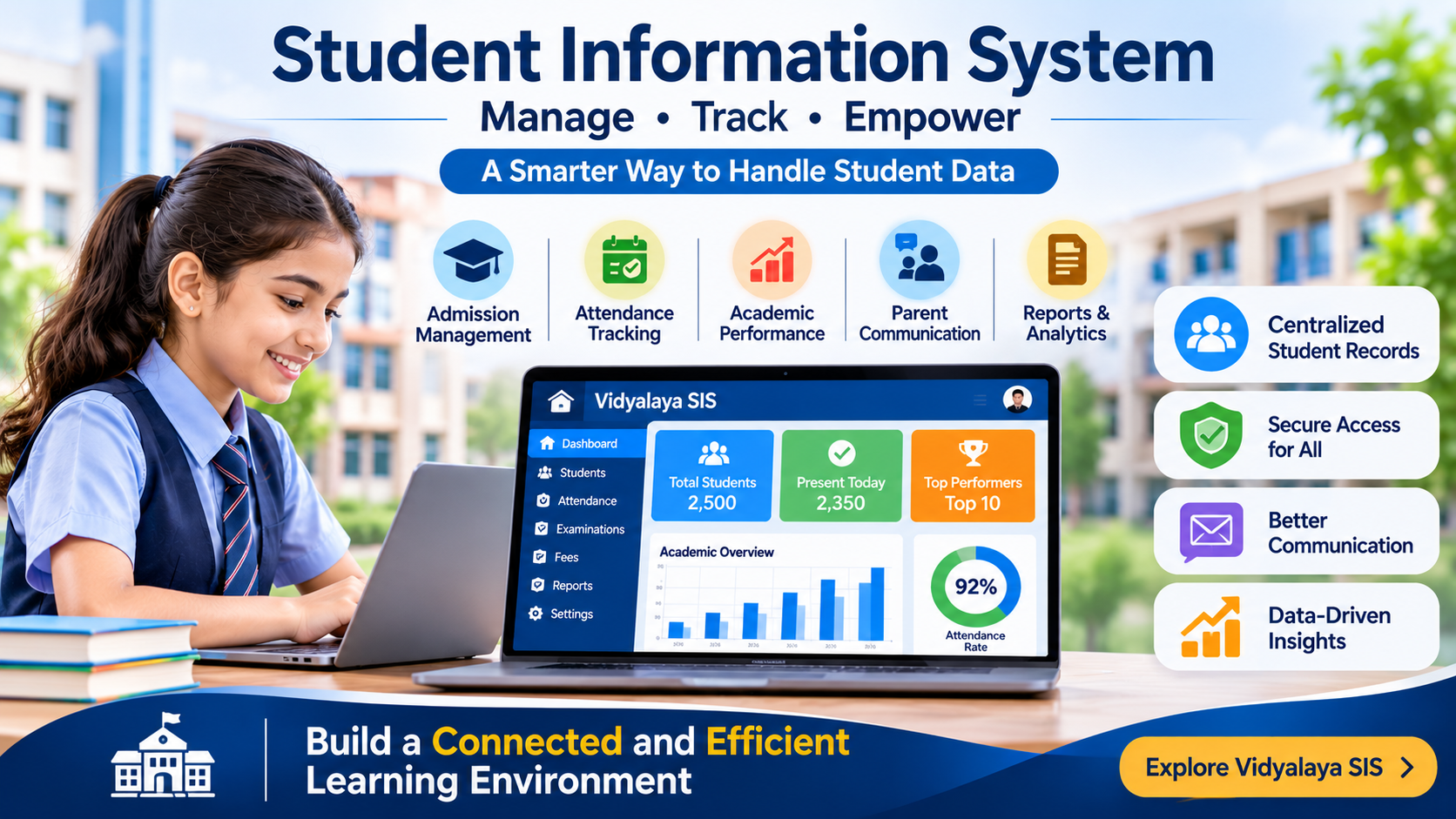
Managing student information is one of the most important responsibilities of an educational institution. From admission applications and personal details to attendance, examination results, and academic progress, schools handle a continuous flow of student-related information.
When these records are maintained across separate spreadsheets, registers, and applications, retrieving accurate information can become time-consuming. Teachers may struggle to access updated academic records, administrators may spend additional time preparing reports, and parents may not receive timely updates.
A modern Student Information System (SIS) helps schools address these challenges by bringing essential student data and academic activities into one centralized platform. It allows educational institutions to organize records, coordinate administrative processes, and make more informed decisions throughout the student lifecycle.
Why Is a Student Information System Important for Schools?
A school manages student information from the moment a family submits an admission enquiry until the student completes their education. Every stage requires accurate records and coordination between different departments.
A centralized SIS helps institutions:
-
Maintain organized student profiles and documents.
-
Manage admission and enrollment information.
-
Track attendance and academic performance.
-
Coordinate examinations, grades, and results.
-
Improve communication between teachers and parents.
-
Generate reports for administrative decisions.
-
Reduce repetitive manual data entry.
The biggest advantage: Schools can access relevant student information through a connected digital environment instead of depending on disconnected records.
1. Manage Student Admissions and Enrollment More Efficiently
The student journey begins with admission enquiries, applications, document submissions, and enrollment confirmation. Managing these activities manually can make it difficult to track applicant information and maintain accurate admission records.
A Student Information System helps schools organize student registration details, personal information, guardian contacts, and uploaded documents.
When admission management connects with student records, information can flow into the student database without unnecessary duplication.
Schools can also explore Admission CRM Software to manage enquiries, follow-ups, and enrollment activities more systematically.
2. Maintain Complete and Centralized Student Profiles
Student information is required by teachers, administrators, and other authorized departments. A centralized database makes it easier to maintain and retrieve important records.
A modern SIS can organize:
-
Student names, photographs, and contact details.
-
Parent and guardian information.
-
Admission and enrollment records.
-
Academic history and class information.
-
Uploaded certificates and documents.
-
Student identification and roll numbers.
With centralized records, authorized staff can retrieve relevant information more conveniently and reduce dependence on multiple registers.
For schools managing large student populations, structured data management also supports more consistent record maintenance.
3. Connect Attendance Records with Academic Management
Student attendance is an important indicator for monitoring classroom participation and maintaining academic records. Manual attendance registers can require additional effort when schools need to prepare monthly reports or identify frequent absences.
A digital student information platform can connect attendance records with student profiles and generate relevant attendance reports.
Depending on the institution's setup, schools can also use biometric attendance integrations and automated absence notifications.
Explore the Student Attendance Management System to understand how schools can organize attendance tracking and reporting.
4. Monitor Academic Performance and Student Progress
Academic performance information helps teachers understand student development and identify areas where additional support may be required.
A Student Information System can help institutions organize examination records, marks, grades, assignments, and academic reports.
Teachers and administrators can review performance information to understand:
-
Subject-wise academic results.
-
Examination performance.
-
Grade and assessment history.
-
Assignment and coursework records.
-
Overall academic progress.
These records support more informed academic discussions between teachers, parents, and school management.
Schools can also connect academic reporting with a Holistic Progress Card to review broader aspects of student development through available assessment modules.
5. Strengthen Parent-Teacher Communication
Parents want regular updates about attendance, examination results, assignments, school events, and academic activities. When communication depends entirely on phone calls or physical visits, sharing information can become inconvenient.
A connected SIS can support communication through announcements, alerts, messages, and designated user access.
With the School Mobile App, parents and students can access supported information such as timetables, assignments, attendance, results, and school announcements.
This helps create a more connected relationship between families and educational institutions.
6. Generate Reports for Better Administrative Decisions
School management requires accurate information to plan academic and administrative activities. A Student Information System helps organize data into reports that can provide visibility into student strength, admission activity, attendance, and academic performance.
Useful reports can help administrators answer questions such as:
-
How many students are enrolled in each class?
-
Which students have frequent attendance issues?
-
How are students performing in examinations?
-
How many new admissions have been confirmed?
-
Which records require updating?
When reports are generated from centralized information, administrators can spend less time collecting data from different departments.
7. Maintain Student Data with Better Access Management
Student records contain personal and academic information that should only be available to authorized users.
Educational institutions should select software that supports role-based access, secure login facilities, and appropriate data protection practices.
Different users should have access according to their responsibilities. For example, teachers may require academic and attendance information, while parents should access relevant details about their own children.
Schools should also review backup procedures, account permissions, and data management policies when implementing an SIS.
How Vidyalaya Student Information System Supports Schools
Vidyalaya provides a centralized Student Information System designed to help educational institutions manage student records and important academic activities.
Its capabilities include:
-
Student Profile Management: Maintain personal details, photographs, guardian information, and documents.
-
Admission Management: Organize enquiries, applications, and enrollment information.
-
Attendance Tracking: Maintain daily and subject-wise attendance records.
-
Academic Records: Manage grades, examinations, assignments, and coursework.
-
Reporting and Analysis: Generate reports related to student information and academic performance.
-
Communication: Support information sharing between parents, teachers, students, and administrators.
-
Mobile Access: Provide access to supported student and academic information through mobile applications.
Vidyalaya also connects student management with broader school administration modules, including fees, timetables, assessments, library management, and other institutional activities.
Explore the Vidyalaya Student Information System to understand how these capabilities can support your school's student data management requirements.
What Should Schools Consider Before Choosing SIS Software?
Selecting the right Student Information System requires evaluating how well the platform supports daily school operations.
Consider these important factors:
-
Complete Student Records: Can the system maintain personal, guardian, admission, and academic information?
-
Attendance Management: Does it support attendance recording and useful reports?
-
Academic Tracking: Can teachers manage grades, examinations, and student performance?
-
Parent Communication: Does it provide convenient access to relevant student updates?
-
Reporting Capabilities: Can administrators generate useful student-related reports?
-
Integration: Can the SIS connect with admission, fees, mobile applications, and other school modules?
-
Security: Does it offer suitable access controls and data protection practices?
The right solution should support current requirements while remaining adaptable as the institution grows.
Conclusion
Student information is connected to almost every aspect of school administration. Managing these records efficiently helps institutions coordinate admissions, attendance, academic activities, communication, and reporting.
A modern Student Information System brings these activities together through a centralized platform, helping schools maintain organized records and provide better access to relevant information.
Vidyalaya offers an integrated solution that connects student management with wider school operations. Educational institutions can evaluate its capabilities to build a more organized, connected, and data-driven school environment.


 English
 Arabic
 French
 Spanish
 Portuguese
 Deutsch
 Turkish
 Dutch
 Italiano
 Romaian
 Portuguese (Brazil)
 Greek
