
FUE vs DHI Hair Transplant in Dubai Compared
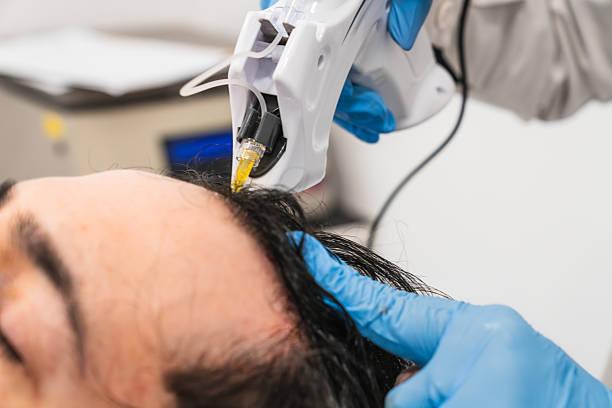
Choosing a hair restoration technique involves more than comparing procedure names. The pattern of hair loss, donor hair quality, available grafts, and desired appearance all influence which surgical approach may be appropriate. When considering a Hair Transplant in Dubai, patients commonly compare Follicular Unit Extraction (FUE) with Direct Hair Implantation (DHI) because both methods involve harvesting individual follicular units.
Although the techniques share similarities, they differ in how grafts are prepared and implanted. Understanding these differences can help patients discuss their options with a qualified hair transplant surgeon.
Understanding FUE and DHI Hair Transplant Techniques
Both FUE and DHI use individual follicular units collected from a donor area, usually at the back or sides of the scalp. The follicles are then transferred to areas affected by thinning or baldness.
How FUE Hair Transplant Works
Follicular Unit Extraction involves removing individual follicular units using small extraction instruments. The harvested grafts are carefully prepared before being placed into recipient sites created in the thinning area.
The surgeon plans the recipient sites according to the natural direction, angle, and distribution of existing hair.
FUE is commonly considered for:
-
Receding hairlines
-
Frontal hair restoration
-
Mid-scalp thinning
-
Selected crown restoration cases
-
Patients who prefer to avoid a linear donor scar
Although FUE does not involve removing a strip of scalp, it can leave small circular scars in the donor area. Their visibility depends on extraction technique, healing, and hair length.
How DHI Hair Transplant Works
Direct Hair Implantation is an implantation approach in which prepared grafts are placed using a specialised implanter instrument.
The instrument allows the surgeon to control the placement angle, direction, and depth while inserting each graft. Depending on the surgical plan, recipient sites may be created during the implantation process.
DHI may be considered when detailed placement control is important, including selected hairline and density-restoration procedures.
However, DHI is not automatically more effective than FUE. Its suitability depends on the patient's scalp, graft requirements, and the surgeon's experience with the technique.
Key Differences Between FUE and DHI
The main distinction is often the implantation process rather than the way follicles are initially collected.
| Feature | FUE | DHI |
|---|---|---|
| Follicle harvesting | Individual extraction | Individual extraction, commonly using FUE |
| Graft preparation | Grafts are prepared before implantation | Grafts are prepared for use with an implanter |
| Implantation | Placement into prepared recipient sites | Placement using a specialised implanter |
| Placement control | Depends on site creation and implantation technique | Implanter supports controlled placement |
| Treatment suitability | Various scalp restoration patterns | Selected cases requiring detailed placement |
| Scarring | Small extraction marks may remain | Donor extraction marks may remain |
The actual surgical approach can vary between clinics and surgeons. Patients should ask which steps are included in the proposed technique rather than relying on the label alone.
Which Technique May Suit Different Hair-Loss Patterns
The best method depends on the area being treated and the patient's long-term restoration goals.
FUE for Larger Treatment Areas
FUE may be considered when a patient needs coverage across several scalp regions. The surgeon can distribute grafts according to donor availability and the priorities of the treatment plan.
For larger procedures, graft handling, extraction distribution, and procedure duration require careful management.
DHI for Detailed Hairline Work
DHI may be considered for selected cases where controlled placement is particularly important. The implanter can help the surgeon manage the angle and direction of individual grafts.
A natural hairline still depends on careful design, suitable graft selection, and the surgeon's judgement. The instrument alone does not guarantee a natural result.
Crown Restoration Requires Individual Planning
The crown has a circular or whorl-like growth pattern. Reproducing this direction requires detailed planning regardless of whether FUE or DHI is used.
The surgeon should also consider the possibility of future hair loss and avoid using an excessive number of donor grafts in one area.
Factors That Matter More Than the Technique Name
Patients sometimes focus heavily on whether a clinic offers FUE or DHI. However, several other factors can have a greater influence on the overall treatment plan.
Donor Hair Quality and Availability
The donor area contains a limited supply of follicles. The surgeon must assess density, hair thickness, scalp characteristics, and the number of grafts that can be safely harvested.
Over-extraction can create visible thinning in the donor region and reduce options for future procedures.
Graft Handling and Survival
Follicular grafts are delicate. Their handling, storage conditions, time outside the body, and implantation technique all matter.
Careful graft management is important regardless of the chosen method.
Surgeon Experience and Hairline Design
A technically advanced instrument cannot replace surgical judgement. The surgeon must understand natural hair direction, facial proportions, donor limitations, and the patient's likely future hair-loss pattern.
The hairline should be planned to suit the individual rather than follow a standard design.
Questions to Ask During Your Consultation
Before selecting a technique, consider discussing:
-
Which method is appropriate for my hair-loss pattern?
-
How many grafts may be required?
-
How much donor hair can safely be harvested?
-
Who will perform the extraction and implantation?
-
How will the hairline and graft direction be planned?
-
What scarring should I expect?
-
What are the likely recovery requirements?
-
How will future hair loss affect the result?
Clear answers help patients evaluate the complete surgical plan rather than choosing based on marketing terminology.
Clinic Note: FUE and DHI are not competing guarantees of superior results. Both require careful patient selection, donor management, graft handling, and implantation planning. The most suitable technique is the one that fits the patient's scalp characteristics and restoration goals.
FAQs About FUE and DHI Hair Transplants
Is DHI better than FUE?
Not in every case. DHI uses a specialised implantation method, while FUE describes individual follicle extraction. The appropriate approach depends on the patient and the surgeon's treatment plan.
Does DHI leave scars?
DHI does not eliminate donor-area scarring. When follicles are harvested individually, small extraction marks may remain.
Which technique is better for a receding hairline?
Both methods may be considered. Hairline design, graft selection, and placement direction are important regardless of the technique.
Is recovery different between FUE and DHI?
Recovery varies according to the extent of surgery, harvesting method, and individual healing. The clinic should provide instructions based on the actual procedure.
Can FUE or DHI guarantee permanent results?
No technique guarantees a particular cosmetic result. Transplanted follicles may continue growing, but existing native hair can still thin over time.
Explore Your Hair Restoration Options at Tajmeels Clinic
Choosing between FUE and DHI should begin with an assessment of the scalp, donor supply, and expected progression of hair loss. Tajmeels Clinic in Dubai provides an opportunity to discuss hair restoration techniques, graft requirements, and individual treatment goals. A consultation can help establish which approach may be appropriate and what outcomes are realistic.

 English
 Arabic
 French
 Portuguese
 Deutsch
 Turkish
 Dutch
 Italiano
 Russian
 Romaian
 Portuguese (Brazil)
 Greek
