
Electronic Bug Sweeping Services: How to Identify Hidden Surveillance Devices
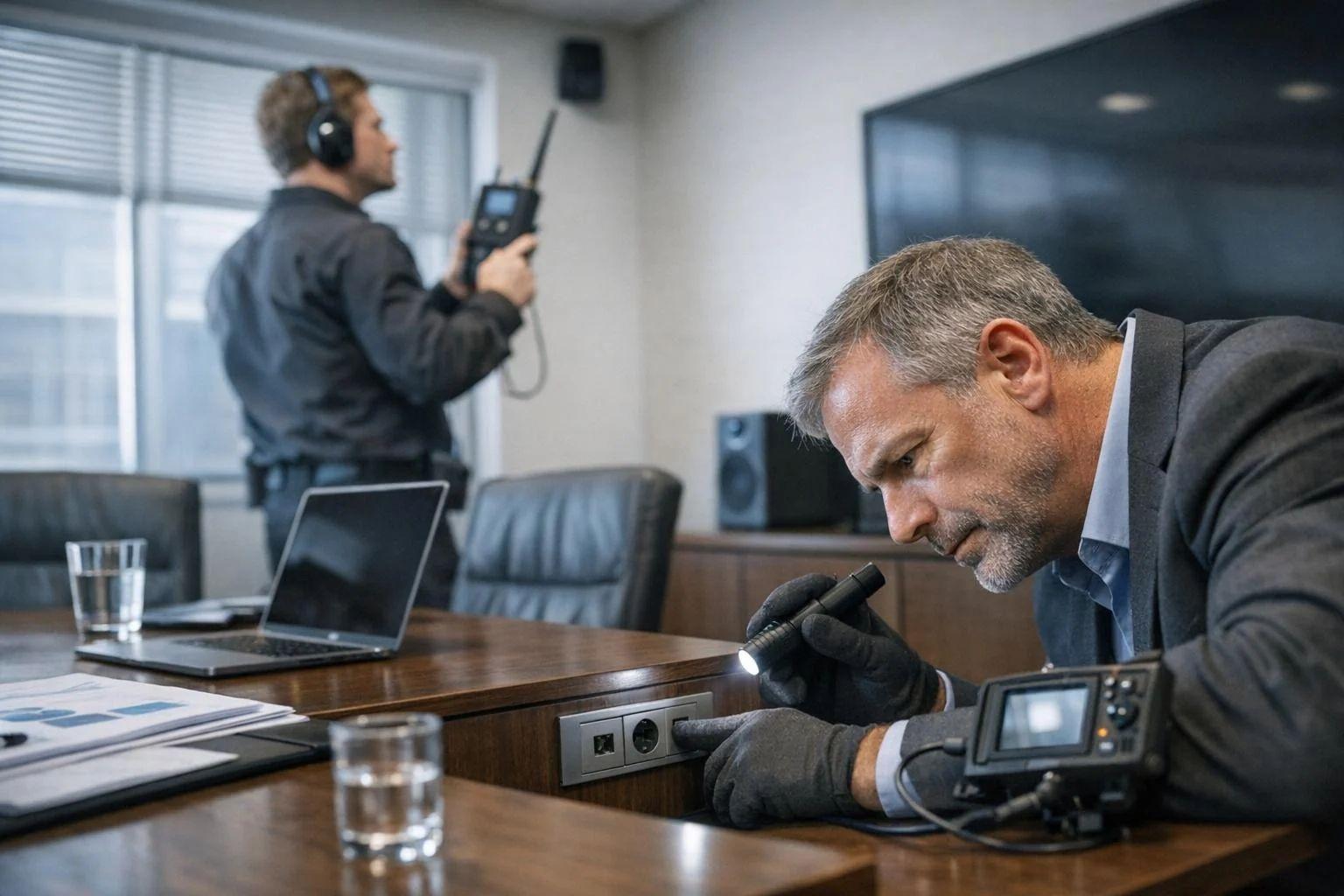
Privacy is no longer just about keeping doors locked or protecting digital information. In today's technology-driven environment, unauthorized electronic surveillance can create concerns in residential properties, corporate offices, hotels, conference rooms, and other sensitive spaces. Hidden cameras, listening devices, wireless transmitters, and other monitoring equipment may be difficult to identify without specialized knowledge and appropriate detection instruments.
This is where professional electronic bug sweeping services become relevant. Through systematic physical inspections, radio-frequency (RF) analysis, and specialized electronic detection techniques, trained professionals can assess premises for potential surveillance devices and suspicious electronic activity.
At Trace Point India, professional Technical Surveillance Countermeasures (TSCM) inspections focus on identifying potential electronic surveillance risks through structured inspection procedures and specialized equipment. Understanding how these inspections work can help individuals and organizations make informed decisions about their privacy requirements.
What Are Electronic Bug Sweeping Services?
Electronic bug sweeping refers to the technical inspection of a property or environment to identify potential hidden surveillance equipment, unauthorized monitoring devices, and suspicious electronic transmissions.
Unlike a routine visual inspection, professional bug sweeping involves examining both the physical environment and relevant electronic signals. Some surveillance devices may be concealed within everyday objects, while others may use wireless communication technologies to transmit collected information.
Professional electronic bug detection may involve examining:
- Hidden cameras and miniature video recording devices.
- Listening devices and concealed microphones.
- Wireless audio and video transmitters.
- Unauthorized RF transmitting equipment.
- Suspicious electronic components and concealed devices.
- Potentially compromised communication and meeting environments.
A professional inspection combines multiple detection approaches because no single instrument or technique can identify every type of surveillance equipment.
Why Are Hidden Surveillance Devices a Growing Privacy Concern?
The increasing availability of compact electronic components has made surveillance equipment smaller and easier to conceal. Devices can potentially be placed inside everyday objects, electronic accessories, furniture, decorative items, and other fixtures.
For individuals, such concerns may arise in private residences, rented accommodation, hotel rooms, or personal spaces. For businesses, the implications can extend to confidential discussions, intellectual property, strategic planning, financial information, and sensitive negotiations.
Some common situations where electronic bug sweeping may be considered include:
1. Corporate Offices and Boardrooms
Business meetings frequently involve confidential information, internal strategies, financial discussions, and sensitive negotiations. Unauthorized recording equipment in these environments could create serious confidentiality concerns.
2. Residential Properties
Homeowners may consider professional inspections when they have specific and reasonable concerns about unauthorized monitoring within private living spaces.
3. Hotels and Temporary Accommodation
People staying in hotels, serviced apartments, or other temporary accommodation may have concerns about concealed recording equipment in private areas.
4. Executive Cabins and Meeting Rooms
Senior management offices and confidential meeting spaces may benefit from periodic technical inspections, particularly when sensitive information is regularly discussed.
5. Commercial and Industrial Premises
Certain business environments contain proprietary processes, operational information, and commercially sensitive discussions that warrant appropriate privacy assessments.
How Do Professional Electronic Bug Sweeping Inspections Work?
Professional bug sweeping is not simply about checking visible objects or using a handheld detector. A systematic inspection involves different stages, with each method serving a specific purpose.
1. Preliminary Assessment of the Premises
The inspection generally begins with understanding the location, its layout, intended use, and the nature of the privacy concerns.
The professional team may assess:
- The size and layout of the premises.
- Areas where confidential conversations take place.
- Relevant electronic equipment and communication systems.
- Specific concerns reported by the client.
- Areas requiring closer technical examination.
This initial assessment helps establish an appropriate inspection plan.
2. Physical Inspection for Concealed Devices
A physical examination is an important part of electronic bug sweeping. Professionals examine accessible areas, fixtures, furniture, electrical accessories, and other objects for unusual modifications or suspicious components.
Particular attention may be given to objects that appear inconsistent with their surroundings or contain unexplained electronic components.
However, an unusual object does not automatically indicate surveillance equipment. Proper verification is essential before drawing conclusions.
3. Radio Frequency (RF) Signal Analysis
RF analysis is one of the important techniques used during certain TSCM inspections.
Wireless surveillance devices may transmit audio, video, or other information through radio-frequency signals. Professional spectrum analyzers can help examine the RF environment and identify transmissions that require further investigation.
RF analysis may help professionals:
- Examine activity across relevant frequency ranges.
- Identify unusual or unexplained RF signals.
- Investigate suspicious wireless transmissions.
- Assess signal behavior under different conditions.
- Distinguish potentially relevant activity from legitimate electronic communications.
It is important to understand that not every RF signal represents a surveillance device. Wi-Fi routers, mobile phones, Bluetooth equipment, and other everyday electronics also generate radio-frequency activity. Technical interpretation and further verification are therefore essential.
4. Non-Linear Junction Detection (NLJD)
Non-linear junction detection is a specialized technique used to identify certain electronic components, including semiconductor junctions, within objects and structures.
Unlike RF analysis, which examines radio-frequency transmissions, NLJD can help locate electronic components even when a device is not actively transmitting.
This makes it a useful inspection technique in appropriate circumstances, particularly when assessing concealed electronic components.
5. Examination of Potential Hidden Cameras
Miniature cameras can be concealed in various objects and fixtures. Professional inspections may include examining suspicious openings, reflective surfaces, unusual modifications, and accessible locations where camera components could potentially be concealed.
Depending on the equipment and circumstances, specialized optical detection tools may also assist in examining potential camera lenses.
A thorough assessment should not rely exclusively on visual checks because different camera designs and recording technologies require different examination methods.
6. Inspection of Listening Devices and Audio Equipment
Listening devices may be designed to capture conversations through microphones and, in some cases, transmit audio wirelessly.
Professional TSCM inspections may involve examining suspicious electronic components, analyzing relevant RF activity, and checking accessible areas for potential recording or transmission equipment.
Not all recording devices transmit continuously. Some may store information locally, which is why RF analysis alone cannot establish that a premises is free from surveillance equipment.
7. Findings, Verification, and Reporting
The final stage involves reviewing observations and verifying suspicious findings wherever possible.
A professional inspection should distinguish between confirmed devices, suspicious components, unexplained signals, and ordinary electronic activity.
Depending on the engagement, findings may be documented in an inspection report with relevant observations and recommendations.
Types of Equipment Used in Professional TSCM Inspections
Professional electronic bug sweeping may involve several specialized instruments depending on the nature of the premises and the inspection requirements.
|
Equipment |
Inspection purpose |
|
RF Spectrum Analyzers |
Examine radio-frequency activity and investigate suspicious transmissions. |
|
Non-Linear Junction Detectors |
Identify certain concealed electronic components. |
|
Optical Lens Detectors |
Assist in locating potential hidden camera lenses. |
|
Broadband RF Detectors |
Help identify relevant wireless signal activity. |
|
Physical Inspection Tools |
Examine accessible objects, fixtures, and concealed spaces. |
|
Electronic Inspection Instruments |
Support the technical examination of suspicious devices. |
The selection of equipment depends on the inspection environment, potential surveillance technologies, and the technical requirements of the assignment.
Can Every Hidden Surveillance Device Be Detected?
One of the most important aspects of professional bug sweeping is understanding the limitations of detection technology.
No single device or inspection method can guarantee the identification of every possible surveillance device.
For example:
- A camera recording directly to internal storage may not generate an active RF transmission.
- A listening device may remain inactive until triggered.
- A wired surveillance device may not transmit wireless signals.
- Some electronic components may resemble ordinary household or office equipment.
- Legitimate wireless signals may sometimes require further investigation to establish their source.
This is why professional TSCM inspections combine multiple approaches rather than depending on one detection instrument.
A systematic inspection can help reduce uncertainty and identify potential concerns, but absolute guarantees of zero surveillance risk should be avoided.
When Should You Consider Professional Electronic Bug Sweeping?
There is no universal inspection schedule suitable for every property. The frequency and scope of inspections should depend on the environment, confidentiality requirements, and specific concerns.
You may consider professional bug sweeping when:
- Moving into a new office or business premises.
- Establishing a confidential boardroom or executive meeting space.
- Experiencing specific and credible privacy concerns.
- Preparing for sensitive business negotiations.
- Managing locations where confidential information is regularly discussed.
- Reviewing privacy arrangements in residential or temporary accommodation.
For organisations handling sensitive business information, periodic TSCM assessments can form part of a broader confidentiality and risk-management programme.
How to Choose the Right Electronic Bug Sweeping Service Provider
Selecting a professional TSCM provider requires careful consideration. Since electronic surveillance detection involves specialised equipment and technical interpretation, the quality of the inspection methodology matters.
Before engaging a service provider, consider the following:
Technical Expertise: Understand the team's experience with electronic surveillance detection and TSCM inspection procedures.
Specialised Equipment: Ask about the detection instruments used and whether they are appropriate for your inspection requirements.
Systematic Inspection Process: Look for a provider that combines physical examination with relevant electronic detection techniques.
Confidentiality: Discuss how sensitive client information, premises details, and inspection findings will be handled.
Transparent Reporting: Understand what documentation and findings will be provided after the inspection.
Clear Scope of Work: Ensure that the proposed inspection covers the relevant areas and explains any limitations.
A professional provider should communicate findings responsibly rather than creating unnecessary alarm or making unrealistic promises.
Professional Electronic Bug Sweeping and TSCM Services by Trace Point India
When privacy concerns involve potentially concealed electronic surveillance equipment, a structured technical assessment can help establish a clearer understanding of the environment.
Trace Point India provides specialised TSCM debugging and electronic bug sweeping services for individuals, businesses, corporate offices, and other professional environments.
The inspection approach focuses on identifying potential electronic surveillance devices through relevant physical examination procedures, RF analysis, and specialised detection equipment.
Services may address inspection requirements involving:
- Hidden camera detection.
- Listening device and microphone detection.
- Wireless transmitter identification.
- RF signal analysis.
- Corporate office and boardroom inspections.
- Residential and commercial premises inspections.
- Technical Surveillance Countermeasures (TSCM).
Every inspection requirement can differ depending on the premises, the nature of the concern, and the technologies involved. Understanding these factors helps determine the appropriate inspection scope and technical approach.
Whether you are reviewing the privacy of a residential property or assessing a confidential corporate environment, professional guidance can help you make an informed decision.
Frequently Asked Questions (FAQs)
1. What are electronic bug sweeping services?
Electronic bug sweeping services involve professional inspections designed to identify potential hidden cameras, listening devices, wireless transmitters, and other unauthorised electronic surveillance equipment using specialised detection instruments and inspection techniques.
2. What is the difference between bug sweeping and TSCM?
Bug sweeping generally refers to identifying potential hidden surveillance equipment. TSCM, or Technical Surveillance Countermeasures, is a broader technical inspection discipline involving physical examination, electronic analysis, signal investigation, and specialised detection procedures.
3. Can RF analysis detect all hidden cameras?
No. RF analysis can help identify certain wireless transmissions, but cameras that record locally or use wired connections may not generate detectable wireless signals. Other inspection methods may be required.
4. How long does a professional bug sweeping inspection take?
The duration depends on the size of the premises, inspection requirements, number of rooms, complexity of the electronic environment, and the techniques involved. A provider can estimate the time after understanding the scope of work.
5. Are electronic bug sweeping services useful for corporate offices?
Yes. Corporate bug sweeping can help organisations assess potential electronic surveillance risks in boardrooms, executive offices, conference rooms, and other sensitive areas.
6. Do professional bug sweeping services include hidden camera detection?
Professional inspections may include examining potential hidden cameras, concealed lenses, and associated electronic components using appropriate physical and optical detection methods.
7. How often should a business conduct TSCM inspections?
There is no fixed frequency for every organisation. Inspection schedules can be based on the sensitivity of business operations, changes in premises, confidentiality requirements, and specific risk assessments.
Conclusion: Make Informed Decisions About Your Electronic Privacy
Electronic surveillance technologies continue to evolve, making awareness and appropriate inspection practices increasingly relevant. Hidden cameras, listening devices, and wireless transmitters may not always be easy to identify through ordinary visual checks.
Professional electronic bug sweeping services provide a structured way to assess potential surveillance risks through physical inspections, RF analysis, specialised detection equipment, and technical verification.
For individuals and organisations with specific privacy concerns, choosing an experienced TSCM service provider is an important step towards understanding the electronic environment of their premises.
Trace Point India offers professional TSCM debugging and electronic bug sweeping services to help assess potential surveillance risks across residential, corporate, and commercial environments.
Explore the available services and discuss your inspection requirements.

 English
 Arabic
 French
 Portuguese
 Deutsch
 Turkish
 Dutch
 Italiano
 Russian
 Romaian
 Portuguese (Brazil)
 Greek
