
Best Jira Alternative for Full Lifecycle Management
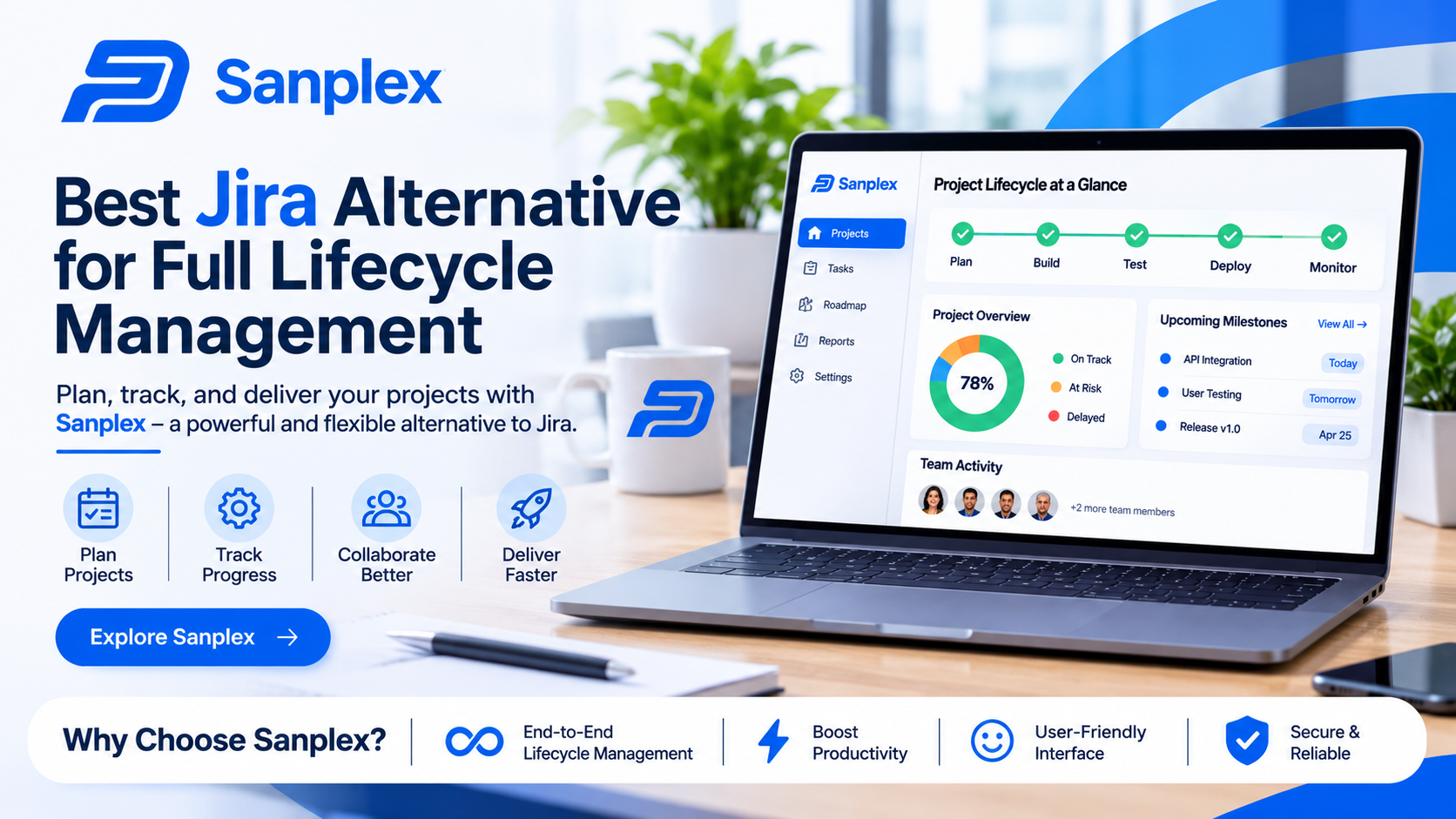
Successful project delivery depends on more than completing individual tasks. Teams must understand business requirements, plan resources, coordinate activities, manage changes, test results, and deliver work within agreed timelines. When these responsibilities are spread across disconnected applications, maintaining control becomes difficult. This is why organizations are searching for the Best Jira Alternative for Full Lifecycle Management.
Jira is a familiar choice for software development teams, particularly those using agile methods and issue tracking. However, businesses managing complex products, services, and cross-department projects may need a platform with broader capabilities. They need a connected workspace where project information remains accessible from initial planning through execution, delivery, and future improvements.
Understanding Full Lifecycle Management
Full lifecycle management is the process of overseeing a project through every major stage of its development. It connects activities that might otherwise be managed separately and gives teams a consistent view of responsibilities, progress, and results.
From Initial Idea to Final Delivery
A project usually begins with an idea, business requirement, or customer problem. The team evaluates its value, defines the expected outcome, and determines what resources are needed.
After approval, planning establishes the scope, milestones, deadlines, and responsibilities. During execution, employees complete assigned work and report progress. Testing and review confirm whether the results meet agreed requirements. Delivery makes the completed work available to its intended users, while ongoing maintenance addresses issues and opportunities for improvement.
A lifecycle management platform helps connect these stages. For example, when a product requirement changes, the team should be able to identify affected tasks, owners, deadlines, and approvals without manually searching through unrelated records.
Why Organizations Consider Alternatives to Jira
Jira offers useful tools for issue tracking, agile development, backlog management, and sprint planning. Its capabilities can be effective for software teams, but organizations do not all manage projects in the same way.
Businesses with multiple departments may need to coordinate engineering, product management, marketing, operations, and leadership. A platform focused primarily on development workflows may not provide the most convenient experience for every participant.
Different Teams Need Different Workflows
A developer may need a detailed issue queue, while a project manager needs a timeline showing dependencies and milestones. A department head may want a high-level dashboard rather than a list of individual tickets.
The Best Jira Alternative for Full Lifecycle Management should accommodate these different working styles without separating important project information.
Complex Customization Can Increase Administration
Highly customized workflows can help organizations manage specific processes. However, excessive configuration may make a system harder to maintain. Administrators must understand how rules, fields, permissions, and integrations interact.
A simpler platform with flexible workflow options can sometimes provide better long-term value than a system that requires extensive customization for everyday activities.
Project Information Can Become Fragmented
Teams often use separate applications for planning, documents, approvals, reporting, and communication. Employees then spend time updating multiple records or checking different locations for the latest information.
A connected platform can reduce this fragmentation by keeping project details, task updates, and relevant discussions together.
Features to Evaluate in a Full Lifecycle Management Platform
Choosing an alternative requires examining how well the platform supports actual business processes. The following capabilities are particularly important.
1. Centralized Project Planning
Project planning tools should allow users to define objectives, create tasks, set deadlines, assign owners, and establish dependencies. Timeline and calendar views help managers understand how individual activities affect major delivery dates.
For example, a product launch may depend on design approval, development completion, quality testing, and marketing preparation. A connected project plan makes these relationships easier to monitor.
2. Requirements and Change Management
Requirements explain what a project must achieve. They may include technical specifications, customer expectations, compliance obligations, or business objectives.
A suitable platform should provide a reliable place to record requirements and connect them to related tasks and deliverables. When a requirement changes, the team should be able to assess its impact on cost, timing, and workload.
3. Task and Workflow Management
Task management should support different work styles, including lists, Kanban boards, and structured workflows. Users should be able to assign ownership, set priorities, add due dates, and track status.
Workflow management is equally important. It defines how work moves between stages, such as review, approval, implementation, and completion.
4. Team Collaboration
Project information becomes more useful when employees can discuss it in context. Look for comments, mentions, file attachments, notifications, and activity histories.
For example, a reviewer should be able to leave feedback on a specific deliverable rather than sending an email that may become difficult to locate later.
5. Reporting and Resource Visibility
Managers need accurate information about project health. Useful reports include overdue tasks, milestone progress, workload distribution, and outstanding approvals.
Resource visibility also helps prevent teams from assigning more work than employees can reasonably complete. When workload information is available, managers can adjust priorities or redistribute responsibilities.
6. Integrations and Access Controls
A replacement platform should work with the organization's existing technology where practical. Consider integrations with document storage, communication tools, development environments, and other essential applications.
Access controls are also important. Employees, contractors, and clients may need different levels of visibility. Check whether the platform supports role-based permissions and appropriate data protection measures.
A Practical Method for Selecting the Right Alternative
The best platform is the one that solves the organization's actual problems. A structured evaluation helps prevent decisions based only on appearance or a long feature list.
Map Current Processes
Document how projects move from approval to completion. Identify repeated administrative tasks, unclear responsibilities, delayed approvals, and missing information.
This review reveals which capabilities should receive the highest priority.
Define Essential Requirements
Separate must-have features from optional improvements. For example, a company managing engineering projects may require dependency tracking, document control, approvals, and detailed reporting. A smaller team may prioritize task organization and collaboration.
This distinction makes comparisons more objective.
Test Realistic Workflows
Use a trial environment to create a sample project. Add tasks, assign owners, set dependencies, upload documents, and generate a progress report.
Invite employees from different departments to test the same project. Their feedback can reveal usability problems that a product demonstration might not show.
Compare Long-Term Costs
Review subscription fees alongside implementation, training, administration, integration, and migration costs. Also consider whether pricing changes as the number of users or projects increases.
A platform should remain financially practical as the organization expands.
Practical Benefits and Key Insights
A well-selected lifecycle management platform can improve project operations in several measurable ways:
-
Clearer responsibility: Every activity can have an identified owner and deadline.
-
Better coordination: Teams work from shared project information instead of maintaining disconnected records.
-
Earlier risk detection: Milestone and dependency tracking can reveal delays before they affect final delivery.
-
More informed decisions: Current reports help managers evaluate progress and workload.
-
Consistent processes: Standard workflows make approvals and handovers easier to manage.
-
Less manual administration: Automation can handle routine notifications and status changes.
-
Improved accountability: Activity histories help teams understand decisions and changes.
These outcomes depend on consistent use. A platform cannot improve project control if employees do not update tasks or managers ignore the information it provides.
Common Challenges When Changing Platforms
Replacing an established project management system requires preparation. Organizations should plan for technical and operational issues before moving their work.
Data Migration and Compatibility
Existing projects may contain custom fields, attachments, comments, issue histories, and relationships between tasks. These records may not transfer directly into a different platform.
Create a migration inventory and test representative data before transferring everything. Confirm that essential information remains accurate and accessible.
Training and Adoption
Employees may be familiar with Jira's terminology and workflows. A new platform can initially slow work if users do not understand how to complete everyday activities.
Provide role-specific training and clear guidance. Start with a pilot team so the organization can address problems before wider adoption.
Avoiding Unnecessary Complexity
Migration is an opportunity to review existing processes. Rebuilding every old customization may carry forward problems that no longer serve the business.
Retain workflows that provide real value and simplify those that create unnecessary steps.
Frequently Asked Questions
1. What makes a Jira alternative suitable for full lifecycle management?
It should connect planning, requirements, task execution, collaboration, monitoring, approvals, delivery, and ongoing improvements while providing clear project visibility.
2. Can a full lifecycle management platform support agile teams?
Yes. Look for capabilities such as backlogs, sprint planning, Kanban boards, issue tracking, and progress reporting. The exact features vary by platform.
3. Is lifecycle management useful outside software development?
Yes. Engineering, marketing, operations, product development, and professional services teams can use lifecycle management to coordinate tasks, resources, deadlines, and approvals.
4. How can a company reduce disruption during migration?
Use a phased migration, test data transfers, train employees, and establish a clear transition plan. A pilot project can help identify problems before the full rollout.
5. Should businesses choose a platform with the most features?
No. The platform should provide the capabilities required by the organization without making everyday work unnecessarily complicated. Usability, integration, support, and total cost are equally important.
Conclusion
Finding the Best Jira Alternative for Full Lifecycle Management involves evaluating how a platform supports the complete journey of a project, not simply how it tracks tasks. Organizations should look for connected planning, requirements management, collaboration, workflow automation, reporting, and delivery capabilities.
A careful selection process begins with understanding existing problems, defining essential requirements, and testing realistic workflows. With suitable migration planning and employee training, businesses can establish a more coordinated project environment, improve accountability, and maintain better control from initial planning to final delivery.

 English
 Arabic
 French
 Spanish
 Portuguese
 Deutsch
 Turkish
 Dutch
 Italiano
 Russian
 Romaian
 Portuguese (Brazil)
