
E-commerce Marketing Strategies for Better Sales
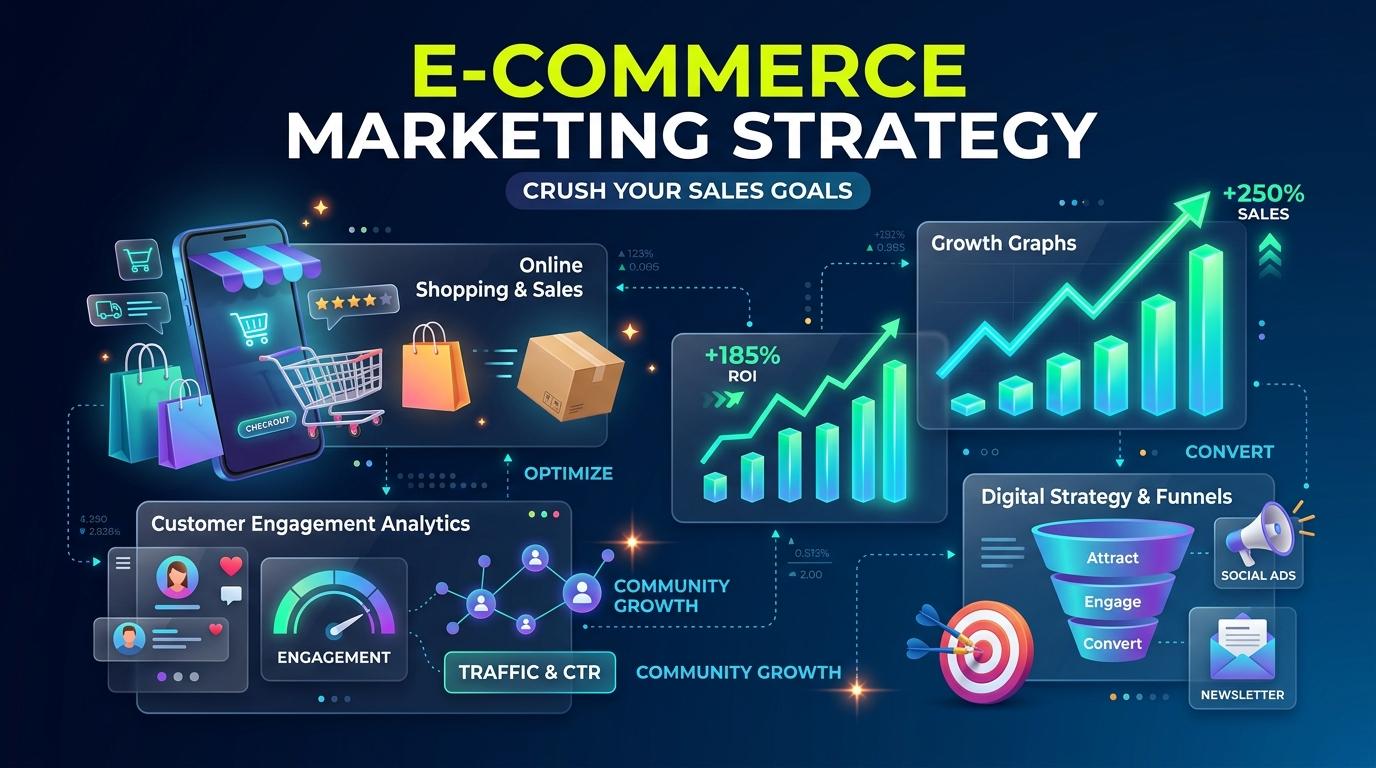
E-commerce businesses operate in a competitive market where attracting customers is only the first step toward success. To increase sales, businesses need a clear marketing plan that focuses on customer needs, product visibility, pricing, and advertising performance. A well-planned approach helps online stores reach potential buyers, build trust, and encourage repeat purchases. By using effective E-commerce Marketing strategies, businesses can improve their online presence, attract qualified traffic, and turn more visitors into paying customers.
1. Understand Your Target Audience
Understanding your target audience is the foundation of a successful online business. Before investing in marketing campaigns, businesses should identify who their customers are, what they need, and how they make purchasing decisions.
Start by studying customer interests, shopping habits, age groups, locations, and spending patterns. This information helps businesses create relevant product offers and marketing messages.
For example, an online store selling fitness equipment may target people interested in home workouts, health products, and exercise routines. Instead of showing the same advertisement to everyone, the business can create separate campaigns for beginners, professional athletes, and home fitness enthusiasts.
A clear understanding of customers helps reduce wasted advertising costs and improves conversion opportunities.
2. Improve Your Website Experience
Your website plays an important role in converting visitors into customers. Even a well-designed advertising campaign may fail if visitors cannot easily find products or complete their purchases.
Focus on these important website improvements:
- Create simple and clear navigation menus.
- Use high-quality product images.
- Provide accurate product descriptions.
- Make the checkout process easy.
- Ensure mobile-friendly website performance.
- Display shipping, return, and payment information clearly.
Mobile shopping is especially important for online retailers. According to Statista, mobile commerce accounts for a significant share of global retail e-commerce sales. Businesses should therefore test their websites on different screen sizes and make sure customers can purchase products without unnecessary steps.
A smooth shopping experience builds confidence and helps reduce abandoned carts.
3. Use Advertising & PPC to Attract Customers
Paid advertising is an effective way to bring targeted visitors to an online store. Advertising & PPC campaigns allow businesses to display products to people who are actively searching for related items or showing interest in specific categories.
Google Ads and social media advertising platforms provide different targeting options, including keywords, interests, demographics, and shopping behavior.
For better campaign performance, businesses should:
- Select relevant advertising keywords.
- Create clear and action-focused ad copy.
- Use attractive product images.
- Test different audience groups.
- Monitor clicks, conversions, and advertising costs.
For example, an online clothing store can run separate campaigns for men's clothing, women's clothing, and seasonal collections. This approach makes it easier to understand which product categories attract more customers.
However, spending more money on advertisements does not always produce better results. Businesses must regularly evaluate campaign performance and adjust their budgets according to actual sales.
4. Apply Marketing Analytics to Measure Performance
Marketing decisions should be based on reliable data rather than assumptions. Marketing Analytics helps businesses understand how visitors interact with their websites and which campaigns generate the best results.
Important performance metrics include:
- Website traffic
- Conversion rate
- Customer acquisition cost
- Average order value
- Cart abandonment rate
- Return on ad spend
These measurements help identify opportunities for improvement. For instance, if a campaign receives many clicks but generates very few purchases, the business should investigate its landing page, product pricing, audience targeting, and checkout experience.
Tools such as Google Analytics 4 can help track website activity, traffic sources, and customer interactions. Businesses can use this information to understand which marketing channels contribute to their sales goals.
5. Focus on Advertising Profitability
Generating revenue is important, but businesses must also understand how much they spend to generate that revenue. Advertising Profitability helps online retailers determine whether their marketing investments are producing sufficient returns.
One useful measurement is Return on Ad Spend (ROAS).
ROAS = Revenue from Advertising ÷ Advertising Cost
For example, suppose an online store spends $2,000 on advertising and generates $8,000 in sales from those campaigns.
Its ROAS would be:
$8,000 ÷ $2,000 = 4
This means the business generates $4 in revenue for every $1 spent on advertising.
Businesses can use roascalculate to evaluate advertising returns, compare campaign results, and understand how effectively their marketing budgets generate revenue.
However, ROAS does not represent net profit because it does not automatically account for product costs, shipping, employee expenses, or other operating costs. Businesses should consider these expenses before deciding whether a campaign is profitable.
6. Use Email Marketing to Increase Repeat Sales
Email marketing remains a useful strategy for maintaining customer relationships and encouraging repeat purchases. Instead of focusing entirely on attracting new customers, online stores should also communicate with existing buyers.
Businesses can create different email campaigns for different customer groups.
Some effective examples include:
- Welcome emails for new subscribers.
- Special discounts for returning customers.
- Abandoned cart reminders.
- Product recommendations based on previous purchases.
- Updates about new products and seasonal offers.
Personalized emails can make communication more relevant. For example, a customer who previously purchased skincare products may receive recommendations for related items.
Businesses should avoid sending too many promotional messages. Useful content, clear offers, and appropriate timing can improve customer engagement.
7. Improve Product Pages for Search Engines
Search engine optimization helps online stores attract visitors without relying entirely on paid advertising. Product pages should provide useful information that helps both customers and search engines understand what is being offered.
Start with descriptive product titles, relevant keywords, informative descriptions, and optimized images. Include important product details such as size, material, features, pricing, and availability.
Publishing helpful blog content can also support organic traffic. Topics such as buying guides, product comparisons, tutorials, and frequently asked questions can answer customer questions before they make a purchase.
For example, an electronics store could publish a guide explaining how to choose the right wireless headphones. The article can link to relevant product pages and help readers make informed decisions.
Consistent SEO improvements can support long-term website visibility.
8. Build Customer Trust and Encourage Reviews
Trust plays a major role in online purchasing decisions. Customers cannot physically inspect products before ordering, so they often depend on reviews, product details, and business policies.
Encourage satisfied customers to share honest feedback. Display genuine reviews, provide clear contact information, and explain return policies.
Respond professionally to negative feedback and address customer concerns whenever possible. This shows that the business values its customers and takes service quality seriously.
Offering secure payment options and providing accurate delivery information can also improve customer confidence.
9. Test, Review, and Improve Your Strategy
E-commerce marketing requires continuous improvement. Customer preferences, competition, and advertising costs can change over time.
Businesses should review their marketing results regularly and test different approaches. Experiment with product images, advertising messages, landing pages, discounts, and audience targeting.
Compare the results before making major budget changes. Keep strategies that generate valuable customers and improve or replace campaigns that consistently underperform.
A consistent testing process helps businesses make better decisions and use their marketing budgets more effectively.
Conclusion
Growing an online store requires more than attracting website visitors. Businesses need to understand their customers, improve website performance, create targeted advertising campaigns, and measure their results. Combining SEO, email marketing, Advertising & PPC, and Marketing Analytics can create a stronger foundation for sustainable growth. By focusing on customer experience and Advertising Profitability, online retailers can improve conversions, increase repeat purchases, and build a successful E-commerce Marketing strategy.
Frequently Asked Questions
1. What is e-commerce marketing?
E-commerce marketing involves promoting online stores and products through SEO, paid advertising, email campaigns, and social media.
2. How can I increase e-commerce sales?
Improve product pages, target relevant customers, offer competitive pricing, and simplify the checkout process.
3. Why is PPC important for online stores?
PPC helps businesses reach targeted audiences and attract visitors who are interested in their products.
4. What is ROAS in e-commerce?
ROAS measures advertising revenue compared with advertising costs and helps evaluate campaign performance.
5. How does SEO help e-commerce businesses?
SEO improves organic search visibility, attracts relevant visitors, and supports long-term website traffic.

 English
 Arabic
 Spanish
 Portuguese
 Deutsch
 Turkish
 Dutch
 Italiano
 Russian
 Romaian
 Portuguese (Brazil)
 Greek
