
OSHA Safety Videos That Help Reduce Workplace Accidents
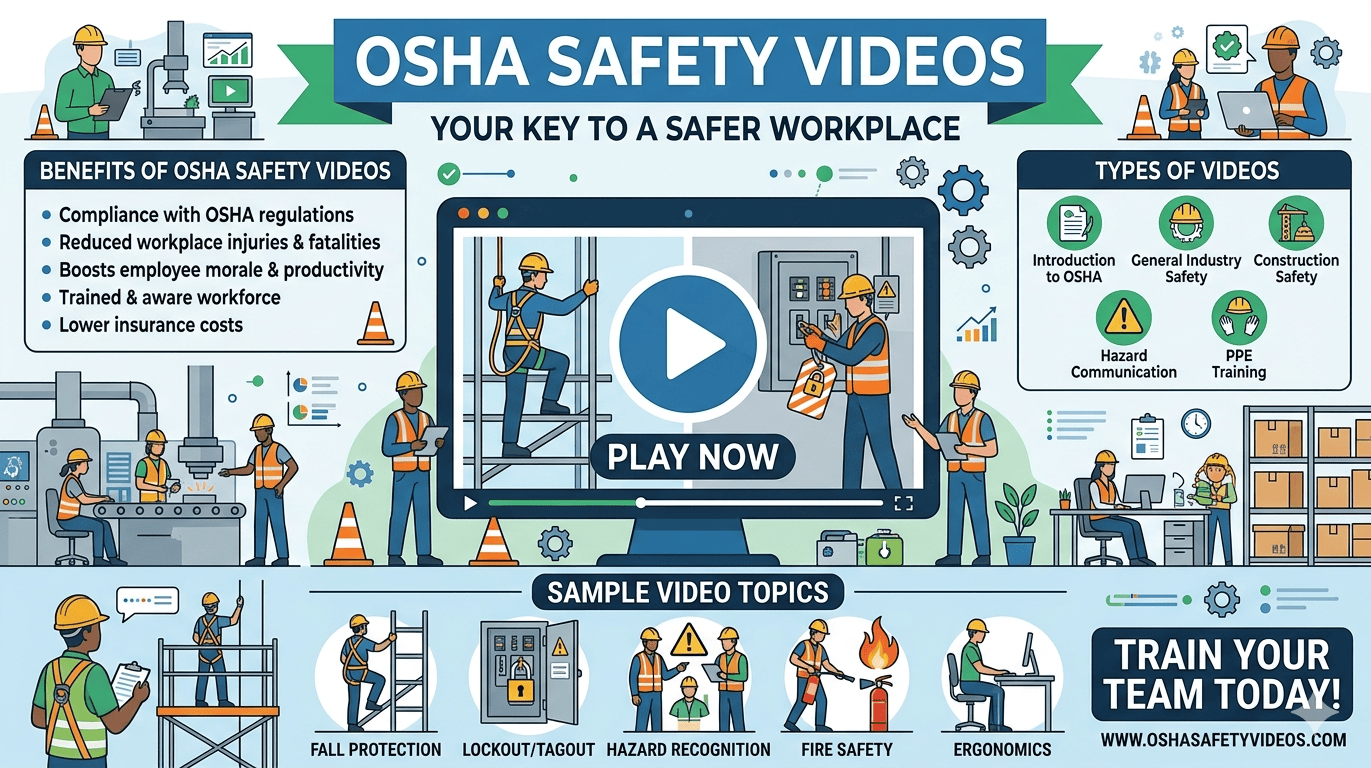
OSHA Safety Videos play a critical role in helping employers create safer work environments across the United States. From manufacturing plants to construction sites and office settings, visual safety training helps employees understand workplace hazards, proper safety procedures, and OSHA compliance requirements. Companies that invest in effective video-based training often experience fewer injuries, improved employee awareness, and stronger safety cultures.
The Role of Visual Learning in Workplace Safety
Employees retain information more effectively when they can see real-life demonstrations instead of simply reading manuals. Safety training videos explain complex procedures in a simple, engaging format that is easy to understand. Workers learn how to identify hazards, operate equipment correctly, wear personal protective equipment (PPE), and respond to emergencies.
Visual demonstrations also help reduce misunderstandings among multilingual workforces by providing clear examples that are easier to follow than written instructions alone. This makes video-based training an excellent choice for businesses with diverse teams.
Preventing Common Workplace Accidents
Many workplace accidents happen because employees are unaware of safety risks or fail to follow established procedures. High-quality Safety Videos provide practical guidance on avoiding slips, trips, falls, electrical hazards, machine injuries, chemical exposure, and improper lifting techniques.
When employees regularly review updated safety content, they become more confident in identifying dangerous situations before accidents occur. Continuous learning encourages workers to make safer decisions during their daily tasks, reducing both injuries and downtime.
Supporting OSHA Compliance
Employers across the United States are responsible for providing safe workplaces that comply with OSHA regulations. Safety training is an important part of meeting these requirements.
Using OSHA Safety Videos allows organizations to deliver standardized training that remains consistent across departments and job sites. Every employee receives the same accurate safety information, making documentation and compliance easier for employers while reinforcing safe work practices throughout the organization.
Video training can also be incorporated into onboarding programs, annual refresher sessions, and department-specific safety meetings to maintain compliance year-round.
Benefits of Online Training Solutions
Modern businesses increasingly rely on Online Safety Training Videos because they provide flexibility, convenience, and accessibility. Employees can complete required training from different locations without disrupting operations, making online learning ideal for companies with multiple facilities or remote teams.
Digital training platforms also allow employers to monitor employee progress, maintain training records, schedule refresher courses, and quickly update safety materials whenever regulations change. This creates a more efficient training process while ensuring workers always have access to current safety information.
Building a Strong Safety Culture
Creating a safe workplace goes beyond meeting legal requirements. Organizations that prioritize safety encourage employees to report hazards, follow procedures, and actively participate in improving workplace conditions.
A comprehensive Safety Orientation Course introduces new hires to company policies, emergency procedures, reporting systems, and job-specific safety expectations before they begin work. Combining orientation with ongoing video training helps reinforce important safety habits throughout an employee's career.
A positive safety culture improves teamwork, increases employee confidence, and demonstrates management's commitment to worker well-being.
Industries That Benefit from OSHA Safety Videos
Virtually every industry can benefit from OSHA-compliant training videos. Construction companies use them to educate workers about fall protection, scaffolding safety, and heavy equipment operation. Manufacturing facilities focus on machine guarding, lockout/tagout procedures, and chemical safety. Warehouses emphasize forklift operation, material handling, and ergonomics.
Healthcare organizations also use safety training to reduce exposure to biological hazards, improve infection control practices, and strengthen emergency preparedness. Office environments benefit from ergonomic training, fire safety instruction, and workplace emergency response education.
Regardless of the industry, consistent training helps reduce preventable incidents while improving overall operational efficiency.
Best Practices for Effective Safety Training
To maximize results, employers should update training materials regularly and ensure they reflect current OSHA standards and workplace procedures. Interactive discussions after video sessions encourage employees to ask questions and better understand the information presented.
Managers should also reinforce key safety concepts during daily meetings, toolbox talks, and routine workplace inspections. Repetition helps employees remember important procedures and promotes long-term behavioral change.
Tracking employee participation and evaluating training effectiveness through assessments or observations can further strengthen workplace safety programs.
Conclusion
Reducing workplace accidents requires continuous education, employee engagement, and consistent safety practices. OSHA Safety Videos provide an effective way to educate workers, improve hazard awareness, and support OSHA compliance across a wide range of industries in the United States. When combined with regular safety discussions, updated procedures, and strong leadership commitment, video-based training becomes a valuable investment that protects employees, reduces costly incidents, and creates a safer, more productive workplace for everyone.

 English
 Arabic
 French
 Spanish
 Portuguese
 Deutsch
 Turkish
 Dutch
Dutch
 Italiano
 Russian
 Romaian
 Portuguese (Brazil)
