
Beyond Online Courses: How a Learning Management System Transforms Digital Learning and Employee Training
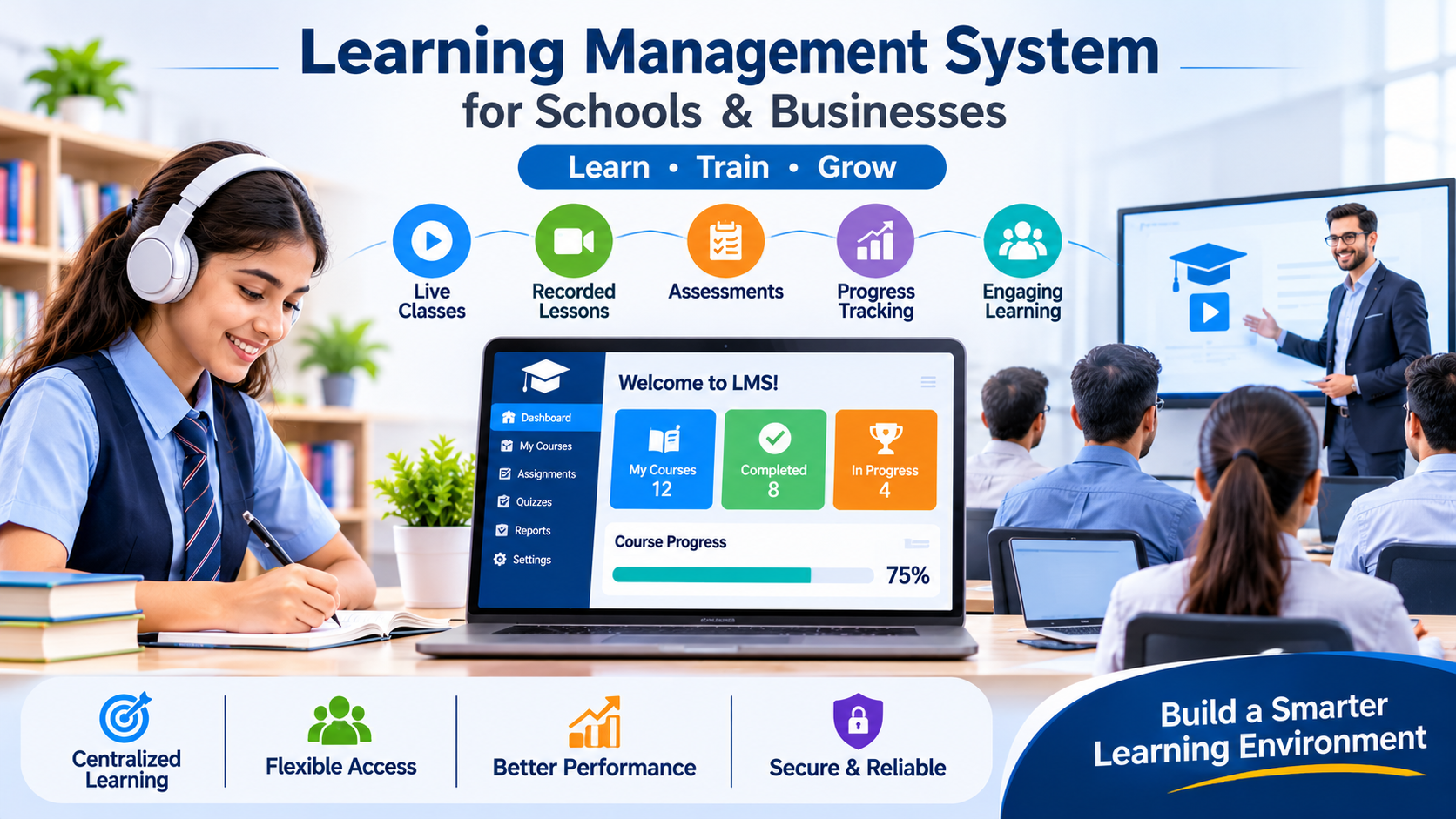
Learning is no longer limited to traditional classrooms or instructor-led training sessions. Schools, colleges, and businesses are increasingly adopting digital platforms to deliver courses, share resources, conduct assessments, and monitor learner performance.
However, simply uploading study materials or training videos is not enough. Organizations need a structured way to manage courses, engage learners, evaluate progress, and make learning accessible across different devices.
This is where a modern Learning Management System (LMS) becomes valuable. It brings essential learning activities together through one centralized platform, helping institutions and businesses create more organized, flexible, and engaging learning experiences.
Why Are Organizations Investing in Learning Management Systems?
Managing multiple courses, learners, instructors, and assessments manually can consume considerable time. Disconnected tools can also make it difficult to track participation and understand whether training programs are delivering the expected outcomes.
A centralized LMS helps organizations manage these activities more efficiently.
Key benefits include:
-
Centralized course and learning material management.
-
Flexible access to online and recorded learning resources.
-
Better communication between instructors and learners.
-
Organized online assessments and assignments.
-
Learner progress tracking and performance reports.
-
Consistent employee training across multiple locations.
For schools, this means better coordination of digital academic activities. For businesses, it provides a structured environment for employee onboarding, professional development, and skill-based training.
1. Centralize Courses, Content, and Learning Resources
Managing learning materials across multiple platforms can create confusion for both instructors and learners. A Learning Management System provides a common location to organize courses, upload resources, and distribute learning content.
Depending on the platform's capabilities, administrators can manage:
-
Video lectures and recorded sessions.
-
PDF documents, presentations, and study materials.
-
Online assignments and quizzes.
-
Interactive learning resources.
-
Course modules and structured learning paths.
Business value: Instructors spend less time organizing scattered resources, while learners get a more consistent learning experience.
2. Make Learning More Interactive and Engaging
Learner engagement is essential for successful digital education. Long training sessions and static learning materials may not always encourage active participation.
Modern LMS Software can support interactive learning through quizzes, assignments, discussion forums, virtual classrooms, and gamification.
For example, businesses can use product knowledge quizzes to evaluate employee understanding, while educational institutions can organize subject-based assessments and learning activities.
Engagement features to look for:
-
Interactive quizzes and assessments.
-
Points, badges, and leaderboards.
-
Discussion forums and messaging.
-
Live virtual classrooms.
-
Recorded video lessons.
-
Collaborative learning activities.
These capabilities can make learning more participatory and encourage learners to complete their courses.
3. Track Learner Progress with Reports and Analytics
One of the biggest challenges in digital learning is understanding whether learners are making progress.
A centralized learning platform helps administrators and instructors monitor course completion, assessment results, learner activities, and performance reports.
Useful insights may include:
-
Which learners have completed their assigned courses?
-
Which training modules have lower completion rates?
-
Where are learners experiencing difficulties?
-
How are learners performing in assessments?
-
Which courses may need updated learning materials?
Why it matters: Data-driven reports help instructors identify learning gaps and make better decisions about future training activities.
4. Support Flexible Learning Through Mobile Access
Employees and students may not always be available at a desktop computer or inside a classroom. Mobile learning gives them more flexibility to access digital resources according to their schedules.
A mobile-friendly LMS can provide access to supported features such as:
-
Online courses and learning materials.
-
Recorded classes and training videos.
-
Assignments and assessments.
-
Learning notifications and updates.
-
Course progress information.
This is particularly useful for businesses managing distributed teams and institutions supporting learners who need access beyond classroom hours.
5. Simplify Employee Training and Professional Development
Employee training plays an important role in developing workplace skills and preparing teams for changing business requirements.
A Learning Management Platform can help businesses organize structured training programs for different departments and employee roles.
For example, an organization can create dedicated learning programs for:
-
New employee onboarding.
-
Sales and product training.
-
Customer service development.
-
Technical and software training.
-
Leadership and management development.
-
Compliance and workplace policies.
Training managers can assign courses, monitor completion, and review assessment results through a centralized system.
The result: A more organized training process with better visibility into employee learning activities.
6. Make Academic Learning Easier to Coordinate
Educational institutions need to manage courses, learning materials, assessments, and communication across different classes and subjects.
An LMS for schools can help teachers organize digital resources, share assignments, conduct online evaluations, and support students with structured learning activities.
It can also provide students with convenient access to educational materials and recorded lessons, depending on the available features.
By bringing these activities together, schools can complement classroom teaching with digital learning opportunities.
7. Connect Virtual Classrooms with Online Learning
Virtual classrooms have become an important part of digital education and corporate training. However, managing live sessions separately from course materials and assessments can create fragmented learning experiences.
An LMS with virtual classroom integration can connect scheduled sessions with the wider learning process.
For example, instructors can organize live sessions, share supporting resources, and provide assessments related to the lessons. Integrations with tools such as Zoom and Google Meet can support virtual learning activities.
This helps organizations coordinate instructor-led and self-paced learning more effectively.
How Vidyalaya Learning Management System Supports Digital Learning
Vidyalaya provides a centralized Learning Management System designed to support digital education and organizational training requirements.
Its platform brings together important learning activities, helping administrators manage courses, learners, assessments, and progress through one environment.
Key Vidyalaya LMS capabilities include:
-
Course Management: Organize courses, learning materials, users, and access permissions.
-
Learning Paths: Structure courses into planned learning sequences.
-
Virtual Classrooms: Support online sessions through available integrations.
-
Assessment Management: Create quizzes, tests, and assignments to evaluate learner understanding.
-
Gamification: Use points, badges, and leaderboards to encourage participation.
-
Mobile Learning: Support learning access through mobile applications.
-
Reports and Analytics: Review learner activities, course completion, and assessment performance.
-
User Management: Organize learners, instructors, and administrators with appropriate access roles.
Whether an organization wants to manage academic learning or employee development, these capabilities can support a more connected digital learning environment.
Explore the Enterprise LMS to understand how its features can support your institution's or business's learning requirements.
What Should You Consider Before Choosing LMS Software?
Selecting the right platform requires evaluating more than the number of available features. Organizations should consider how effectively the solution supports their actual learning requirements.
Here are seven important factors:
-
Ease of Use: Can learners, instructors, and administrators navigate the platform comfortably?
-
Course Management: Does it support different content formats and structured learning paths?
-
Assessment Capabilities: Can instructors create quizzes, assignments, and evaluations?
-
Progress Tracking: Are course completion and learner performance reports available?
-
Mobile Accessibility: Can learners access relevant content through supported mobile devices?
-
Integration Options: Can the platform connect with virtual classroom and other business tools?
-
Scalability and Security: Can it support growing learner numbers while protecting user information?
A suitable LMS should meet current requirements while providing flexibility for future learning initiatives.
Conclusion
Digital learning requires more than providing access to online courses. Organizations need to manage content, encourage learner participation, conduct assessments, and measure progress through a coordinated approach.
A modern Learning Management System connects these activities, helping schools deliver organized digital education and businesses manage employee training more effectively.
Vidyalaya LMS provides capabilities for course management, virtual classrooms, assessments, gamification, mobile learning, and performance tracking. For institutions and businesses planning to strengthen their digital learning environment, it offers a centralized platform to support structured and flexible learning.


 English
 Arabic
 French
 Spanish
 Portuguese
 Deutsch
 Turkish
 Italiano
 Russian
 Romaian
 Portuguese (Brazil)
 Greek
