
Understanding Professional Bug Sweeping: How TSCM Inspections Help Identify Electronic Surveillance Risks
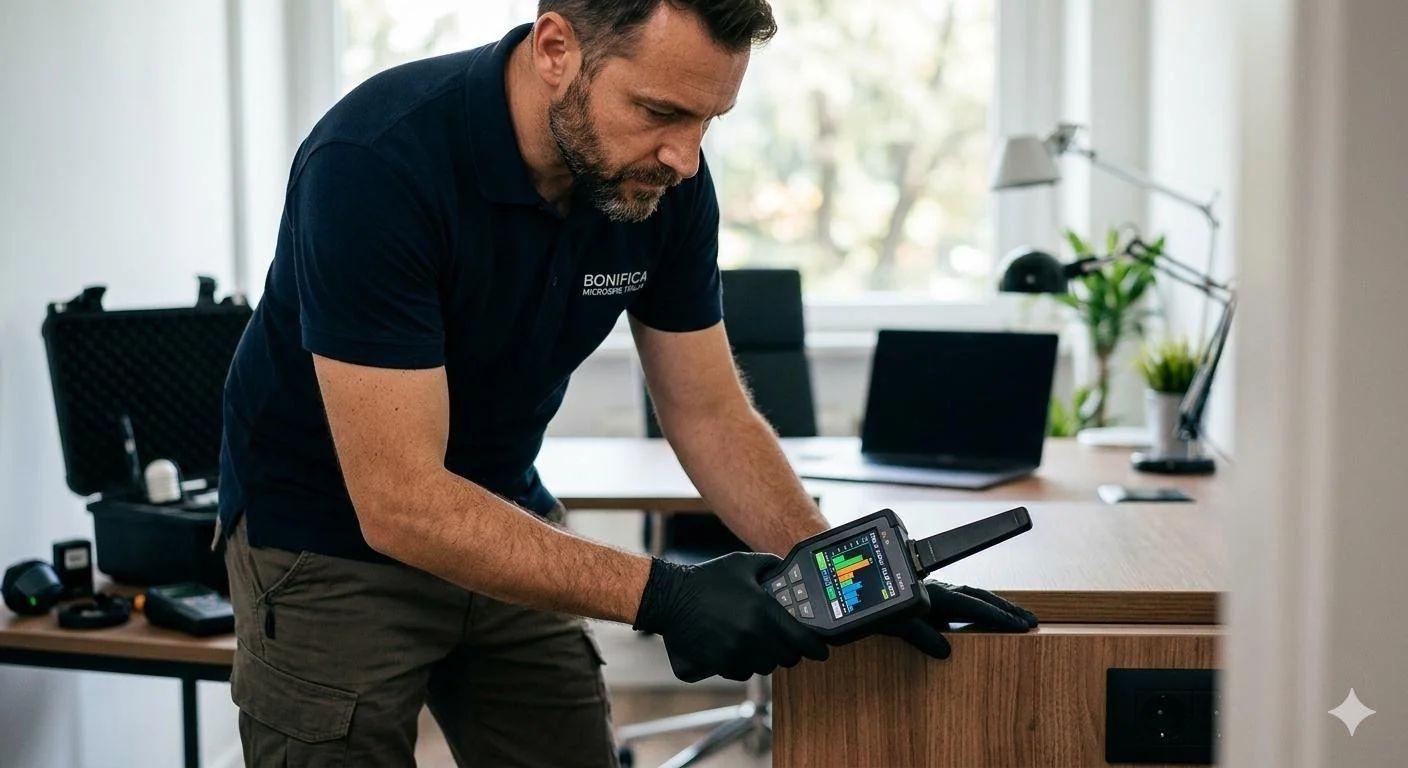
Privacy is an important consideration for individuals, businesses, and organizations handling sensitive information. Whether it involves confidential business meetings, private conversations, executive offices, or residential spaces, the possibility of unauthorized electronic surveillance can raise serious concerns.
Professional bug sweeping is a specialised inspection process designed to identify and assess potential electronic surveillance devices within a particular environment. Unlike basic visual checks or consumer-level detection gadgets, professional bug sweeping uses specialised equipment, technical expertise, and systematic inspection procedures.
Also known as Technical Surveillance Countermeasures (TSCM), this approach helps investigate potential surveillance risks involving hidden cameras, wireless listening devices, tracking equipment, and other electronic monitoring technologies.
Understanding how professional bug sweeping works, what equipment is involved, and when an inspection may be appropriate can help individuals and organizations make informed decisions about their privacy.
What Is Professional Bug Sweeping?
Professional bug sweeping refers to the systematic examination of premises, vehicles, or relevant electronic installations to identify potential unauthorized surveillance equipment.
The process may involve examining radio frequency activity, identifying concealed electronic components, inspecting physical installations, and evaluating suspicious electronic signals.
Professional TSCM inspections may address concerns involving:
- Hidden cameras and concealed recording equipment.
- Wireless audio and video transmission devices.
- Unauthorized listening devices.
- GPS tracking equipment.
- Suspicious electronic installations.
- Potentially compromised communication environments.
The objective is to investigate possible surveillance threats using appropriate technical methods rather than relying on assumptions or basic detection tools.
Why Is Professional Bug Sweeping Important?
Modern electronic surveillance equipment can be compact, technologically advanced, and difficult to identify through ordinary observation.
Some devices transmit information wirelessly, while others store recordings locally. Certain equipment may also operate intermittently, making detection more challenging.
Professional bug sweeping may be considered in several situations:
1. Protecting Confidential Business Discussions
Corporate offices frequently handle sensitive information involving commercial negotiations, financial planning, intellectual property, and strategic decisions.
Professional TSCM inspections may help organizations assess potential electronic surveillance risks in boardrooms, executive offices, and conference facilities.
2. Addressing Residential Privacy Concerns
Individuals may consider professional bug sweeping when they have specific concerns about unauthorized recording or suspicious electronic installations within their homes.
3. Assessing Executive and VIP Environments
Executives and individuals handling sensitive professional information may consider periodic privacy assessments of their offices, meeting spaces, and vehicles.
4. Investigating Potential Vehicle Surveillance
Vehicles contain numerous electronic systems and connected accessories. Professional vehicle inspections may help investigate concerns involving unauthorized tracking or electronic monitoring.
5. Reviewing Sensitive Meeting Environments
Conference rooms, private offices, and meeting facilities may require specialised assessments when confidentiality is particularly important.
How Does Professional Bug Sweeping Work?
A professional bug sweeping inspection follows a structured process based on the environment, the nature of the concerns, and the suspected surveillance technology.
Although procedures vary, a typical inspection may involve the following stages.
Step 1: Initial Consultation and Risk Assessment
The inspection begins with understanding the client's concerns, the type of premises, and the areas requiring examination.
This helps determine the appropriate inspection scope and equipment requirements.
Step 2: Physical Inspection
Relevant areas, fixtures, electronic installations, furniture, and accessible equipment may be examined for unusual modifications, unfamiliar components, or suspicious installations.
Step 3: Radio Frequency Analysis
Specialised RF equipment may be used to examine wireless activity and investigate signals that require further technical assessment.
Step 4: Specialised Electronic Detection
Depending on the inspection requirements, specialists may use instruments such as spectrum analyzers and Non-Linear Junction Detectors (NLJDs) to investigate potential electronic surveillance components.
Step 5: Evaluation of Findings
The collected observations and instrument readings are assessed in context. Unusual signals or equipment readings do not automatically indicate surveillance and require appropriate interpretation.
Step 6: Reporting and Recommendations
The inspection findings are communicated to the client, along with relevant observations and recommendations for addressing identified concerns.
Professional Bug Sweeping Equipment Used During TSCM Inspections
Professional TSCM inspections may involve different instruments depending on the suspected technology and inspection environment.
Some commonly used instruments include:
1. RF Spectrum Analyzers: Examine radio frequency activity across selected frequency ranges and help specialists investigate potentially relevant wireless transmissions.
2. Non-Linear Junction Detectors (NLJDs): Help identify certain concealed electronic semiconductor components, including components in devices that are not actively transmitting wireless signals.
3. Optical Lens Detection Equipment: Uses light and reflection techniques to help identify certain camera lenses.
4. Thermal Imaging Equipment: Helps examine unusual temperature patterns around electronic equipment and installations when relevant to the inspection.
5. Specialised Physical Inspection Tools: Support the examination of accessible spaces, fixtures, equipment enclosures, and other relevant areas.
No single instrument can identify every possible surveillance device. Professional results depend on appropriate equipment selection, inspection methodology, and technical interpretation.
Professional Bug Sweeping vs. Basic Bug Detection
Consumer-level bug detectors are widely available, but they generally offer more limited capabilities than professional TSCM equipment.
|
Factor |
Basic bug detectors |
Professional bug sweeping |
|
RF detection |
Limited capabilities |
Advanced RF analysis may be included. |
|
Hidden camera detection |
Basic optical or RF functions |
Multiple inspection methods |
|
Non-transmitting devices |
Generally limited |
NLJD assessment may be used. |
|
Physical inspection |
Limited |
Systematic technical assessment |
|
Signal interpretation |
Basic alerts |
Professional evaluation |
|
Inspection scope |
Usually narrow |
Adapted to specific requirements |
Professional bug sweeping is not simply about using expensive equipment. It involves understanding how different surveillance technologies operate and selecting appropriate methods to investigate potential risks.
How to Choose a Professional Bug Sweeping Company
Selecting the right service provider is important when arranging an electronic surveillance inspection.
Before hiring a company, consider:
- Technical expertise: Assess relevant TSCM experience and knowledge.
- Equipment: Ask about the specialised instruments used during inspections.
- Inspection methodology: Understand the proposed examination process.
- Confidentiality: Clarify how personal information and inspection findings are handled.
- Reporting: Ask whether findings and recommendations will be documented.
- Inspection scope: Ensure the assessment addresses your specific requirements.
Avoid providers who guarantee that every surveillance device can be detected or promise absolute privacy.
Conclusion : Why Professional Bug Sweeping Matters
Professional bug sweeping is an important consideration when individuals or organizations have specific concerns about unauthorized electronic surveillance.
Unlike basic detection methods, professional TSCM inspections combine specialised equipment, physical examination, RF analysis, and technical expertise to investigate potential surveillance risks.
Choosing an experienced service provider with appropriate equipment, clear inspection procedures, and responsible reporting practices can help ensure a more informed assessment.
Concerned About Unauthorized Electronic Surveillance?
Don't rely on assumptions or basic detection devices alone. Discuss your requirements with Trace Point India and explore professional TSCM debugging and bug sweeping services.

 English
 Arabic
 French
 Spanish
 Portuguese
 Deutsch
 Turkish
 Dutch
 Italiano
 Russian
 Portuguese (Brazil)
 Greek
