
Is mRNA the Future of Cancer Treatment—or Is Delivery Still the Biggest Obstacle?
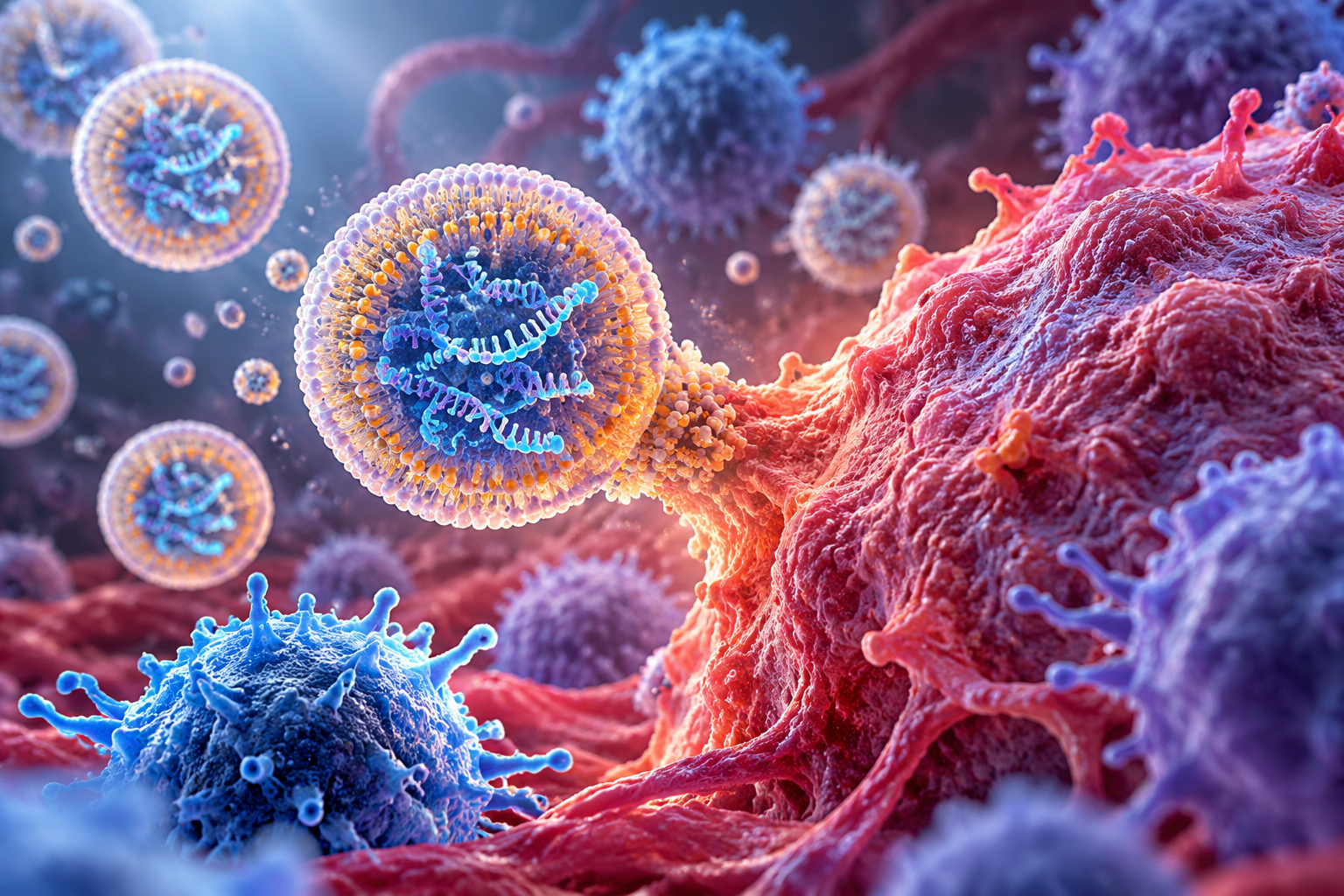
Messenger RNA (mRNA) has attracted considerable interest as a platform for cancer vaccines and emerging immunotherapies. Yet, the success of an mRNA-based therapeutic depends on much more than selecting a promising genetic sequence. Antigen selection, RNA stability, intracellular delivery, and immune response all influence its biological performance. This article examines the major challenges in mRNA cancer therapeutics research, explores alternative delivery strategies, and discusses how advances in RNA engineering and nanoparticle characterization may help researchers develop more effective experimental approaches.
Beyond the Hype: What Can mRNA Actually Do in Cancer Research?
What if the biggest obstacle to mRNA cancer treatment is not the RNA itself, but getting it to work where it matters?
The rapid development of mRNA technologies has challenged conventional assumptions about how therapeutic proteins can be produced in the body. Instead of administering a protein directly, researchers can deliver messenger RNA that instructs cells to produce a selected protein temporarily. In oncology, this approach has opened new avenues for investigating therapeutic cancer vaccines, tumor-associated antigens, patient-specific neoantigens, and immune-modulating proteins.
However, mRNA is not a universal solution to cancer. Tumors differ in their genetic characteristics, antigen expression, and ability to evade immune surveillance. Even when a candidate antigen is scientifically promising, an mRNA formulation may fail to generate a sufficiently strong or tumor-specific immune response.
The real challenge is therefore not simply to design an RNA sequence. It is to coordinate molecular engineering, delivery, and biological validation into a reproducible research strategy.
1. Designing mRNA Around the Biological Target
Cancer-directed mRNA research often begins with identifying a protein or antigen that could help the immune system recognize tumor cells.
In therapeutic cancer vaccine research, mRNA may encode tumor-associated antigens or neoantigens arising from tumor-specific mutations. Following cellular uptake and protein expression, the resulting antigens may be processed and presented to immune cells, potentially supporting tumor-directed T-cell responses.
The challenge is that not every tumor antigen produces a useful immune response. Researchers must consider antigen expression, immunogenicity, tumor heterogeneity, and the risk of targeting antigens also present in healthy tissues.
RNA engineering introduces additional variables, including untranslated regions, coding sequence design, nucleotide modifications, and poly(A) tail characteristics. These features can influence RNA stability, translation efficiency, and innate immune sensing.
Researchers investigating the wider applications of engineered RNA can explore mRNA engineering approaches for regenerative medicine and mRNA engineering for genetic disease research. Although these research areas are not cancer-specific, they illustrate broader engineering considerations relevant to the design and evaluation of mRNA constructs.
For oncology applications, candidate constructs must still be assessed in appropriate tumor models to determine whether they generate the intended protein and produce a meaningful biological response.
2. Why Intracellular Delivery Remains a Major Bottleneck
An mRNA construct can be well designed and still fail if it degrades before reaching its target or remains trapped inside cellular compartments.
Naked mRNA is vulnerable to degradation and does not readily cross cell membranes. Delivery systems are therefore essential to protect the payload, facilitate cellular uptake, and enable the RNA to reach the cytoplasm, where translation occurs.
Lipid nanoparticles (LNPs) are among the most extensively studied delivery platforms for nucleic acid therapeutics. Their performance depends on several interconnected properties, including lipid composition, particle size, surface characteristics, encapsulation efficiency, and intracellular trafficking.
Yet, cellular uptake alone is not sufficient evidence of successful delivery. RNA may enter a cell without escaping the endosome, limiting its availability for protein production. Researchers must distinguish between particle uptake, endosomal escape, functional expression, and downstream biological activity.
Alternative approaches can provide additional experimental options. For example, cationic nanoemulsion (CNE) delivery systems offer a formulation strategy for investigating RNA association and cellular delivery, while lipopolyplex (LPP) delivery systems combine lipid and polymer components in hybrid formulations designed to support nucleic acid protection and delivery.
Neither approach should be assumed to outperform LNPs universally. Their suitability depends on the RNA payload, target cell, formulation characteristics, and intended application. Comparative testing is needed to establish which system offers the most appropriate balance of delivery efficiency, expression, and tolerability.
3. Measuring More Than Delivery Efficiency
A common mistake in evaluating experimental RNA formulations is to treat high cellular uptake as proof of therapeutic potential.
For cancer research, a more informative evaluation strategy considers several complementary endpoints:
l RNA integrity and encapsulation: Does the formulation protect the payload during preparation and exposure to relevant biological conditions?
l Functional expression: Does the delivered mRNA produce the intended protein at an appropriate level and duration?
l Biological activity: Does the expressed protein generate the expected cellular or immunological response?
l Safety and selectivity: Are there undesirable inflammatory responses, cellular toxicity, or unintended effects in non-target cells?
l In vivo performance: Where appropriate, do biodistribution, tolerability, and efficacy findings support further development?
These measurements help researchers identify whether a limitation originates in RNA design, formulation, cellular trafficking, or the underlying biological hypothesis.
Cancer models also require careful interpretation. Results obtained in a cell line may not predict performance in an intact tumor microenvironment, where stromal barriers, immune suppression, and heterogeneous target expression can influence outcomes.
Consequently, robust preclinical research should connect formulation characteristics to functional biological endpoints rather than relying on a single delivery metric.
4. Understanding Nanoparticle Structure and Biological Activity
As RNA delivery platforms become more sophisticated, characterization of their physical and chemical properties is increasingly important.
Two formulations with similar average particle sizes may differ in internal organization, lipid composition, particle heterogeneity, or interactions with biological environments. These differences can affect payload protection, cellular uptake, intracellular release, and ultimately functional expression.
A deeper understanding of the relationship between molecular structure and biological performance can help researchers identify meaningful formulation variables and develop more reproducible experimental systems.
An upcoming scientific webinar, "From Molecular Synthesis to Supramolecular Structure: Deciphering the Activity of RNA Lipid Nanoparticles", scheduled for October 27, 2026, at 11:00 a.m. EDT, will examine how lipid molecular design, nanoparticle organization, and biophysical characterization relate to RNA delivery performance. The session features Marshall Scott Padilla, PhD.
Although nanoparticle behavior varies by formulation and application, these analytical principles are relevant to researchers investigating mRNA delivery for oncology and other therapeutic fields.
Conclusion: Better mRNA Cancer Therapies Require More Than Better Sequences
mRNA offers researchers a flexible platform for exploring cancer vaccines and immunotherapies, but its promise depends on overcoming several connected challenges. Appropriate target selection, careful RNA engineering, effective intracellular delivery, and rigorous biological evaluation must work together.
No single formulation or engineering strategy will solve every oncology challenge. The most productive path forward is to match each experimental design to its biological objective, evaluate delivery and functional expression separately, and validate promising findings in increasingly relevant models.
Ultimately, progress in mRNA cancer therapeutics will depend not only on what RNA can encode, but also on whether researchers can deliver it reliably and demonstrate meaningful biological activity.
Further reading: Explore additional resources on mRNA engineering for regenerative medicine, mRNA engineering for genetic disease, CNE-based RNA delivery, and LPP-based RNA delivery for further information on RNA design and delivery development.

 English
 Arabic
 French
 Spanish
 Portuguese
 Deutsch
 Turkish
 Dutch
 Russian
 Romaian
 Portuguese (Brazil)
 Greek
