
Silicon Carbide Ingot Market to Reach USD 3.60 Billion by 2034 as Demand for SiC Crystal Feedstock Accelerates
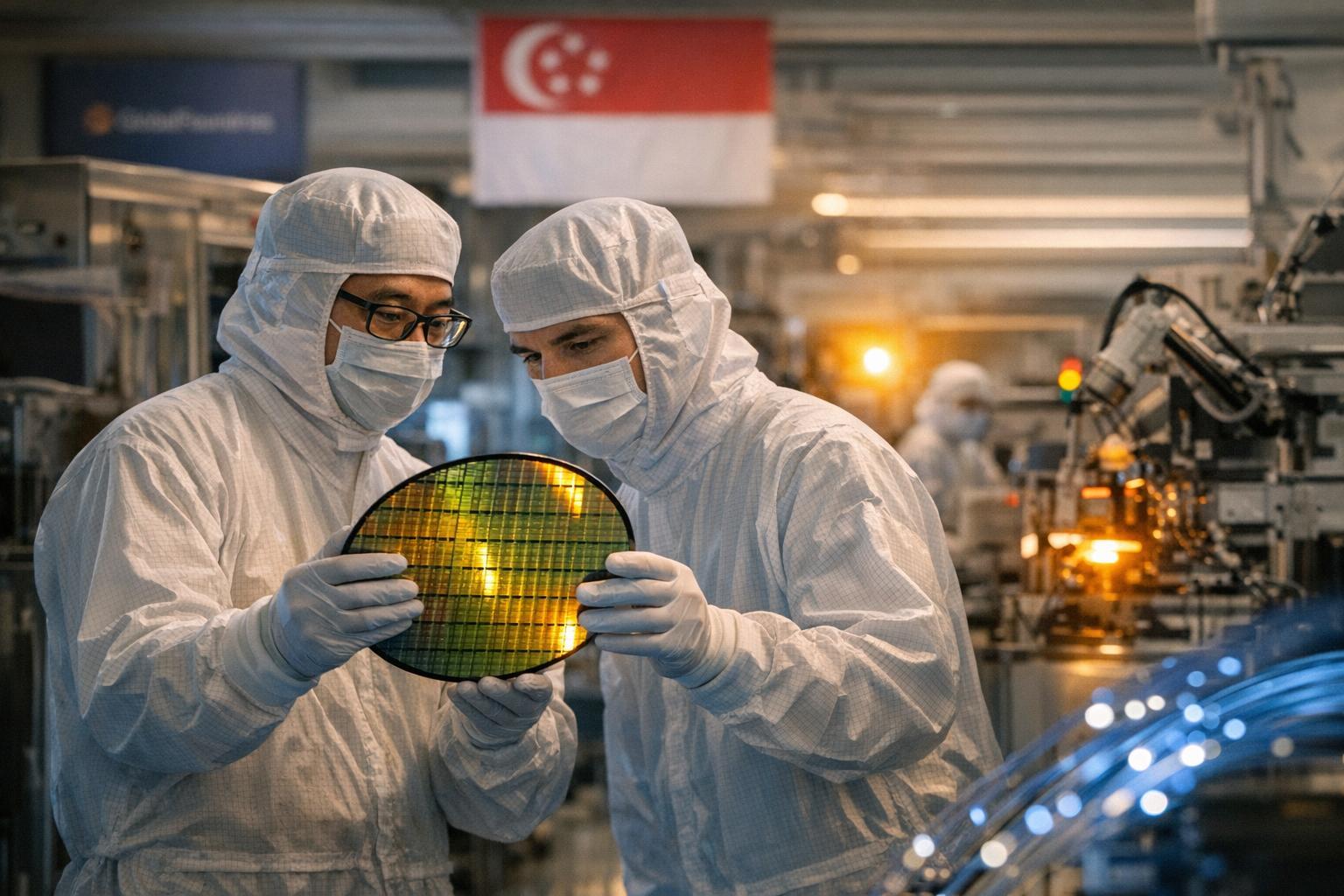
The expansion of electric vehicles, renewable-energy conversion and power electronics is increasing demand for silicon carbide materials used in semiconductor manufacturing. Silicon carbide ingots form the bulk crystalline feedstock that is processed into wafers and subsequently used in semiconductor-device production.
According to SemiconductorInsight, the Global Silicon Carbide Ingot Market was valued at USD 844 million in 2025 and is projected to reach USD 3,604 million by 2034, growing at a CAGR of 17.5% over the 2026–2034 forecast period. The 2026 market estimate is USD 991.7 million, reflecting demand for qualified crystal feedstock for SiC wafer and device fabrication.
Explore the complete Silicon Carbide Ingot Market analysis: https://semiconductorinsight.com/report/silicon-carbide-ingot-market/
Why Are Silicon Carbide Ingots Important in Semiconductor Manufacturing?
A silicon carbide ingot, also known as a boule, is the bulk crystalline body produced before cutting, orientation and substrate polishing. Its quality influences the usable material available for downstream wafer manufacturing.
Physical vapor transport is an important crystal-growth process in which SiC source material is sublimated and deposited on a seed under controlled high-temperature conditions. Source purity, temperature distribution and seed orientation influence the resulting crystal.
Crystal defects such as micropipes, threading dislocations and cracks can reduce the usable portion of an ingot. Manufacturers therefore evaluate defect distribution, polytype stability and electrical characteristics across the grown material.
The market covers bulk SiC ingots and the material formats identified in the report, rather than the additional value of polished wafers, epitaxial layers or finished power devices.
Market Growth Is Closely Linked to Electric Vehicles and Power Electronics
One of the major factors influencing the Silicon Carbide Ingot Market is the growing use of SiC power devices in electric-vehicle powertrains, renewable-energy inverters and industrial drives.
Semiconductor Insight identifies EV powertrains as the largest application category, accounting for an estimated 49% share. Renewable-energy inverters represent approximately 23%, industrial drives 19% and high-power RF applications 9%.
The expansion of downstream power-device manufacturing creates demand for qualified crystalline feedstock from wafer manufacturers and integrated semiconductor suppliers. Material quality and consistency remain important considerations for customers.
The market is an upstream material category. The value of finished wafers, MOSFET chips, power modules and complete energy-conversion systems is not included in ingot revenue.
Receive your Free Sample Report today: https://semiconductorinsight.com/download-sample-report/?product_id=156621
N-Type Material Leads the Electrical Grade Segment
N-type silicon carbide ingots account for an estimated 62% of the electrical-grade market, reflecting their use as feedstock for many SiC power devices. Semi-insulating material represents approximately 26%, while P-type material accounts for around 12%.
Each electrical grade requires specific dopant and carrier-control characteristics during crystal growth. Manufacturers must maintain the required resistivity while controlling defects that can affect downstream substrate processing.
The report also segments the market by product type, including single-crystal ingots, polycrystalline ingots and composite or in-situ-doped ingots. Single-crystal ingots represent an estimated 75% of product-type demand.
EV Powertrains and Renewable-Energy Inverters Create Additional Demand
Electric-vehicle traction inverters use high-voltage SiC devices to support efficient power conversion. This demand encourages wafer and device manufacturers to secure consistent supplies of conductive SiC material with controlled resistivity and low defect levels.
Renewable-energy inverters represent another important application as solar and wind power systems require reliable high-voltage conversion components. Industrial drives and high-power RF applications also contribute to demand for specialized SiC material.
These end uses influence upstream crystal procurement, although the value of the finished inverter, vehicle or semiconductor device is not included in the ingot market.
The report identifies automotive OEMs, power-electronics OEMs and industrial equipment makers among the end-user categories.
Crystal Quality and Larger Wafer Formats Are Shaping Material Development
The commercial value of a silicon carbide ingot depends on usable crystal length, diameter, polytype, resistivity and defect distribution. Customers evaluate material at different positions within a boule because quality can vary across radial and axial sections.
The report covers 4H-SiC, 6H-SiC and other polytypes. These crystal structures serve different material and device requirements, making polytype control an important part of the growth process.
The industry is also developing larger-diameter SiC material. The report discusses 150 mm and 200 mm material as important areas of development, while recent supplier announcements describe distinct advanced crystal and substrate milestones.
These developments concern different crystal specifications and should not be interpreted as proof that every ingot grade is already available at larger commercial volumes.
Crystal Defects and Production Qualification Remain Key Challenges
SiC crystal growth involves long high-temperature cycles and complex process control. Micropipes, dislocations, cracks and unwanted polytype inclusions can reduce the amount of material suitable for device-grade substrates.
New suppliers must demonstrate repeatable material quality across multiple growth runs. Customers may require defect maps, resistivity measurements and evidence of consistent waferable diameter before approving a supplier.
High equipment costs, source-material purity, furnace energy requirements and specialized metrology can also limit rapid capacity expansion. Qualification cycles may delay the commercial contribution of newly installed crystal-growth equipment.
The supply chain therefore depends on both crystal-growth capability and the ability to deliver material that meets downstream wafering and device-manufacturing requirements.
Access the Full Report for In-Depth Insights: https://semiconductorinsight.com/report/silicon-carbide-ingot-market/
Where Are the Biggest Opportunities Emerging?
The expansion of SiC wafer and power-device manufacturing provides opportunities for ingot suppliers capable of maintaining crystal quality and consistent waferable dimensions.
Specialty semi-insulating and alternative polytype materials offer opportunities in RF, photonics, thermal-management and research applications. These products can require different electrical and structural characteristics from conductive N-type ingots.
The development of larger-diameter material may support improved wafer-area economics, provided manufacturers can maintain acceptable defect levels and repeatable growth performance.
High-thermal-conductivity SiC materials are also being evaluated for thermal-management applications. These products should be distinguished from conductive ingots used for power-device substrates.
Customer qualification and repeat supply remain essential before development milestones translate into sustained commercial ingot demand.
Crystal Quality and Supply-Chain Integration Influence Purchasing Decisions
The silicon carbide ingot supply chain connects source-material preparation and crystal growth with wafer slicing, polishing, epitaxy and semiconductor-device production. Each stage adds value and should be distinguished when assessing market revenue.
Wolfspeed, Coherent and SiCrystal demonstrate different routes through the SiC materials ecosystem. Specialist producers such as SICC and TankeBlue are also identified among the companies covered in the report.
Competition is influenced by crystal quality, qualified diameter, defect control, resistivity consistency, production capacity and customer relationships. Long-term supply arrangements can be important where device manufacturers require predictable material availability.
Integrated manufacturers and independent merchant suppliers may participate at different stages of the chain. Their roles should be considered carefully when comparing ingot suppliers.
The report also distinguishes material development milestones from confirmed high-volume commercial supply.
Silicon Carbide Ingot Market Segmentation
The report evaluates the market by electrical type, application, end user, product type, polytype classification and region, providing a detailed view of bulk crystalline material demand.
By type, the market is divided into:
· N-Type
· P-Type
· Semi-Insulating
By application, the market covers:
· EV Powertrains
· Renewable-Energy Inverters
· Industrial Drives
· High-Power RF
Additional segmentation covers automotive OEMs, power-electronics OEMs and industrial equipment makers; single-crystal, polycrystalline and composite or in-situ-doped ingots; and 4H-SiC, 6H-SiC and other polytypes.
View the complete Silicon Carbide Ingot Market segmentation and forecast: https://semiconductorinsight.com/report/silicon-carbide-ingot-market/
Regional Silicon Carbide Ingot Market Outlook
Asia-Pacific represents the largest regional market with an estimated 45% share, supported by Asian substrate factories, EV power electronics and wafer-processing ecosystems. The region includes important material and semiconductor markets such as China, Japan, South Korea, Taiwan and India.
North America accounts for approximately 26% of the market, supported by SiC material development and semiconductor research. Wolfspeed and Coherent are among the companies with publicly described advanced material activities in the region.
Europe represents around 22% of the market, with SiCrystal and other semiconductor-material operations contributing to the regional ecosystem. The region is connected to automotive and industrial power-device demand.
South and Central America account for approximately 4%, while the Middle East and Africa represent around 3%. These markets are smaller in the report’s regional split and include developing semiconductor and specialist material activities.
Competitive Landscape and Key Companies
The Silicon Carbide Ingot Market includes integrated semiconductor-material companies and specialist crystal suppliers. Competition is influenced by crystal-growth capability, defect control, polytype consistency, resistivity, waferable diameter and customer qualification.
Semiconductor Insight identifies Wolfspeed, Coherent Corporation, SiCrystal GmbH (ROHM Group), SICC, TankeBlue, SK Siltron, STMicroelectronics, onsemi, Resonac, Ningbo Alpha Semiconductor and Zhejiang Tony Electronic among the companies covered.
Wolfspeed, Coherent and SiCrystal have described SiC material and substrate activities, while specialist producers participate in crystal and substrate supply. Integrated device firms and adjacent material companies should be distinguished from independent merchant ingot suppliers when evaluating competitive roles.
What Does the Silicon Carbide Ingot Market Report Cover?
The Semiconductor Insight study provides analysis of market size, sales, revenue, competitive positioning, industry dynamics, segmentation and regional performance for silicon carbide ingots.
The report examines electrical grades, product formats, polytypes, applications and end users. It also evaluates crystal-growth technology, material quality, supply-chain conditions, market drivers, restraints and competitive developments.
Regional coverage includes Asia-Pacific, North America, Europe, South and Central America, and the Middle East and Africa, with country-level analysis across key material and semiconductor markets.
Key Questions Answered by the Study
The report helps industry participants evaluate questions including:
· What is the current Silicon Carbide Ingot Market size?
· How large will the market become by 2034?
· What is the expected CAGR during the 2026–2034 forecast period?
· Why are N-type ingots important for power-device manufacturing?
· What share of the market is represented by semi-insulating material?
· Which applications are driving demand for silicon carbide ingots?
· What is the difference between single-crystal and polycrystalline ingots?
· Which polytypes are covered in the report?
· How do crystal defects influence material qualification?
· Which regions account for the largest market shares?
· Who are the leading silicon carbide ingot companies?
· How are larger wafer formats influencing crystal-growth development?
Explore the full Silicon Carbide Ingot Market forecast and competitive analysis: https://semiconductorinsight.com/report/silicon-carbide-ingot-market/
Get a Sample Report copy for free: https://semiconductorinsight.com/download-sample-report/?product_id=156621
About Semiconductor Insight
Semiconductor Insight provides market intelligence and industry research covering semiconductor technologies, electronic components, advanced manufacturing systems and related technology markets. Its research focuses on market sizing, forecasting, competitive landscapes, technology trends, segmentation and regional analysis to support strategic decision-making across the semiconductor ecosystem.
Contact Semiconductor Insight
Website: www.semiconductorinsight.com

 English
 Arabic
 French
 Spanish
 Portuguese
 Deutsch
 Turkish
 Dutch
 Russian
 Romaian
 Portuguese (Brazil)
 Greek
