
Historical Rehabilitation: When to Hire a Structural Engineer
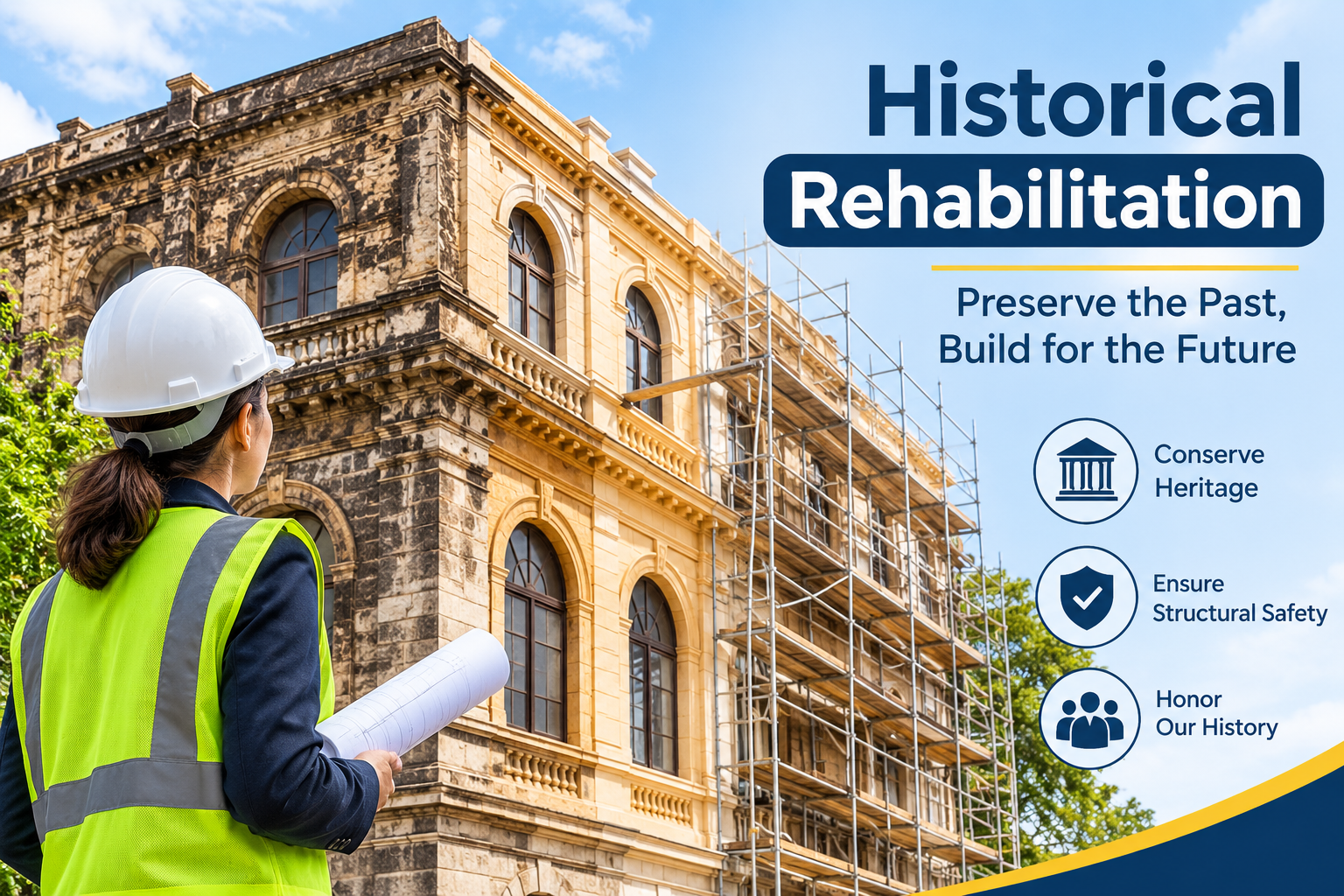
Historical buildings are more than old structures; they represent the architectural styles, craftsmanship, and stories of earlier generations. However, years of exposure to weather, aging materials, and changing environmental conditions can affect their strength and stability. Knowing when to hire a structural engineer for historical rehabilitation can help property owners preserve these buildings while making sure they remain safe for future use.
What Is Historical Rehabilitation and Why Does It Matter?
Historical rehabilitation is the process of repairing, strengthening, and updating an older or historically significant building without unnecessarily changing its original architectural character. Unlike ordinary renovation, it requires careful planning because many historic structures were constructed using traditional materials and building methods that may not match modern construction practices.
A successful rehabilitation project focuses on preserving original features while addressing structural problems. This may involve repairing masonry walls, reinforcing wooden beams, restoring foundations, or improving the building's ability to withstand environmental conditions.
A structural engineer helps determine which parts of the building can be preserved, which require repairs, and where additional support may be necessary. Their involvement can prevent unnecessary modifications and reduce the risk of future structural damage.
7 Signs You Should Hire a Structural Engineer for Historical Rehabilitation
Not every older building requires extensive structural work. However, certain warning signs indicate that professional engineering advice is necessary.
1. Visible Cracks in Walls and Foundations
Small surface cracks may develop naturally as buildings age. However, wide, growing, or diagonal cracks can indicate foundation movement or structural stress.
Historic buildings may have foundations made from stone, brick, or older concrete. These materials can deteriorate over time because of moisture, soil movement, and changing environmental conditions.
A structural engineer can inspect the cracks, identify their possible causes, and recommend appropriate repairs before the damage becomes more serious.
2. Sagging Floors and Roof Structures
Uneven floors, sagging ceilings, and visibly weakened roof sections should never be ignored. These conditions may indicate deteriorating timber, damaged connections, excessive loading, or weakened supporting members.
Older wooden structures are particularly vulnerable to moisture and wood-decaying organisms. An engineering inspection helps determine whether individual components need replacement or whether additional reinforcement is required.
3. Water Damage and Material Deterioration
Long-term water exposure can seriously affect historic buildings. Moisture may weaken timber, damage masonry joints, corrode metal connections, and cause plaster to separate from walls.
Before beginning restoration, property owners should understand how far the damage extends. Repairing visible surfaces without addressing the underlying structural problem may lead to repeated maintenance expenses.
4. Changes in the Building's Original Layout
Removing walls, adding new rooms, installing larger windows, or changing the building's use can affect its original load distribution.
Some older buildings rely on walls and structural elements that were never designed to support modern alterations. A structural engineer can evaluate the existing load-bearing system and determine whether proposed modifications are safe.
5. Deteriorating Masonry and Wooden Components
Historic brickwork, stone walls, wooden beams, and structural connections can deteriorate after decades of exposure. Loose masonry, damaged mortar joints, timber decay, and corroded metal supports may reduce the building's overall stability.
A detailed structural assessment helps establish the extent of deterioration and identify suitable repair methods that respect the building's original construction.
6. Damage Following Storms or Natural Disasters
Heavy rainfall, hurricanes, flooding, strong winds, and other extreme weather events can cause serious damage to historic properties.
Even when damage is not immediately visible, internal connections, foundations, and load-bearing components may have been affected. An engineer can assess the building's condition and recommend appropriate stabilization and restoration measures.
7. Before Purchasing or Renovating a Historic Property
Hiring an engineer before purchasing or starting a major renovation can help identify hidden structural concerns. This is especially important when dealing with buildings that have undergone multiple repairs or undocumented alterations.
An early assessment gives owners a better understanding of the building's condition, potential repair requirements, and project costs.
How Does a Structural Engineer Evaluate a Historic Building?
Historical rehabilitation requires more than a visual inspection. Engineers need to understand how the building was originally constructed, how its materials have aged, and how different structural components work together.
A typical evaluation may include:
-
Initial site inspection: Reviewing visible damage, structural movement, and existing building conditions.
-
Foundation assessment: Checking for settlement, movement, moisture-related deterioration, and other foundation concerns.
-
Material evaluation: Examining brick, stone, concrete, timber, and metal components.
-
Structural analysis: Understanding how loads transfer through walls, beams, columns, floors, and roofs.
-
Repair recommendations: Identifying suitable reinforcement, replacement, and restoration methods.
-
Technical documentation: Preparing engineering observations, calculations, and reports to support rehabilitation decisions.
The goal is to develop a practical repair strategy that improves structural performance without compromising the building's historical value.
When Do You Need a Structural Forensic Engineer?
Sometimes, the main concern is not simply repairing an older building but understanding why structural damage occurred. This is where a Structural Forensic Engineer becomes particularly valuable.
Forensic engineering involves investigating structural failures, construction problems, material deterioration, and damage patterns to determine their underlying causes.
For example, if a historic masonry wall develops significant cracks after nearby construction work, an engineer may investigate whether the damage resulted from vibration, foundation movement, poor workmanship, or another contributing factor.
A proper investigation provides property owners, contractors, insurers, and legal professionals with evidence-based findings that can guide the next steps.
Understanding Structural Defects and the Role of Expert Witnesses
Historical rehabilitation projects can sometimes involve disagreements between property owners, contractors, architects, and insurance companies. Disputes may arise over repair quality, construction responsibilities, material failures, or the cause of structural damage.
An Expert Witness and Structural Engineer can provide independent technical opinions when engineering issues become part of a legal dispute. Their role may include reviewing project records, inspecting the property, evaluating engineering reports, and explaining technical findings.
Similarly, a Construction Defect Expert Witness and Structural Engineer may investigate problems involving improper installation, inadequate structural support, defective materials, or work that does not meet applicable construction requirements.
When a historic property experiences serious damage and the parties disagree about responsibility, a Structural Engineer Expert Witness can explain the technical evidence through professional reports, depositions, and courtroom testimony when required.
How Forensic Engineering Helps Identify the Cause of Structural Damage
Understanding the cause of damage is essential before selecting a rehabilitation method. Repairing a symptom without identifying its source can result in recurring problems and unnecessary expenses.
A Standard and Cause and Forensic Engineer evaluates the applicable construction requirements, available project documentation, and physical evidence to understand the standard of work and the cause of the observed condition.
A Damage Assessment and Forensic Engineer examines the extent of deterioration and evaluates how the damage affects the building's structural performance. This may include reviewing cracks, displaced masonry, damaged foundations, roof failures, and deteriorating structural connections.
In cases involving defective construction or improper restoration, a Construction Defect Structural Engineer can investigate whether the original work, materials, design, or installation contributed to the problem.
These investigations help stakeholders make informed decisions about repairs, project responsibilities, insurance claims, and potential legal proceedings.
How to Preserve Historic Character While Improving Structural Safety
One of the biggest challenges in historical rehabilitation is balancing modern safety requirements with architectural preservation. The objective should not be to make an old building look completely new but to extend its useful life while retaining the features that make it historically valuable.
Here are some important considerations:
-
Preserve original materials: Retain existing brickwork, stone, timber, and other architectural features wherever technically practical.
-
Choose compatible repair materials: New materials should be selected carefully to avoid moisture problems, incompatibility, or additional deterioration.
-
Avoid unnecessary demolition: Preserve structurally sound elements instead of replacing entire sections without a clear engineering reason.
-
Use appropriate reinforcement: Strengthen weakened components through carefully designed engineering solutions.
-
Follow applicable building requirements: Evaluate current safety, accessibility, and building code requirements alongside relevant historic preservation guidelines.
-
Document every major change: Maintain inspection records, photographs, repair details, and engineering reports for future reference.
Working with experienced engineering professionals helps property owners make decisions that support both long-term stability and historical preservation.
Why Hire PS Engineering for Historical Rehabilitation?
Historical rehabilitation requires technical knowledge, practical experience, and a clear understanding of how older structures behave. PS Engineering provides structural engineering, forensic investigation, expert witness, and historic restoration and renovation services.
With more than 30 years of experience in structural design, forensic engineering, construction defects, and expert testimony, the company supports clients with complex engineering challenges.
Its services include investigating structural problems, evaluating construction-related damage, developing engineering solutions, and providing technical support for disputes involving building performance.
Whether a project involves an aging commercial property, a historic building, or a structure affected by construction defects, professional engineering guidance can help identify risks and determine appropriate solutions.
Final Thoughts
Preserving a historic building requires more than maintaining its appearance. It means protecting its structural integrity, understanding the causes of deterioration, and making informed decisions about repairs and improvements. Working with experienced engineering professionals helps property owners balance historical preservation with modern safety expectations. Whether you are restoring an aging commercial property or planning a major renovation, the right Building Retrofit and Structural Engineer can help create a safer, stronger, and more sustainable structure for the future.

 English
 Arabic
 French
 Portuguese
 Deutsch
 Turkish
 Dutch
 Italiano
 Russian
 Romaian
 Portuguese (Brazil)
 Greek
