
The Business Advantages of Developing a Custom Property Tokenization Platform
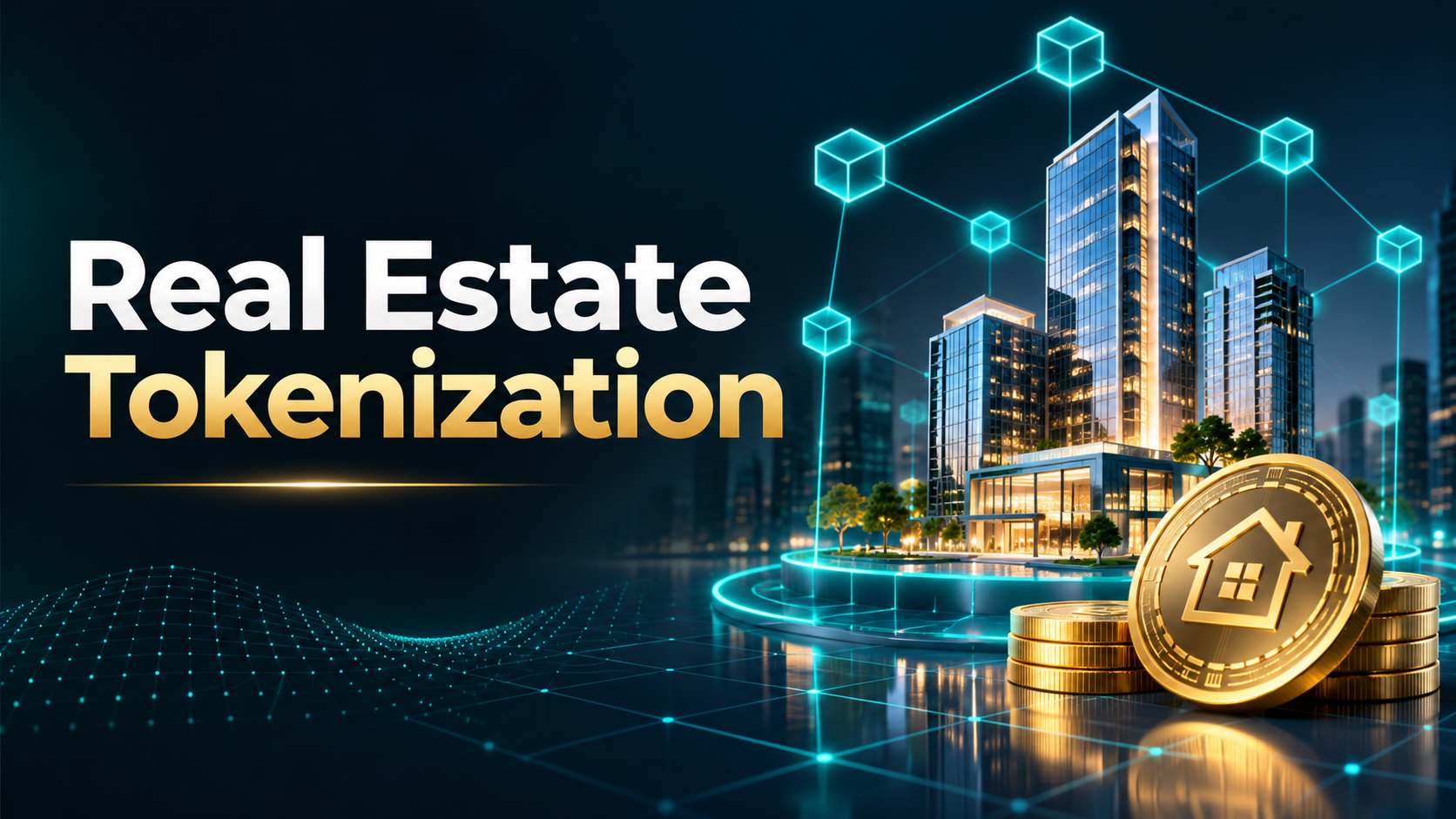
The real estate industry is undergoing a significant transformation as property owners, developers, investment firms, and real estate businesses explore digital solutions to manage assets and attract investors. Traditional property investment models often involve high capital requirements, lengthy transactions, complex ownership structures, and limited investment opportunities. These challenges can restrict business growth and make it difficult for property companies to access a broader investor base.
Property Tokenization is emerging as a promising approach to addressing some of these challenges. By converting property ownership rights, equity interests, rental income rights, or other eligible real estate interests into digital tokens on a blockchain, businesses can create more flexible investment structures.
From improving operational efficiency to creating new revenue opportunities, a custom platform can deliver several business advantages. Let's explore how.
Greater Control Over Property Investment Models
Every real estate business operates differently. Property developers may focus on raising funds for new projects, while asset management companies may prioritize rental income distribution or portfolio management.
A custom property tokenization platform allows businesses to design investment models that align with their commercial objectives.
For example, businesses can support:
-
Fractional property ownership structures.
-
Real Estate Equity Tokenization.
-
Real Estate Debt Tokenization.
-
Tokenized Rental Income.
-
Property portfolio tokenization.
-
Revenue-sharing investment models.
Rather than adjusting business operations to fit a generic platform, companies can develop tokenization infrastructure that supports their preferred investment structures.
Access to a Broader Investor Base
Traditional property investments often require substantial upfront capital, which can limit participation to high-net-worth individuals and institutional investors.
Property Tokenization can enable eligible investors to participate through smaller investment units, depending on the legal ownership structure and applicable regulations.
A custom platform can introduce features such as:
-
Digital investor registration.
-
Identity verification and KYC processes.
-
Investor eligibility checks.
-
Token allocation management.
-
Investment dashboards.
-
Secure transaction records.
These capabilities help businesses establish more accessible investment processes and manage relationships with different investor groups.
However, broader digital access does not automatically mean unrestricted public investment. Investor participation must follow applicable securities and financial regulations.
Improved Operational Efficiency
Managing property investments through spreadsheets, paperwork, and disconnected systems can create administrative challenges.
A custom property tokenization platform can automate several operational activities through blockchain technology and smart contracts.
Businesses can integrate:
-
Automated token issuance.
-
Investor onboarding workflows.
-
Ownership record management.
-
Smart contract execution.
-
Rental income distribution.
-
Transaction tracking.
-
Digital reporting systems.
For instance, when a property generates rental income, the platform can calculate eligible investor distributions according to predefined smart contract rules.
Automation can reduce repetitive administrative work, minimize manual errors, and improve the overall efficiency of property investment management.
New Revenue Opportunities for Real Estate Businesses
One of the biggest business advantages of property tokenization is the ability to develop new revenue models around existing real estate assets.
Instead of depending entirely on traditional property sales, businesses can explore different financial structures involving eligible property interests.
A custom platform can support revenue opportunities through:
Platform transaction fees: Businesses can generate revenue by charging fees for eligible token issuance, transfers, or investment transactions.
Asset management fees: Companies can charge for managing tokenized property portfolios and investor activities.
Tokenization services: Real estate businesses can offer tokenization infrastructure and related services to property owners or developers.
Secondary transaction fees: Where legally permitted, businesses can establish fee structures for eligible secondary-market transactions.
Portfolio management services: Companies can expand their offerings by managing multiple tokenized real estate assets through a unified platform.
These models can help real estate businesses diversify their income sources beyond conventional property transactions.
Enhanced Transparency in Property Ownership
Transparency plays an important role in building investor confidence.
Traditional property investment processes may involve multiple intermediaries, separate documentation systems, and complicated ownership records.
Blockchain technology provides a shared and traceable transaction history that can improve the visibility of token-related activities.
A custom platform can provide:
-
Digital ownership records.
-
Transparent token allocation.
-
Verifiable transaction histories.
-
Smart contract-based investment rules.
-
Investor activity monitoring.
-
Accessible portfolio information.
Businesses can use these capabilities to improve recordkeeping and provide investors with clearer information about their eligible property interests.
However, blockchain records alone do not establish legal property ownership. The platform must connect digital token records with legally enforceable agreements and relevant property registration requirements.
Better Scalability for Growing Property Portfolios
As real estate businesses expand, managing multiple properties, investors, and investment structures becomes increasingly complicated.
A custom property tokenization platform can be designed to accommodate business growth without requiring an entirely new infrastructure for every property.
For example, a property development company may initially tokenize one commercial building and later expand into:
-
Residential property portfolios.
-
Commercial office buildings.
-
Industrial properties.
-
Hospitality assets.
-
Multifamily developments.
-
Real estate investment funds.
A scalable architecture can support multiple asset listings, investor accounts, token contracts, and property management workflows.
This gives businesses the flexibility to expand their tokenization operations as new opportunities emerge.
Stronger Security and Regulatory Control
Security and regulatory compliance are essential when developing a property tokenization platform.
A custom development approach allows businesses to incorporate security and compliance requirements directly into the platform architecture.
Important features include:
-
KYC and AML verification.
-
Role-based access controls.
-
Multi-factor authentication.
-
Smart contract security audits.
-
Wallet integration.
-
Encrypted data management.
-
Investor eligibility restrictions.
-
Transaction monitoring.
-
Regulatory reporting capabilities.
Businesses can also implement token transfer restrictions to prevent transactions involving ineligible investors or unauthorized wallets.
The exact compliance requirements depend on the jurisdictions, asset structures, and securities laws involved. A custom platform should therefore be designed alongside appropriate legal and regulatory guidance.
Seamless Integration With Existing Business Systems
Real estate businesses often rely on existing software for accounting, property management, customer relationship management, and financial reporting.
A custom property tokenization platform can integrate with these systems through APIs and other compatible integration methods.
Potential integrations include:
|
Integration |
Business Advantage |
|---|---|
|
CRM systems |
Better investor relationship management |
|
Accounting software |
Improved financial recordkeeping |
|
Property management systems |
Centralized property operations |
|
Payment gateways |
Streamlined payment processing |
|
KYC providers |
Automated identity verification |
|
Blockchain networks |
On-chain token issuance and transactions |
|
Reporting tools |
Better investment performance monitoring |
These integrations help businesses connect tokenization activities with their existing operational infrastructure.
Competitive Differentiation in the Real Estate Market
Real estate companies are increasingly exploring digital investment infrastructure to differentiate their offerings.
Developing a custom platform can help businesses introduce innovative services that traditional competitors may not provide.
For example, a real estate development company could offer tokenized investment opportunities alongside conventional property investment services.
Similarly, an asset management firm could introduce digital portfolio management and tokenized revenue-sharing structures.
This can help businesses:
-
Introduce differentiated investment products.
-
Attract technology-focused investors.
-
Expand their digital service offerings.
-
Strengthen their market positioning.
-
Build long-term relationships with investors.
A well-designed platform can become an important part of a company's digital transformation strategy.
Flexibility to Choose Blockchain Infrastructure
Different blockchain networks offer different technical capabilities, transaction costs, security models, and ecosystem advantages.
A custom property tokenization platform allows businesses to select blockchain infrastructure based on their operational requirements.
Some commonly explored networks include:
Ethereum
Suitable for businesses exploring established smart contract infrastructure and token standards.
Polygon
An option for businesses looking for Ethereum-compatible infrastructure and scaling capabilities.
BNB Chain
Supports smart contracts and tokenization applications within its blockchain ecosystem.
Businesses can also explore multi-chain architecture when their requirements involve different blockchain ecosystems.
The right choice depends on transaction volume, security requirements, interoperability, development costs, and target users.
Long-Term Cost Optimization
Although developing a custom property tokenization platform requires an initial investment, it can offer long-term operational benefits.
Ready-made solutions may involve recurring licensing fees, customization limitations, and additional charges for integrations or advanced functionality.
With custom development, businesses have greater control over platform features, infrastructure, and future enhancements.
Potential cost-saving areas include:
-
Reduced manual administrative work.
-
Automated investment workflows.
-
Centralized property management.
-
Fewer disconnected software systems.
-
Customizable reporting processes.
-
More efficient investor onboarding.
The overall financial benefits depend on platform complexity, transaction volume, maintenance requirements, and business growth.
Essential Features of a Custom Property Tokenization Platform
To achieve these business advantages, companies should prioritize the right technical components during development.
|
Platform Feature |
Purpose |
|---|---|
|
Property Listing Module |
Manage and display tokenized properties |
|
Investor Dashboard |
Track investments and portfolio details |
|
Token Issuance Engine |
Create and manage property-related tokens |
|
Smart Contracts |
Automate predefined investment rules |
|
KYC/AML Integration |
Verify investor identities |
|
Wallet Integration |
Support secure digital asset management |
|
Payment Integration |
Facilitate supported payment processes |
|
Admin Dashboard |
Manage platform activities |
|
Reporting Module |
Monitor transactions and distributions |
|
Compliance Controls |
Enforce applicable investment restrictions |
The platform should also undergo smart contract audits, security testing, and compliance reviews before handling real investment activities.
Custom Property Tokenization Platform Development: Key Considerations
Before starting development, businesses should evaluate several important factors.
1. Define the business model
Determine whether the platform will support fractional ownership, property equity, rental income rights, debt instruments, or multiple investment structures.
2. Identify the target investors
Understand whether the platform will serve institutional investors, accredited investors, eligible retail investors, or a combination of permitted investor categories.
3. Select the legal ownership structure
Define how tokens relate to the underlying property, SPV shares, contractual rights, or other legally recognized financial interests.
4. Choose the blockchain network
Evaluate network security, transaction costs, scalability, interoperability, and ecosystem compatibility.
5. Prioritize security and compliance
Establish KYC/AML workflows, investor restrictions, smart contract audits, and data protection mechanisms.
6. Partner with an experienced development company
Work with a blockchain development team that understands smart contracts, token standards, wallet integration, real estate workflows, and regulatory considerations.
Conclusion
Developing a custom property tokenization platform can create significant business opportunities for real estate developers, property owners, investment firms, and asset management companies.
From improving operational efficiency and expanding investor access to creating new revenue models and supporting portfolio scalability, custom tokenization infrastructure can help businesses modernize their property investment operations.
However, successful implementation requires more than blockchain integration. Companies must establish legally enforceable ownership structures, secure smart contracts, compliant investment workflows, and scalable platform architecture.

 English
 Arabic
 French
 Spanish
 Portuguese
 Deutsch
 Turkish
 Dutch
 Italiano
 Russian
 Portuguese (Brazil)
 Greek
