
When Fluorescence Misleads: Building Better Antibody-Based Assays for Natural Compounds
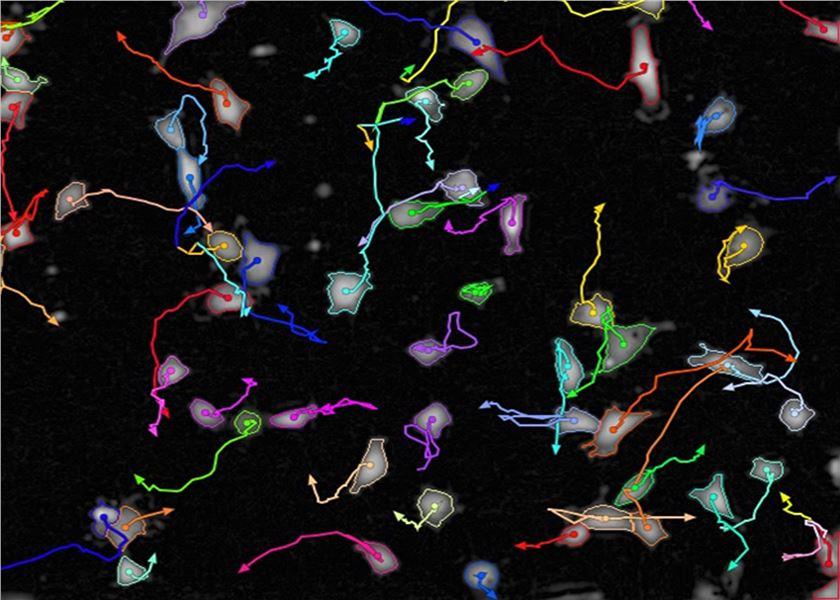
A brighter image does not always mean more target protein, and a weaker signal does not necessarily demonstrate inhibition. In experiments involving natural compounds, the detection chemistry can change independently of the biology. When fluorescent antibodies are used to measure cellular responses, reliable interpretation depends on three connected choices: the test compound, the antibody reagent, and the label attached to it.
Understanding those connections helps researchers distinguish a promising biological effect from a misleading optical result.
Start with the compound, not the readout
Selecting bioactive natural compounds for laboratory research requires more than comparing purity percentages. Identity, solubility, solvent compatibility, and stability under the intended conditions all influence what reaches the assay.
A nominal treatment concentration may differ from the dissolved concentration if material precipitates after dilution into culture medium. Likewise, changing the solvent concentration between treatment groups introduces another variable. Documenting stock preparation, final vehicle content, and visible precipitation makes later comparisons more informative.
Natural origin also does not guarantee optical neutrality. An experimental study examining components of herbal products found that some compounds fluoresced or quenched fluorescence strongly enough to interfere with the tested assays. The implication is specific: interference must be evaluated under the actual measurement conditions, rather than assumed from a compound's source.
Choose antibodies around the biological question
The next step is selecting research reagents for antibody-based assays that match the target, sample, and application. An antibody suitable for a Western blot may behave differently in fixed cells because sample preparation changes which epitopes remain accessible.
For imaging experiments, researchers should establish a useful staining range before comparing compound treatments. Excess antibody can increase background, while insufficient antibody can obscure genuine differences. Positive and negative biological controls help determine whether the observed pattern reflects the intended target.
Direct labeling can simplify detection and avoid some complications associated with secondary antibodies. However, converting a validated antibody into a fluorescent conjugate creates a modified reagent that needs its own performance check.
Treat conjugation as an optimization step
Choosing antibody conjugation kits for fluorescence detection begins with instrument compatibility and the desired assay format. The brightest available dye is not automatically the best choice if its spectral window overlaps substantially with compound fluorescence or another marker.
Reaction compatibility also matters. In conventional amine-reactive labeling, primary amines in buffers and additional proteins can compete with antibody labeling. Compatibility varies by chemistry and kit design, so the antibody formulation should be checked against the specific protocol.
Adding more dye is not a universal solution to weak staining. Experimental work has shown that fluorophore conjugation can affect antibody affinity and that multiple attached dyes can undergo self-quenching. Labeling therefore involves balancing signal generation with retained antibody function.
After conjugation, assess background and target recognition in the intended assay. Where appropriate, characterize the degree of labeling and remove excess free dye according to the method used.
Build controls that isolate optical effects
A compound-only control measured in the same detection channel can reveal intrinsic fluorescence. An unstained, compound-treated cell sample can help identify treatment-associated autofluorescence in imaging or flow cytometry. These controls address different sources of background and should be interpreted accordingly.
Quenching requires a different check: test whether the compound changes the signal from a defined fluorescent reference without the biological process being measured. Match the relevant solvent, concentration range, and instrument settings as closely as practical.
Wash steps may reduce extracellular interference, but they cannot be assumed to eliminate intracellular compound fluorescence. If a result remains uncertain, use an independent measurement principle, such as a suitable nonfluorescent protein assay. Agreement across methods is more persuasive when their major sources of interference differ.
Make the signal answer a biological question
A dependable assay links controlled compound exposure to validated target detection. Evaluating ingredient behavior, antibody specificity, and conjugate performance together makes it easier to explain unexpected results. The aim is a signal whose changes can be traced confidently to the biological process under investigation.

 English
 Arabic
 French
 Portuguese
 Deutsch
 Turkish
 Dutch
 Italiano
 Russian
 Romaian
 Portuguese (Brazil)
 Greek
