
Decoding the Market Structure: Understanding Product Segments in the Rapidly Expanding World of Agricultural Monitoring Hardware
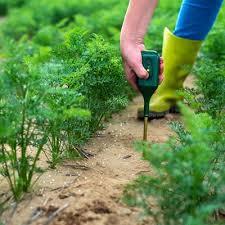
The landscape of agricultural hardware is vast and diverse, categorized into several distinct segments based on application and technology type. Understanding these segments is vital for investors and farmers who need to identify the most relevant tools for their specific needs. The primary categories include soil sensors, weather stations, livestock monitoring tags, and water sensors. Each of these segments serves a critical function in the overall smart-farming ecosystem. For example, soil sensors provide the data needed for "variable rate technology," which allows machinery to adjust the amount of fertilizer applied as it moves across a field. Weather stations, on the other from, provide the macro-environmental data needed to predict pest outbreaks and frost events. In a group discussion, breaking down these segments helps clarify how individual components contribute to the collective efficiency of the farm.
As technology advances, new sub-segments are emerging, such as optical sensors for weed detection and electrochemical sensors for nutrient analysis. The competition within each Agricultural Sensors Market segment is intensifying, leading to rapid cycles of innovation. Manufacturers are now focusing on "plug-and-play" solutions that can be easily integrated into existing farm management software. This ease of use is a significant factor in the widespread adoption of these technologies, as it reduces the need for specialized IT staff on the farm. Furthermore, the rise of "as-a-service" business models allows farmers to lease equipment and pay for data insights rather than making a large upfront capital investment. This flexibility is expected to drive significant growth across all segments, making precision agriculture more accessible to a broader range of agricultural businesses.
Frequently Asked Questions What is the difference between an optical sensor and an electrochemical sensor? Optical sensors use light to detect plant health or weeds, while electrochemical sensors measure specific chemical properties, like pH or nutrient levels in the soil.
Why is it important for sensors to be "plug-and-play"? Farmers need tools that work immediately with their existing equipment without complex setup, saving time and reducing the need for technical expertise.

 Arabic
 French
 Spanish
 Portuguese
 Deutsch
 Turkish
 Dutch
Dutch
 Italiano
 Russian
 Romaian
 Portuguese (Brazil)
 Greek
Greek
