
Dissecting the Competitive Landscape and Market Dominance Strategies within the Global Micro-Electro-Mechanical System Market Framework
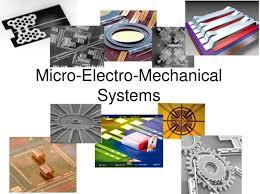
The Micro-Electro-Mechanical System (MEMS) market is characterized by a high degree of specialization and a intense competition among a few key players and a multitude of niche providers. In our group discussion, we should analyze how market leadership is maintained through continuous innovation and strategic partnerships. For many companies, the key to success has been the ability to offer a "platform" approach, where a single MEMS design can be adapted for multiple different applications with minimal changes. This strategy maximizes the return on the significant R&D investment required for any new MEMS device. We are also seeing a trend toward "foundry-plus" models, where manufacturing partners provide not just the raw fabrication, but also design assistance, packaging, and testing services. This allows fabless companies to bring products to market faster and with lower overhead. The importance of intellectual property cannot be overstated, as patents on specific sensing structures or manufacturing steps often provide a significant barrier to entry for competitors.
A critical look at the Micro-Electro-Mechanical System Market Share reveals that while a handful of firms dominate the high-volume consumer and automotive sectors, there is ample room for specialized players in the medical, aerospace, and high-end industrial markets. These niche markets often offer higher margins and more stable demand, as customers are willing to pay a premium for performance and long-term reliability. The rise of Chinese MEMS manufacturers is a significant development, as they leverage their proximity to the world's largest consumer electronics assembly hub to gain market share. This has led to increased price pressure in the commodity sensor segments, forcing established players to innovate further or move up the value chain. As we look ahead, the ability to integrate MEMS with other emerging technologies, such as photonics and quantum sensing, will likely define the next generation of market leaders and reshape the competitive dynamics of the entire electronics industry.
What is a "fabless" MEMS company? A fabless company designs and sells the hardware and semiconductor chips but does not own the manufacturing plant (the fab); instead, they outsource the actual production to a specialized foundry.
How is the rise of Chinese manufacturers affecting the global MEMS market? It is driving down costs for high-volume sensors like accelerometers and microphones through aggressive pricing, which forces global competitors to focus on higher-value, more complex integrated solutions.

 English
 Arabic
 French
 Spanish
 Portuguese
 Deutsch
 Turkish
 Dutch
Dutch
 Russian
 Romaian
 Portuguese (Brazil)
 Greek
Greek
