
Linear and See-Through Gas Fireplaces: Modern Design Ideas for Every Room
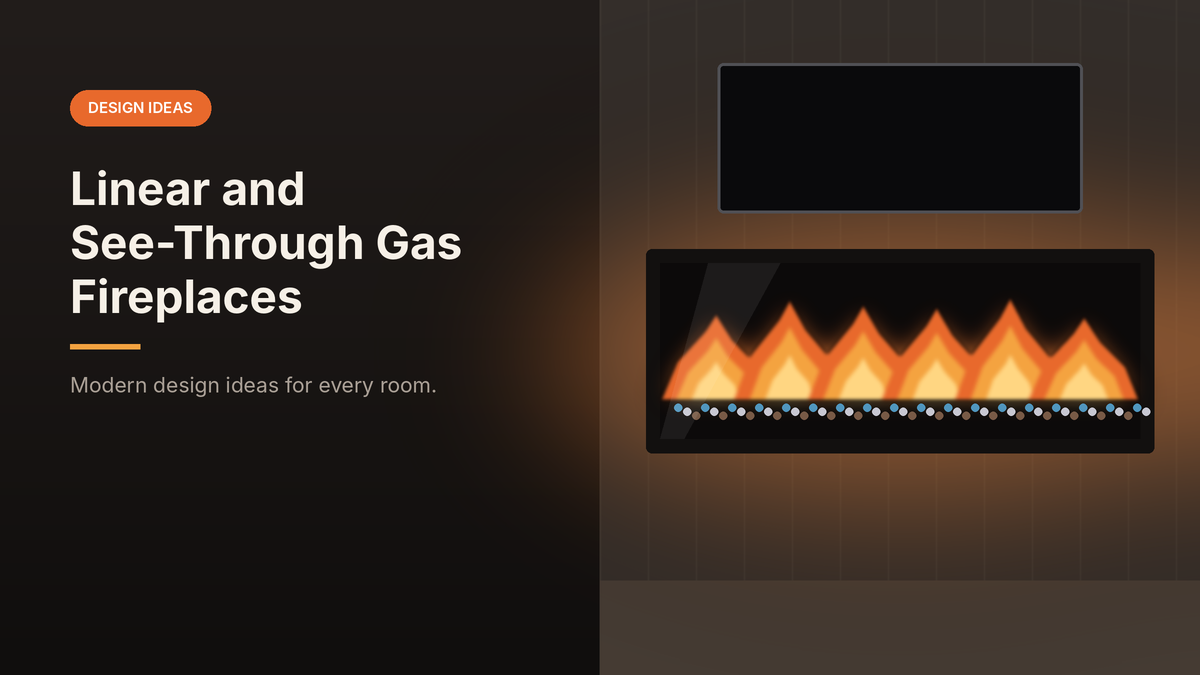
The fireplace has always been the heart of the home, but its shape has changed dramatically. Where we once had a brick box with a mantel, today's most-wanted gas fireplaces are long, low ribbons of flame framed in stone, porcelain or wood, or glass-walled fires you can see from two rooms at once.
Linear and see-through designs are now the signature of modern interiors, and they're surprisingly versatile. In this article, you'll find design ideas for different rooms, the features that matter most, and the practical points that make these statement fires work.
What Makes a Fireplace "Linear"?
A linear fireplace is wider than it is tall, often dramatically so. Widths commonly run from about 36 inches to 84 inches or more. Instead of a log set, most use a long burner under crushed glass, stones or driftwood-style media, creating a continuous line of flame.
Some newer designs, such as "tall linear" models, add more height to the viewing area for a bigger, more dramatic fire while keeping the long modern proportions. Napoleon's Tall Linear Vector series is a good example, offered in 50-, 62- and 74-inch widths with single-sided and see-through options.
What Is a See-Through Gas Fireplace?
A see-through (or two-sided) fireplace has glass on both the front and back, so the fire can be enjoyed from two spaces. It's often installed in a wall between a living room and dining room, a kitchen and family room, or a bedroom and en-suite. Multi-sided versions add a third glass face for peninsula or corner installs.
Why Direct Vent Makes These Designs Possible
Nearly all large linear and see-through fireplaces are direct vent. A direct vent gas fireplace is sealed from the room, drawing combustion air from outside and venting exhaust outside through a co-axial pipe. That sealed design does three things for modern layouts:
- Freedom of placement. The vent can run through a wall or roof, so the fireplace can sit in the middle of a room divider or under a window.
- Tall, realistic flames. Exhaust leaves the home, so manufacturers can tune for a big, lively flame rather than the smaller, bluer flame of a vent-free gas fireplace.
- Clean indoor air. Even a large, open fire won't add moisture or combustion by-products to your living space.
Vent-free units are generally smaller (codes cap them at 40,000 BTUs), and they aren't offered in the big see-through formats that define this style.
Design Ideas by Room
Living Room: The Feature Wall
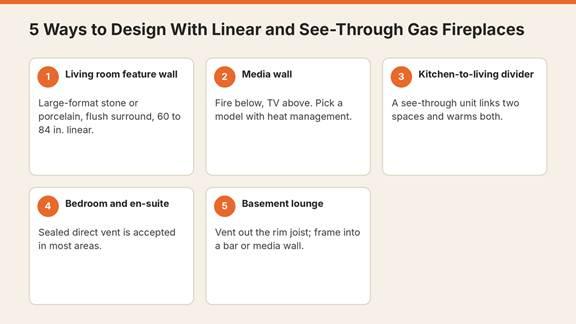
A linear fire set into a floor-to-ceiling wall of large-format porcelain, stone or fluted wood becomes instant architecture. Keep the surround flush and minimal, add a floating hearth bench beneath for display, and let the flame be the art. In very large rooms, a 72- to 84-inch unit such as the Astria Allume or Montigo Distinction holds its own against high ceilings.
The Media Wall: Fire and TV Together
The classic modern layout puts the fire below and the TV above. To make it work, choose a model with heat management, such as a heat-release kit, a cool-wall system, or a design rated for combustible finishes and TV placement above. Always follow the manufacturer's clearance chart for mantels and electronics.
Open-Plan Kitchen and Dining
A see-through fireplace between the kitchen and living area connects the two spaces without closing them off. Diners see the flame, the sofa side gets the warmth, and the wall still gives each zone definition. A 40- to 52-inch see-through unit, like the Astria Montebello or Montigo Phenom, suits this kind of divider wall.
Primary Bedroom and En-Suite
For a hotel-style retreat, a two-sided fireplace between a bedroom and bathroom is hard to beat. Because a direct vent gas fireplace is sealed, it's accepted for bedroom use in most jurisdictions, unlike vent-free models. Pair it with a smart thermostat remote so you can set the temperature from bed.
Basement and Lower Levels
Basements are often cool and lack a chimney, making them ideal for a direct vent linear fire. Vent it horizontally out of a rim joist, frame it into a media wall or bar area, and the space instantly feels more livable.
Finishes, Media and Lighting
- Media. Crushed glass gives a contemporary sparkle; river rock and driftwood feel organic; luminous logs offer a modern take on tradition.
- Liners. Black reflective glass liners multiply the flame and add depth. Brick or ledgestone patterns suit transitional homes.
- LED accent lighting. Many linear models offer multi-color LED lighting that lets you enjoy the fireplace without heat in warmer months.
- Surrounds. Large-format porcelain slabs, honed limestone, concrete-look panels, blackened steel and slatted wood are all popular. Check that the surround materials and clearances match the installation manual.
Practical Considerations
Budget. Large linear and see-through models are investment pieces. In Dawson Heat's current lineup, statement linear and see-through gas fireplaces start at around $9,700 and climb to nearly $19,500 for a 74-inch see-through with luminous logs, before installation and finishing.
- Framing. Plan the chase early with your builder, because linear and see-through units need specific framing dimensions and clearances.
- Venting route. See-through units sit inside a wall, so the vent usually runs vertically or along the chase to an exterior wall within the manual's allowed lengths.
- Heat output. Long fires can put out more heat than you expect. Match the BTU rating to the room and choose a model with variable flame control.
- Safety. Use the barrier screen supplied with modern glass-front models and install carbon monoxide alarms, as the US EPA recommends for any fuel-burning appliance.
If you're still gathering ideas, scrolling through a well-stocked selection of linear and see-through gas fireplaces is one of the easiest ways to see how widths, media and liners change the look.
Matching the Fireplace to Your Interior Style
- Minimalist and contemporary. Choose a frameless linear unit with black glass liners and crushed glass, set flush into a plain plaster or concrete-look wall.
- Warm modern and Scandinavian. Pair a mid-width linear fire with pale oak slats, a limestone hearth and driftwood or birch-style media.
- Industrial. Blackened steel surrounds, exposed concrete and stone media suit loft conversions and open basements.
- Transitional. A tall linear unit with luminous logs and a ledgestone liner bridges modern lines and a traditional feel.
- Luxury and hospitality style. A large see-through fire framed in bookmatched porcelain slabs creates the hotel-lobby effect many homeowners want in a great room.
Whichever style you choose, keep the surround simple enough that the flame stays the focal point. The most successful modern gas fireplaces look built into the architecture rather than added on afterwards.
Frequently Asked Questions
Do linear gas fireplaces give off real heat?
Yes. Most linear models are rated as heaters, with outputs that can warm a large room. Many include heat-management features so the heat can be directed away from a TV or into another space.
Can I put a TV above a linear gas fireplace?
Often, yes, if the model is approved for it and you follow the manufacturer's clearances. Models with heat-release or cool-wall systems are designed for this layout.
Are see-through gas fireplaces more expensive?
Typically, yes. They have two glass faces and more complex construction, so they usually cost more than single-sided versions of the same width.
Can a vent-free gas fireplace be linear?
Some smaller vent-free fireboxes have a linear look, but large linear and see-through designs are almost always direct vent because of their size and flame height.
What size linear fireplace should I choose?
As a guide, 36–50 inches suits standard rooms, 50–62 inches suits larger rooms and media walls, and 72 inches and up suits great rooms and open plans. Confirm heat output with your installer.
Final Thoughts
Linear and see-through gas fireplaces turn a heat source into the centerpiece of a room. With a direct vent design, you can place them almost anywhere, from a living room feature wall to a bedroom divider, while keeping indoor air clean. Gather your inspiration, settle on a width and a finish, then explore Dawson Heat to compare modern models from brands like Napoleon, Montigo, Astria and Majestic.

 English
 French
 Spanish
 Portuguese
 Deutsch
 Turkish
 Dutch
 Italiano
 Russian
 Romaian
 Portuguese (Brazil)
 Greek
