
How Does Fat Transfer Treatment Create Natural Curves?
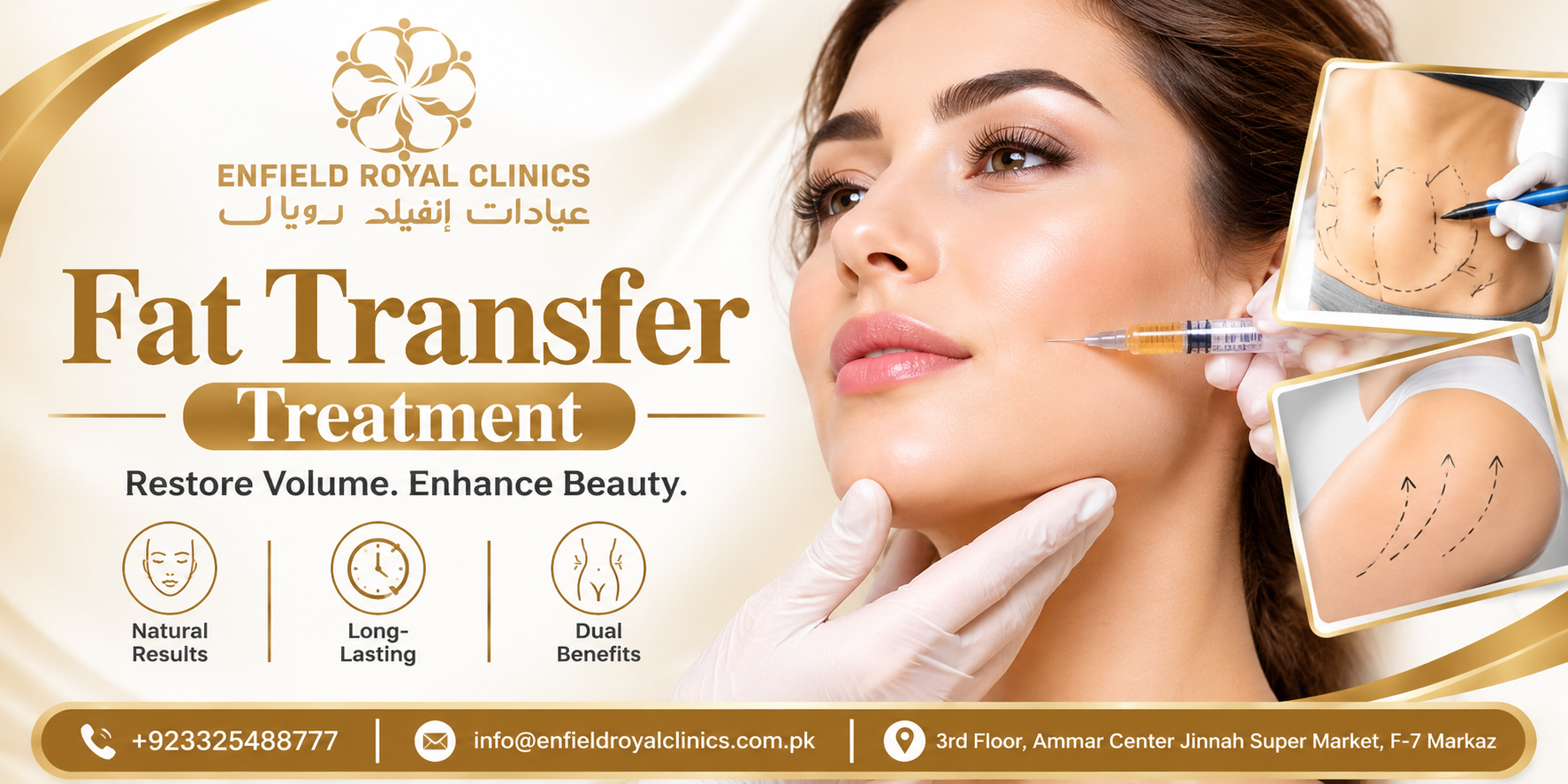
A balanced body shape often comes from the natural relationship between different areas of the body. However, changes in weight, ageing, genetics, and individual body structure can affect these proportions. Some people may have enough fullness around the abdomen or thighs but want more volume in areas such as the hips or buttocks. Others may simply wish to improve body contours without using synthetic materials.
Fat transfer treatment offers an approach to body enhancement by using a person's own fat to add volume to selected areas. The procedure involves collecting fat from a donor site, processing it, and carefully transferring it to another part of the body. When planned according to individual anatomy, it can create softer transitions and more balanced curves.
People considering Fat Transfer Treatment in Islamabad often want to understand how the procedure works, which areas it can enhance, and what kind of results they can realistically expect. Knowing the treatment process and its limitations can help them make a well-informed decision.
1. Understanding How Fat Transfer Creates Natural Curves
Fat transfer, also known as fat grafting or fat injection, is a cosmetic procedure that moves fat from one area of the body to another. Unlike implants, which use artificial materials to increase volume, this technique uses the patient's own fat tissue.
The procedure generally involves three main stages:
-
Fat collection: Fat is removed from a suitable donor area, commonly the abdomen, thighs, or flanks, using a specialised liposuction technique.
-
Fat processing: The collected material is processed to separate suitable fat cells from unwanted fluids and other components.
-
Fat transfer: Purified fat is carefully injected into selected areas to improve volume and contour.
The goal is to create a smoother and more balanced body shape rather than simply making one area larger. For example, adding volume to the hips while removing a suitable amount of fat from the waist may help improve the appearance of the waist-to-hip transition.
The final appearance depends on the patient's natural proportions, the amount of available fat, the treatment plan, and how much transferred fat survives.
2. Which Body Areas Can Benefit From Fat Transfer?
Fat transfer can enhance several body areas where additional volume may improve overall proportions. The most suitable treatment areas depend on individual anatomy and the patient's goals.
Hips: Some individuals have naturally narrow hips or uneven contours around the sides of the waist. Fat transfer may add fullness to selected areas, creating a smoother transition between the waist and thighs.
Buttocks: Fat grafting may increase buttock volume and improve shape in suitable candidates. It can help address areas that appear flat or lack fullness. However, buttock fat transfer requires strict safety precautions because of the risk of fat embolism.
Breasts: In selected patients, fat transfer may provide a modest increase in breast volume or improve contour irregularities. It is not suitable for everyone seeking a substantial increase in breast size.
Other contour areas: Fat grafting may also be considered for selected depressions or contour irregularities elsewhere on the body, depending on the patient's needs.
The purpose is to enhance the body's existing structure. A careful assessment helps determine whether fat transfer can create the desired improvement without producing disproportionate results.
3. How Does the Procedure Improve Body Proportions?
Natural-looking curves are not created by adding the same amount of volume to every area. They depend on how different body regions relate to one another.
For instance, a person may want a more defined waist and fuller hips. In such cases, fat may be collected from suitable areas around the abdomen or flanks and transferred to selected areas of the hips. This can improve the overall contour by addressing both sides of the desired change.
The procedure may help with:
-
Improving the appearance of hip dips in suitable candidates.
-
Adding volume to areas that appear flat.
-
Creating smoother transitions between body regions.
-
Improving symmetry where one side has less fullness.
-
Enhancing the relationship between the waist, hips, and buttocks.
However, fat transfer cannot completely change a person's underlying bone structure or guarantee a particular body shape. The best treatment plan works with natural anatomy instead of trying to create unrealistic proportions.
4. Why Does Using the Patient's Own Fat Create a Natural Appearance?
One reason people consider fat transfer is that it uses their own tissue. Once the transferred fat successfully establishes a blood supply, it becomes part of the surrounding tissue and can provide soft volume.
This can create a natural feel and appearance when the fat is placed appropriately. Unlike implants, which create volume through a separate device, transferred fat integrates into the treated area to the extent that the cells survive.
Several factors contribute to a balanced outcome:
-
Careful fat placement: Fat is distributed in appropriate amounts rather than concentrated in one location.
-
Individualised planning: The treatment considers the patient's existing body shape and proportions.
-
Suitable donor areas: Fat is collected from areas where removal is appropriate.
-
Realistic enhancement: The goal is a balanced improvement rather than excessive fullness.
-
Proper healing: The transferred fat needs time to establish a blood supply and stabilise.
Not all transferred fat survives. Some is naturally absorbed by the body during recovery. Therefore, the initial appearance may change as swelling settles and the surviving fat becomes established.
5. What Results Can Patients Expect After Fat Transfer?
Fat transfer can create fuller contours, smoother body transitions, and improved proportions. However, the final result develops gradually rather than appearing immediately in its settled form.
During the early recovery period, swelling may make the treated area appear larger than the eventual result. Bruising and tenderness may also occur at the donor and recipient sites.
As healing progresses, some of the transferred fat is absorbed. The remaining fat may establish a blood supply and provide longer-lasting volume. The amount that survives varies from person to person, so no specific level of fat retention can be guaranteed.
Patients may notice:
-
Improved fullness in the treated area.
-
Smoother body contours.
-
Better balance between selected body regions.
-
A more defined appearance around the donor area.
-
Gradual improvement as swelling decreases.
The final appearance may take several months to assess. Weight stability is important because transferred fat can increase or decrease in size as a person's body weight changes.
Some individuals may require an additional session if they want further enhancement or if the initial volume retention is lower than expected.
6. Safety, Recovery, and Important Considerations
Fat transfer is a surgical procedure, so understanding its risks is essential. Although using the patient's own fat avoids certain concerns associated with implants or synthetic materials, it does not make the procedure risk-free.
Possible complications include bruising, swelling, bleeding, infection, fluid accumulation, fat necrosis, lumps, asymmetry, and irregular contours. The risks vary according to the treatment area, surgical technique, and individual health.
Buttock fat grafting requires particular caution. Fat must be injected only into the subcutaneous tissue above the gluteal muscle, never into or beneath the muscle. Real-time ultrasound guidance is an important safety measure for confirming the correct injection plane. Injection into deeper tissues can cause a potentially fatal fat embolism.
After treatment, patients may need to:
-
Follow instructions about sitting or lying positions if the buttocks are treated.
-
Avoid strenuous exercise until cleared to resume activity.
-
Wear compression garments when recommended for donor areas.
-
Keep treatment areas clean and follow wound-care instructions.
-
Avoid smoking during the healing period.
-
Attend follow-up appointments to monitor recovery.
Fever, spreading redness, worsening pain, or unusual swelling should be assessed promptly. Chest pain, shortness of breath, fainting, sudden vision changes, or one-sided weakness require emergency medical attention.
A thorough consultation before Fat Transfer Treatment in Islamabad helps determine whether the procedure is suitable. The assessment should cover medical history, available donor fat, treatment goals, surgical risks, and the safety measures required for the selected area.
7. Who Is a Suitable Candidate for Natural Body Contouring?
Fat transfer may be appropriate for people who want to improve selected body contours and have enough suitable donor fat available. It is generally more suitable for individuals seeking moderate enhancement rather than a dramatic change in body size.
Potential candidates may include people who:
-
Have sufficient fat in areas such as the abdomen, thighs, or flanks.
-
Want additional volume in the hips or buttocks.
-
Prefer using their own tissue for body enhancement.
-
Have realistic expectations about fat survival and recovery.
-
Are in suitable overall health for surgery.
-
Can follow the recommended aftercare instructions.
People with insufficient donor fat, certain medical conditions, active infections, or significant healing concerns may not be suitable. A qualified professional should evaluate each person's circumstances before recommending treatment.
For more information visit Enfield royal clinic in islamabad
Frequently Asked Questions (FAQs)
1. Can fat transfer create natural-looking hips and curves?
Yes. In suitable candidates, fat transfer can add volume to selected areas of the hips and improve body proportions. The outcome depends on natural anatomy, fat availability, surgical technique, and fat survival.
2. Which areas are commonly used as fat donor sites?
Common donor sites include the abdomen, thighs, and flanks. The most appropriate area depends on the patient's body composition and the amount of fat that can be safely collected.
3. Are fat transfer results permanent?
Some transferred fat may survive for many years after establishing a blood supply. However, a portion is usually absorbed by the body, and the final amount retained varies between individuals.
4. How long does recovery take after body fat transfer?
Recovery varies depending on the amount of fat removed and transferred and the treatment areas involved. Swelling and bruising may take several weeks to improve, while the final contours can take several months to settle.
5. Can fat transfer correct hip dips?
Fat transfer may improve the appearance of hip dips in selected candidates by adding volume to the surrounding area. However, the amount of improvement depends on anatomy, available fat, and realistic treatment goals.
6. Does fat transfer help with weight loss?
No. Fat transfer is a body contouring procedure, not a weight-loss treatment. It removes fat from selected donor areas and uses some of that fat to enhance another area.
Conclusion
Fat transfer treatment can create natural-looking curves by moving a person's own fat from suitable donor areas to regions that need additional volume. It may improve hip fullness, enhance buttock contours, soften selected body irregularities, and create more balanced proportions.
The best results come from individualised planning, careful fat placement, appropriate safety measures, and realistic expectations. Since some transferred fat is naturally absorbed, the final outcome takes time to develop. A professional assessment can help determine whether the procedure is suitable for the patient's body shape and aesthetic goals.

 English
 Arabic
 French
 Spanish
 Portuguese
 Deutsch
 Dutch
 Italiano
 Russian
 Romaian
 Portuguese (Brazil)
 Greek
