
Semiconductor Laser Market Dynamics, Key Drivers, Challenges, and Future Opportunities
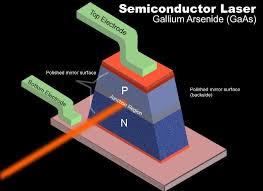
The rapid expansion of telecommunications infrastructure, coupled with the exponential rise in global data traffic, has placed immense pressure on existing optical network frameworks. As data centers scramble to upgrade their routing and switching capabilities to handle massive artificial intelligence and machine learning workloads, the role of miniature optoelectronic components has become more critical than ever before. Semiconductor lasers, particularly vertical-cavity surface-emitting lasers (VCSELs) and edge-emitting lasers, are proving to be the backbone of this infrastructural overhaul due to their unmatched efficiency, high-speed modulation capabilities, and exceptionally small form factor. Industry stakeholders are heavily investing in finding novel materials, such as gallium arsenide and indium phosphide, to push the boundaries of operational bandwidth and reduce thermal dissipation issues that plague dense hardware arrays. According to recent comprehensive industry evaluations, the Semiconductor Laser Market analysis demonstrates that the convergence of fiber-to-the-home services and ultra-dense cloud computing environments is the primary catalyst driving continuous manufacturing innovations and massive cross-border capital investments across both developed and emerging technological hubs worldwide.
Beyond traditional telecommunications, these advanced laser systems are rapidly penetrating alternative high-growth sectors, completely reshaping the landscape of medical diagnostics, industrial manufacturing, and consumer electronics. In the medical arena, precise wavelengths emitted by compact laser diodes enable highly targeted non-invasive surgeries, advanced ophthalmic procedures, and real-time blood flow monitoring systems that were completely unimaginable a decade ago. Concurrently, the automotive industry has emerged as a massive consumer of semiconductor laser technology, deploying lidar systems to provide autonomous vehicles with real-time, highly accurate three-dimensional mapping of their surroundings. This cross-industry adoption not only stabilizes the manufacturing supply chain by diversifying revenue streams but also fosters collaborative research ecosystems where military-grade sensing advancements eventually trickle down into everyday consumer products. As manufacturers achieve better economies of scale, the unit economics of producing complex multi-junction laser arrays will continue to fall, paving the way for ubiquitous integration into next-generation smart city infrastructure and personalized biomedical monitoring devices.
What are the primary factors driving the adoption of VCSELs over edge-emitting lasers in modern data centers?
VCSELs offer superior optical beam profiles, much lower power consumption, and the unique capability to be tested directly on the wafer before final packaging, which significantly reduces manufacturing costs and improves overall system reliability in high-density environments.
How do thermal management challenges impact the operational lifespan of high-power semiconductor laser diodes?
Excessive heat accumulation shifts the emission wavelength away from the desired spectrum, decreases total optical output efficiency, and accelerates internal crystal defects, making robust thermal packaging and advanced cooling systems absolutely vital for maintaining long-term performance.
➤➤➤Explore MRFR’s Related Ongoing Coverage In Semiconductor Industry:
Casino Management System Market
Advanced Metering Infrastructure (AMI) Market
Autonomous Mobile Robot Market

 English
 Arabic
 French
 Spanish
 Portuguese
 Turkish
 Dutch
Dutch
 Italiano
 Russian
 Romaian
 Portuguese (Brazil)
 Greek
Greek
