
Fiber Optic Test Equipment Market Dynamics, Key Drivers, Challenges, and Opportunities
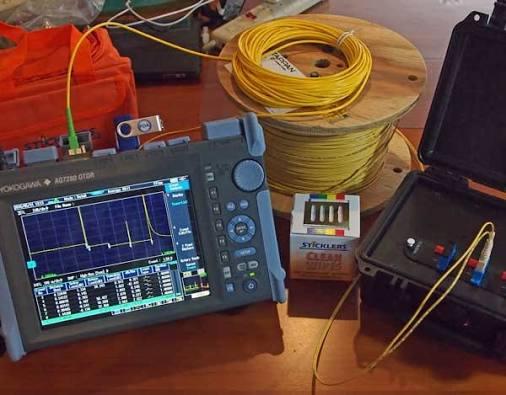
The massive expansion of global telecommunications networks is entirely dependent on the physical integrity of subsea cables, terrestrial trunks, and fiber-to-the-home connections. As data demands skyrocket due to cloud computing, autonomous systems, and pervasive high-definition media streaming, optical fibers must perform flawlessly at their physical limits. Even microscopic imperfections, dust particles, or micro-bends in the glass core can cause catastrophic signal attenuation and packet loss, disrupting vital communications. To prevent these failures, technicians rely on highly specialized diagnostic instruments capable of measuring light reflection, insertion loss, and polarization at sub-millimeter scales. Understanding the deployment velocities and technical benchmarks of these essential instruments requires a close evaluation of the broad Fiber Optic Test Equipment Market analysis which tracks how diagnostic tools evolve alongside modern infrastructure. Without rigorous testing methodologies during both installation and routine maintenance cycles, network operators risk multi-million-dollar outages that can paralyze regional enterprise operations.
From an open group discussion perspective, this infrastructure challenge highlights the delicate balance between rapid network deployment and long-term quality control. In the rush to bridge the digital divide and provide high-speed access to rural or underserved communities, installation teams are frequently pressured to meet aggressive deadlines. This frantic pace can lead to compromised testing protocols, where technicians skip thorough optical time-domain reflectometer sweeps or bypass thorough connector end-face inspections. Group participants should debate whether international telecommunications regulatory bodies should impose stricter, legally binding testing mandates on private contractors or if the financial risk of network self-destruction is enough to enforce compliance. Additionally, the conversation can explore how the current shortage of certified fiber optic field technicians globally impacts the overall reliability of newly laid critical communications infrastructure.
What is the primary function of an optical time-domain reflectometer in network validation?
It injects a series of optical pulses into the fiber strand and analyzes the backscattered light to locate specific splices, connectors, and structural faults along the entire cable length.
How does microscopic contamination on a connector end-face impact signal integrity?
Dust or oil particles block the light path, causing severe signal reflection back into the source, which degrades bandwidth capacity and can permanently damage high-power optical transmitters.
➤➤➤Explore MRFR’s Related Ongoing Coverage In Semiconductor Industry:
Casino Management System Market

 English
 Arabic
 French
 Portuguese
 Deutsch
 Turkish
 Dutch
Dutch
 Italiano
 Russian
 Romaian
 Portuguese (Brazil)
 Greek
Greek
