
How Hemp Regulations Affect 50mg Full Spectrum CBD Gummies
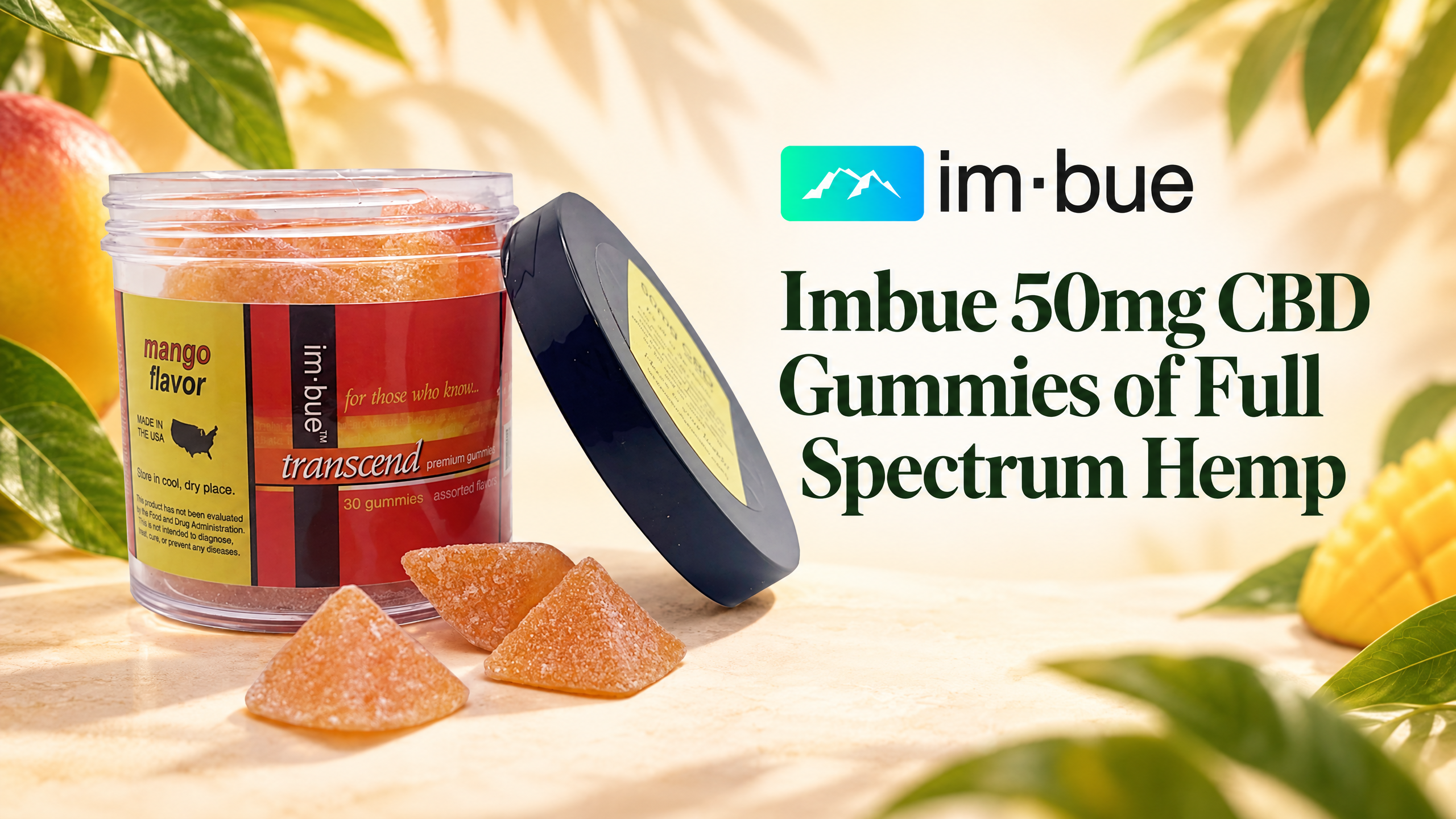
Hemp regulations influence how CBD products are cultivated, manufactured, tested, labeled, and sold. These rules help establish standards for the hemp industry and explain what manufacturers must consider when developing hemp-derived products.
50mg Full Spectrum CBD Gummies belong to a growing category of hemp products, making it important to understand the regulations that may affect their production and sale. From hemp cultivation to ingredient disclosure, legal requirements can influence several stages of the product journey. Consumers researching these products should also understand the difference between federal rules, state laws, and product-specific requirements.
Understanding Federal Hemp Regulations
In the United States, the 2018 Farm Bill established a federal definition of hemp based on a delta-9 THC concentration of no more than 0.3 percent on a dry-weight basis. It also removed qualifying hemp from the federal Controlled Substances Act definition of marijuana. However, this change did not remove the Food and Drug Administration's authority over products containing hemp-derived compounds such as CBD.
This distinction is important because a product made from qualifying hemp does not automatically become lawful for every purpose. The way it is manufactured, marketed, and intended to be used can affect which regulations apply. The FDA explains that cannabis-derived products remain subject to applicable federal requirements even when their source material meets the hemp definition.
How Regulations Affect Product Ingredients
Ingredient transparency is an important part of responsible product manufacturing. Regulations and labeling requirements can influence how companies identify hemp extract, flavoring agents, sweeteners, pectin, and other ingredients.
For 50mg Full Spectrum CBD Gummies, consumers may want to review the ingredient list to understand the product's formulation. Full Spectrum CBD Gummies contain hemp extract intended to retain a range of naturally occurring hemp compounds. The exact cannabinoid profile can vary according to the source material and manufacturing process.
Vegan CBD Gummies may use plant-based ingredients instead of animal-derived gelatin. Mango CBD Gummies may also include flavoring ingredients to create their characteristic taste. Clear ingredient information helps customers understand what a product contains without relying on broad marketing descriptions.
The Importance of THC Limits and Disclosure
THC is one of the naturally occurring cannabinoids found in cannabis plants. Federal hemp rules have historically used a delta-9 THC limit of 0.3 percent on a dry-weight basis to distinguish qualifying hemp from marijuana. However, this definition should not be confused with a guarantee that every finished CBD product meets all applicable requirements.
Consumers researching Hemp CBD Gummies should look for clear information about cannabinoid content and THC disclosure. A product label may describe its hemp extract as full spectrum, but that description alone does not establish the exact amount of each cannabinoid.
There is also an important upcoming federal change. A 2026 amendment to the federal hemp definition is scheduled to take effect on November 12, 2026. It introduces additional restrictions involving certain cannabinoids and final-form products for human use. Businesses selling hemp-derived products should review the updated law and its implementation carefully.
Why Laboratory Testing Matters
Laboratory testing provides useful information about the composition and quality of hemp products. Independent testing can help identify cannabinoid concentrations and screen for substances such as pesticides, heavy metals, residual solvents, and microbial contaminants.
A Certificate of Analysis, commonly called a COA, is a laboratory report that provides results for a tested sample or production batch. When reviewing a report for 50mg Full Spectrum CBD Gummies, consumers should check whether the product name, batch number, testing date, and cannabinoid results are clearly identified.
A COA does not automatically prove that a product is legally approved or suitable for every consumer. It is one source of product information that should be considered alongside labeling, manufacturing details, and applicable regulations.
Understanding CBD Product Labeling
Accurate labeling helps consumers understand what they are purchasing. Important details may include the amount of CBD per gummy, the total number of gummies, serving information, ingredients, storage instructions, and manufacturer details.
For example, 50mg Full Spectrum CBD Gummies communicate a stated CBD amount per gummy, but consumers should confirm that the packaging clearly explains whether the figure refers to one gummy or the entire container. They should also review the complete ingredient list and any warnings supplied by the manufacturer.
Gelatin Free CBD Gummies and Plant Based CBD Gummies are descriptions of formulation choices. They do not independently establish regulatory approval. Similarly, terms such as High Strength CBD Gummies should not replace clear information about the actual cannabinoid amount.
How FDA Rules Affect CBD Edible Products
Federal food and drug regulations are particularly important for CBD edibles. The FDA states that CBD is excluded from the federal dietary supplement definition under the relevant provisions of the Federal Food, Drug, and Cosmetic Act. The agency also states that introducing food with added CBD into interstate commerce is prohibited under current federal law, subject to applicable statutory exceptions and future regulatory changes.
This means that describing a product as a hemp-derived edible or a dietary supplement does not automatically establish that it can legally be sold across state lines. Companies must consider the product's ingredients, intended use, claims, and distribution arrangements.
For 50mg Full Spectrum CBD Gummies, this regulatory distinction is important. Consumers should avoid assuming that availability online means a product has been approved by the FDA. Manufacturers and retailers should obtain appropriate legal guidance before making claims about compliance or product approval.
Why State Laws Also Matter
Federal rules are only one part of the regulatory picture. Individual states may establish additional requirements for hemp-derived products, including age restrictions, testing standards, packaging rules, ingredient disclosures, and retail licensing.
These requirements can differ between locations and may change over time. A product that is treated one way in one state may face different restrictions in another. Businesses involved in distributing CBD Gummies with Full Spectrum Hemp should therefore review the rules in every state where they intend to sell.
Consumers should also check local requirements before purchasing or transporting hemp-derived products. This is especially important when traveling across state borders or ordering products from another jurisdiction.
Responsible Consumer Research
Understanding product regulations helps consumers make informed decisions. Before choosing hemp-derived edibles, buyers can review the product label, ingredient list, manufacturer information, serving details, and available laboratory reports.
It is also sensible to consider personal circumstances. CBD may interact with certain medications, and its safety information is still developing. Anyone taking prescription medicines, managing a health condition, or considering CBD during pregnancy or breastfeeding should consult a qualified healthcare professional before use.
For 50mg Full Spectrum CBD Gummies, responsible research means looking beyond the product name and checking the details that explain its formulation, testing, and legal status.
Final Thoughts
Hemp regulations influence how CBD products are sourced, formulated, labeled, tested, and distributed. Understanding federal requirements, state-level rules, THC disclosures, and FDA policies can help consumers evaluate product information more carefully. Regulations may also change, so manufacturers and buyers should follow current official guidance rather than rely on outdated claims. Imbue Botanicals can be part of a consumer's product research, but customers should always review available ingredients, testing information, and applicable legal requirements before making a purchasing decision.
Frequently Asked Questions
1. What are hemp regulations?
Hemp regulations are federal and state rules governing hemp cultivation, processing, testing, labeling, distribution, and the sale of hemp-derived products.
2. Does the federal hemp definition automatically make CBD gummies legal?
No. Meeting the federal definition of hemp does not automatically make every CBD product lawful. Other federal and state requirements may apply, including FDA rules for food, drugs, and dietary supplements.
3. Why should consumers check a Certificate of Analysis?
A Certificate of Analysis provides laboratory results for a tested sample or batch. It may help consumers review cannabinoid content and screening results for certain contaminants.
4. Can THC be present in full-spectrum CBD products?
Full-spectrum hemp extracts may contain naturally occurring THC along with other cannabinoids. Consumers should review the product label and available laboratory report for the specific cannabinoid profile.
5. Do CBD regulations differ between states?
Yes. States may establish additional requirements involving testing, packaging, labeling, age limits, and retail sales. Consumers and businesses should check the current laws that apply in their location.

 English
 Arabic
 French
 Spanish
 Portuguese
 Turkish
 Dutch
 Italiano
 Russian
 Romaian
 Portuguese (Brazil)
 Greek
