
Cold Chain Environment Monitoring Sensors Market to Reach USD 9.24 Billion by 2034, Driven by Real-Time Supply-Chain Visibility
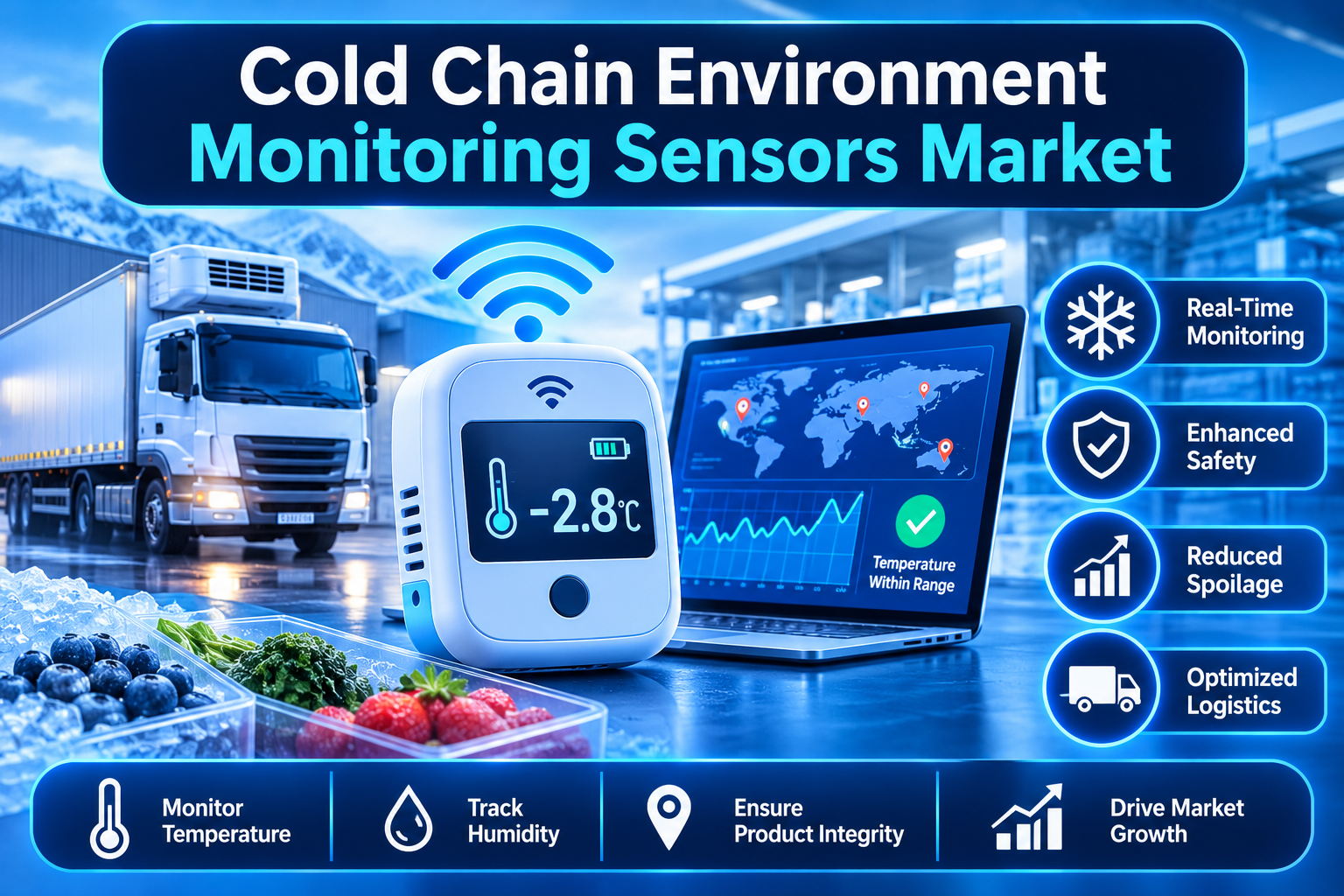
Temperature-sensitive products require controlled storage and transportation across pharmaceutical, food and other perishable-goods supply chains. Cold chain environment monitoring sensors provide continuous visibility into temperature, humidity, light exposure, door-open events, shock, tilt and location, helping operators identify excursions and maintain reliable records.
According to SemiconductorInsight, the global Cold Chain Environment Monitoring Sensors Market was valued at USD 4,789 million in 2025 and is expected to reach USD 9,240 million by 2034, growing at a CAGR of 10.0% during the forecast period. The report attributes expansion to regulatory requirements, demand for real-time monitoring and the shift toward connected multi-parameter sensor platforms.
Explore the complete market analysis: https://semiconductorinsight.com/report/cold-chain-environment-monitoring-sensors-market/
Why Are Cold Chain Environment Monitoring Sensors Becoming Essential?
Cold chain environment monitoring sensors are data-logging devices that continuously detect, record and sometimes transmit environmental conditions throughout refrigerated storage and temperature-controlled transportation. Their capabilities extend beyond temperature measurement to humidity, light exposure, shock, tilt, door status and location.
These devices help logistics providers, pharmaceutical shippers and food distributors maintain visibility across warehouses, refrigerated vehicles and delivery routes. Continuous data streams support timely alerts, automated compliance reporting and audit-ready records.
Regulatory Requirements and Supply-Chain Visibility Support Market Growth
Stringent food-safety requirements across North America and Europe encourage shippers to deploy real-time monitoring devices in refrigerated containers. Digital temperature records help operators demonstrate that products have remained within required conditions during handling and transportation.
Retailers and logistics companies are integrating sensor data with enterprise systems to anticipate spoilage and improve operational decisions. Pharmaceutical requirements for multi-parameter oversight are also encouraging suppliers to add humidity, shock and other sensing capabilities.
Connected Multi-Parameter Devices and Edge AI Are Shaping Innovation
The market is moving from single-point temperature loggers toward connected devices that monitor several environmental conditions and stream information to cloud dashboards. Automated alerts can notify operators when temperature excursions or other events occur.
Edge-AI processing creates an opportunity to detect anomalies locally without depending on continuous connectivity. Bluetooth Low Energy and LoRaWAN are identified as important connectivity choices in regional deployments.
High Upfront Costs and Interoperability Remain Key Challenges
Integrated solutions can require calibrated sensors, gateway infrastructure and subscription services. The report notes that upfront expenditures can exceed USD 10,000 per vehicle, creating a barrier for independent distributors and smaller operators.
A fragmented ecosystem of proprietary communication protocols can force customers to operate multiple gateways. Data-security concerns and encryption or data-hosting requirements can also slow cloud migration.
Where Are the Biggest Opportunities Emerging?
Edge processing and AI-enabled anomaly detection create opportunities for faster alerts and higher-value monitoring services, particularly in pharmaceutical and vaccine supply chains.
Connected multi-parameter devices create opportunities to combine temperature, humidity, shock and location information in a single workflow. Automated compliance reporting can reduce manual audit effort.
Regional Market Outlook
Europe is described as the foremost market, supported by stringent EU temperature-logging requirements and mature cold-chain distribution networks. Germany, France and the Benelux region are highlighted for sensor integration into logistics equipment.
North America benefits from consumer expectations for product freshness, e-commerce growth and demand for detailed temperature information. Asia-Pacific has varied adoption: Japan, South Korea and Australia have sophisticated cold-chain practices, while India and Vietnam face infrastructure constraints.
Competitive Landscape and Industry Positioning
The report describes a market in which established original-equipment manufacturers compete with niche technology providers. Competition is shaped by sensor accuracy, calibration, connectivity, battery life, multi-parameter functionality and integration with logistics software.
Suppliers are expanding portfolios to include humidity and shock detection, connected dashboards and automated reporting. Smaller innovators may differentiate through compact and recyclable sensor designs.
What Does the Report Cover?
The study examines the 2025 base value and 2034 outlook, including USD 4,789 million in 2025, USD 9,240 million by 2034 and a 10.0% CAGR.
It also reviews regulatory momentum, supply-chain visibility, capital expenditure barriers, interoperability, data security, edge-AI opportunities, connected monitoring and regional adoption patterns.
Key Questions Answered by the Study
What was the market size in 2025?
USD 4,789 million.
What is the projected value by 2034?
USD 9,240 million.
What CAGR is expected?
10.0%.
What do these sensors measure?
Temperature, humidity, light exposure, door-open events, shock, tilt and location.
Which industries use them?
Pharmaceutical, food and other temperature-sensitive supply chains.
What drives adoption?
Regulatory requirements, real-time visibility and audit-ready records.
What is a major cost barrier?
Calibrated devices, gateways and subscriptions can create high upfront costs.
Which connectivity technologies are discussed?
Bluetooth Low Energy and LoRaWAN.
How can edge AI help?
It enables local anomaly detection and faster alerts.
Which region is foremost?
Europe.
What can slow cloud adoption?
Data security, encryption and data-hosting requirements.
What is the forecast period?
The page provides a 2025 base and 2034 endpoint.
Explore the full Cold Chain Environment Monitoring Sensors Market forecast and competitive analysis: https://semiconductorinsight.com/report/cold-chain-environment-monitoring-sensors-market/
About Semiconductor Insight
Semiconductor Insight provides market intelligence and industry research covering semiconductor technologies, electronic components, advanced manufacturing systems and related technology markets. Its research focuses on market sizing, forecasting, competitive landscapes, technology trends, segmentation and regional analysis.
Contact Semiconductor Insight
Website: www.semiconductorinsight.com

 English
 Arabic
 French
 Spanish
 Portuguese
 Turkish
 Dutch
 Italiano
 Russian
 Romaian
 Portuguese (Brazil)
 Greek
