
Advanced TSCM Equipment for Professional Bug Sweeping Services in Mumbai
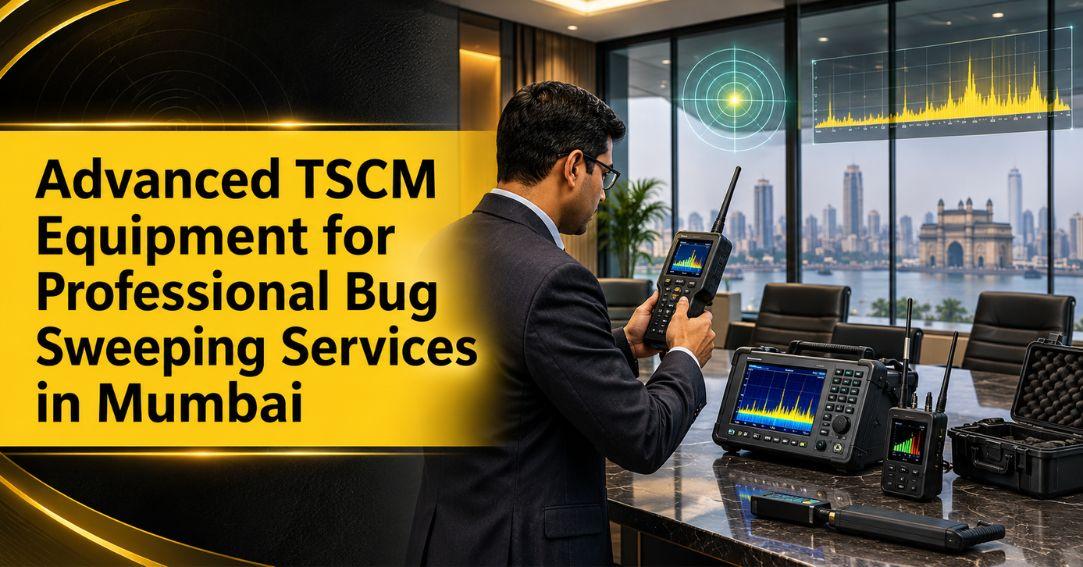
In an increasingly connected business environment, maintaining confidentiality requires more than conventional security practices. Corporate offices, executive cabins, boardrooms, conference facilities, and private premises may contain sensitive information that deserves appropriate privacy assessments. Potential electronic surveillance devices, unauthorized monitoring equipment, and concealed recording technologies can create concerns for organisations and individuals alike.
This is where Technical Surveillance Countermeasures (TSCM) play an important role. Professional bug sweeping services involve specialized inspection procedures designed to assess environments for potential electronic surveillance risks. Unlike a basic visual examination, a comprehensive TSCM inspection may incorporate advanced RF detection equipment, spectrum analyzers, non-linear junction detectors, thermal imaging devices, and other technical instruments.
For businesses and individuals seeking professional bug sweeping in Mumbai, understanding the equipment used during these inspections provides valuable insight into how electronic surveillance detection works.
What Is TSCM and Why Does Professional Equipment Matter?
Technical Surveillance Countermeasures (TSCM) refer to specialized technical procedures used to identify, assess, and evaluate potential electronic surveillance threats within a particular environment.
A basic visual inspection may identify obvious suspicious objects, but modern electronic monitoring equipment can be compact, concealed, or integrated into everyday electronic devices. Identifying potential threats therefore requires appropriate technical knowledge and specialized inspection instruments.
Professional TSCM equipment helps trained specialists examine different aspects of an environment, including:
- Unusual radio frequency (RF) transmissions.
- Suspicious wireless communication signals.
- Potentially concealed electronic components.
- Unauthorized recording or monitoring equipment.
- Electronic devices that may require further technical examination.
- Suspicious wiring and electronic installations.
For organisations operating in Mumbai's commercial and corporate environments, professional TSCM debugging can provide a more structured approach to assessing potential electronic surveillance concerns.
Advanced Equipment Used in Professional Bug Sweeping Services
Different electronic surveillance devices operate using different technologies. Consequently, professional TSCM inspections may require multiple instruments rather than relying on a single detection tool.
Here are some important categories of equipment used during professional bug sweeping inspections.
- RF Detection Equipment
Radio Frequency (RF) detection equipment is an important component of electronic surveillance assessments.
Certain wireless surveillance devices transmit information through radio frequencies. RF detection instruments help specialists identify and investigate radio frequency activity within an inspection area.
These instruments can assist in examining:
- Unusual wireless signal activity.
- Potential radio frequency transmissions.
- Suspicious electronic communication patterns.
- Unexpected signal sources within sensitive environments.
- Wireless devices requiring further investigation.
RF detection is particularly relevant when assessing corporate offices, boardrooms, conference rooms, and executive cabins.
However, not every detected signal indicates surveillance activity. Wi-Fi networks, Bluetooth devices, mobile phones, and other legitimate electronics also generate RF activity. Technical expertise is therefore essential when interpreting results.
- Spectroanalyzers
Spectrum analyzers provide a more detailed understanding of radio frequency activity across selected frequency ranges.
Unlike basic RF detectors that may provide alerts when certain signals are present, spectrum analyzers allow specialists to examine signal characteristics, frequency distribution, and transmission patterns.
During professional TSCM inspections, spectrum analysis can help with:
- Examining activity across different frequency bands.
- Identifying unusual or unexpected signal patterns.
- Investigating potential wireless transmission sources.
- Comparing signal activity against expected environmental conditions.
- Supporting further technical assessment of suspicious signals.
Spectrum analysis is particularly useful in environments with multiple wireless communication systems, where distinguishing legitimate signals from potentially suspicious activity requires careful evaluation.
Read More - Professional TSCM and Technical Privacy Assessment Services Across India
- Non-Linear Junction Detectors (NLJD)
Non-linear junction detectors are specialized instruments used to locate certain electronic semiconductor components, including components that may be present in concealed electronic devices.
Unlike conventional RF detection equipment, an NLJD does not depend on a device actively transmitting a wireless signal.
It works by transmitting a radio frequency signal and analyzing responses from non-linear electronic junctions.
NLJD equipment may help specialists investigate:
- Concealed electronic circuits.
- Electronic components inside furniture or structural spaces.
- Potentially hidden recording equipment.
- Electronic devices that are switched off or not transmitting.
This makes non-linear junction detection a valuable complementary technique during professional TSCM inspections.
However, natural materials and other electronic components can also produce responses, so findings require technical interpretation and, where appropriate, additional examination.
- Thermal Imaging Cameras
Thermal imaging cameras detect differences in surface temperature and display them as thermal patterns.
Certain electronic devices generate heat during operation. Under suitable conditions, thermal imaging may help specialists identify unusual temperature variations that warrant further investigation.
Potential applications include:
- Examining suspicious areas behind accessible surfaces.
- Identifying unexpected heat signatures.
- Investigating electronic equipment operating within enclosed spaces.
- Supporting physical examination of selected areas.
Thermal imaging is not a standalone method of detecting hidden surveillance devices. Environmental conditions, insulation, ventilation, and ordinary electronic equipment can all affect thermal readings.
Nevertheless, when combined with other inspection techniques, thermal imaging can provide useful supporting information.
Check this - TSCM Bug Sweeping for Identifying Potential Electronic Surveillance Risks
- Hidden Camera Lens Detection Equipment
Certain optical inspection instruments are designed to help identify camera lenses through reflected light.
These devices may assist specialists in examining areas where concealed cameras could potentially be installed, including:
- Meeting rooms.
- Hotel accommodation.
- Office interiors.
- Residential spaces.
- Changing areas and other sensitive locations.
Lens detection equipment can help locate reflective optical components that may otherwise be difficult to notice during a routine visual inspection.
However, not every reflective surface is a camera lens, and some cameras may be difficult to identify using optical detection alone. Physical examination and other technical methods may therefore be necessary.
- Telephone and Wired Communication Inspection Equipment
Not all potential surveillance equipment relies on wireless transmission. Certain monitoring arrangements may involve wired connections or modifications to communication infrastructure.
Depending on the inspection requirements, specialists may use suitable telephone and cable testing instruments to examine relevant communication systems.
These inspections may involve:
- Examining accessible telephone connections.
- Assessing suspicious wiring configurations.
- Checking communication infrastructure for irregularities.
- Investigating unexpected electrical or signal characteristics.
Wired communication assessments are an important consideration when evaluating environments where RF detection alone may not provide sufficient coverage.
- Digital and Electronic Inspection Instruments
Modern environments contain numerous electronic devices, communication systems, and network-connected equipment.
During a TSCM inspection, specialists may use additional electronic testing instruments to investigate suspicious installations and examine relevant technical characteristics.
The equipment selected depends on the premises, inspection scope, and nature of the concerns being assessed.
Combining different inspection methods helps create a more comprehensive technical evaluation than relying on a single detection instrument.
Why Multiple TSCM Detection Technologies Are Important
One of the common misconceptions about bug sweeping is that a single detector can identify every type of hidden surveillance device.
In reality, different technologies require different inspection approaches.
For example, an active wireless device may generate detectable RF activity, whereas a switched-off electronic device may not transmit any signal. Similarly, wired monitoring equipment may not be identifiable through conventional wireless signal detection.
This is why professional TSCM debugging generally involves a combination of technical instruments and systematic inspection procedures.
| Inspection technology | Primary purpose |
| RF detectors | Identify and investigate radio frequency activity. |
| Spectral analyzers | Examine signal characteristics across frequency ranges. |
| NLJD equipment | Locate certain concealed electronic components. |
| Thermal imaging | Examine unusual temperature patterns. |
| Optical lens detectors | Assist in identifying reflective camera lenses. |
| Cable testing instruments | Assess selected wired communication systems. |
The objective is not simply to detect electronic activity but to evaluate findings, distinguish legitimate equipment from suspicious installations, and determine whether further investigation is required.
Areas That May Require Professional Bug Sweeping in Mumbai
Mumbai is home to corporate headquarters, financial institutions, commercial establishments, hospitality properties, and private residences. Different environments may have different privacy assessment requirements.
Professional TSCM inspections may be considered for:
- Corporate Offices
Executive cabins, confidential workspaces, and business offices may require technical assessments to evaluate potential electronic surveillance risks.
- Boardrooms and Conference Rooms
Important negotiations, strategic meetings, and business discussions make conference facilities relevant locations for periodic privacy assessments.
- Hotels and Hospitality Properties
Guest rooms and other sensitive hospitality spaces may require appropriate inspections when specific privacy concerns arise.
- Residential Properties
Private residences, home offices, and other personal spaces may be assessed for suspicious electronic devices.
- Vehicles
Vehicle inspections may involve assessing potential GPS tracking devices and other suspicious electronic monitoring equipment.
- Aircraft
Aircraft environments may require specialized technical assessments depending on operational requirements and the nature of the inspection.
What to Consider When Choosing TSCM Services in Mumbai
Selecting a professional TSCM service provider involves more than checking whether the company uses advanced equipment.
The quality of an inspection also depends on the expertise of the specialists, the suitability of the instruments, the inspection methodology, and the interpretation of technical findings.
Before selecting professional bug sweeping services in Mumbai, consider the following factors:
- Technical expertise: Evaluate the provider's experience in technical surveillance inspections.
- Specialized equipment: Ask about the categories of TSCM instruments used for different inspection requirements.
- Inspection methodology: Understand how the inspection is planned and conducted.
- Scope of assessment: Clarify which areas and systems will be examined.
- Technical reporting: Ask whether findings and observations are documented.
- Professional discretion: Consider the importance of confidentiality when dealing with sensitive environments.
A professional inspection should involve an appropriate combination of equipment, technical knowledge, and systematic assessment procedures.
Professional TSCM Debugging and Bug Sweeping Services in Mumbai
Trace Point India provides specialized TSCM debugging and bug-sweeping services for organisations and individuals seeking to assess potential electronic surveillance risks.
Professional technical surveillance inspections may involve specialized RF detection equipment, spectrum analysis, electronic inspection instruments, and other appropriate testing methodologies based on the inspection requirements.
The service scope may cover corporate offices, executive cabins, boardrooms, conference facilities, residential premises, vehicles, and aircraft.
Rather than relying solely on basic visual checks, professional TSCM inspections focus on evaluating relevant electronic and environmental conditions using suitable technical methods.
For businesses handling sensitive information in Mumbai, understanding potential surveillance risks and arranging appropriate technical assessments can be an important part of maintaining confidential working environments.
Frequently Asked Questions (FAQs)
- What equipment is used in professional bug sweeping services?
Professional bug-sweeping inspections may use RF detectors, spectrum analyzers, non-linear junction detectors, thermal imaging cameras, optical lens detection equipment, and suitable electronic testing instruments. The selection depends on the inspection environment and assessment requirements.
- Can RF detection equipment identify every hidden surveillance device?
No. RF detection equipment primarily helps identify radio frequency activity. Devices that are switched off, operate without wireless transmission, or use wired connections may require different inspection techniques.
- What is the difference between an RF detector and a spectrum analyzer?
An RF detector helps identify the presence of radio frequency activity, whereas a spectrum analyzer provides a more detailed examination of signals across selected frequency ranges, including their characteristics and distribution.
- What is an NLJD used for in TSCM inspections?
A non-linear junction detector helps locate certain electronic semiconductor components, even when the associated electronic device is not actively transmitting a wireless signal.
- Are professional TSCM inspections suitable for corporate offices?
Yes. Corporate offices, executive cabins, boardrooms, and conference facilities may benefit from professional TSCM assessments, particularly where confidential business discussions and sensitive information are involved.
Conclusion
Professional bug sweeping requires a combination of specialized equipment, technical expertise, and systematic inspection procedures. From RF detection equipment and spectrum analyzers to non-linear junction detectors and thermal imaging instruments, each technology serves a different purpose in evaluating potential electronic surveillance risks.
For organisations and individuals seeking professional bug sweeping in Mumbai, choosing an experienced TSCM service provider can help ensure that inspections are conducted using the appropriate technical methods.
Looking for professional bug sweeping services in Mumbai?
Contact Trace Point India to discuss your requirements for TSCM debugging, electronic surveillance detection, RF analysis, and specialized technical inspections.

 English
 Arabic
 French
 Spanish
 Portuguese
 Deutsch
 Turkish
 Dutch
 Italiano
 Russian
 Romaian
 Portuguese (Brazil)
